Uncategorized

Office Phone Booth Price: 7 Things to Check Before You Pay

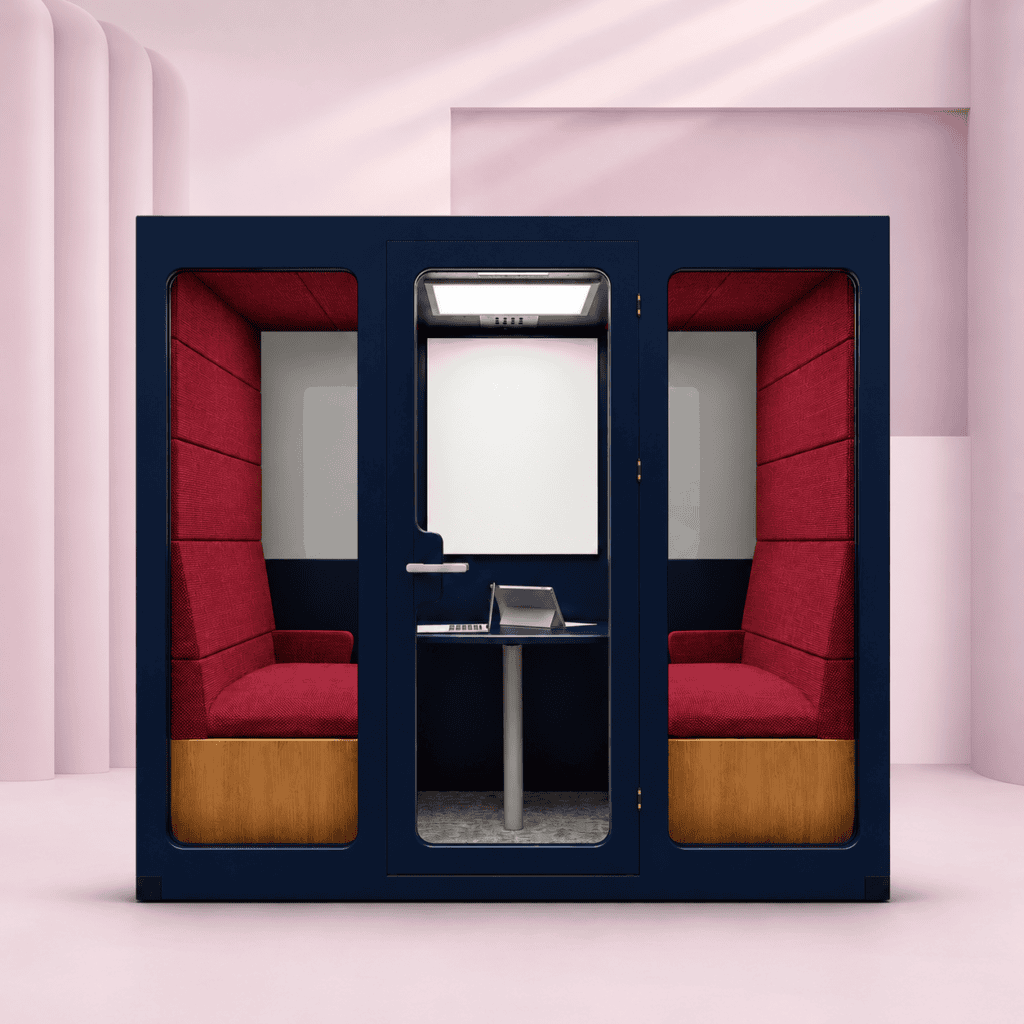
Two office phone booths can look the same in a photo and still be very different products. The difference shows up after a month of use: one stays quiet and cool through a long client call, the other leaks every word and turns stuffy in ten minutes. That is why comparing office phone booth prices on the headline figure alone is risky. A booth that looks cheaper on paper can cost you more once your team stops using it. This guide gives you seven checks to run on every quote, whether it comes from us or from anyone else. Use them as a checklist when you speak to suppliers, and you will know exactly what you are paying for. Get a quote you can check against this list: Call +91 79865 38641 · Call +91 85950 03771 Why price alone is a poor guide Office phone booths are made from the same basic parts: walls, glass, a door, a fan, lights and a table. What changes the price is the quality of each part. Thicker insulation, better glass and stronger ventilation all cost more to make, and they are also what make a booth worth using. A low price usually means one of these has been cut. The seven checks below show you where to look. 1. What sound insulation figure does the seller give? “Soundproof” is not a number. Ask every supplier for the sound insulation percentage in writing. Kraft-Obench single-person booths give up to 75% sound insulation, which is enough to take a confidential call in the middle of a busy floor. Be wary of any seller who claims a booth blocks 100% of sound. No booth does, and a seller who says otherwise is either guessing or overselling. A clear, stated figure is a sign that the maker has tested the product. 2. What is inside the walls? Thin panels alone will not stop voices. Ask what the walls are made of and what sits between the inner and outer layers. Good booths use insulation such as Rockwool inside the walls, which reduces the sound passing through. They also line the inside with sound-absorbing panels, such as acoustic PET or foam, which stop echo so your voice sounds clear on calls. If a supplier cannot tell you what is inside the walls, treat that as a warning. 3. What glass is in the door? Glass is usually the weakest point in any booth, because sound passes through it more easily than through an insulated wall. Ask for the glass thickness and type. Options range from 8 mm toughened glass to 22 mm DGU (double-glazed unit) soundproof glass. Double-glazed glass blocks more sound and suits noisier floors. Toughened glass keeps the booth bright and safe, and works well on calmer floors. 4. How does fresh air get in? A sealed booth gets warm and stuffy within minutes, and people stop using it. Check how many fans the booth has, and whether it has both an inlet and an exhaust, so fresh air comes in while used air goes out. Kraft-Obench booths use dual or quad inlet and exhaust fans for this reason. Ask the supplier how the airflow works on a 45-minute call, not just a quick one. 5. Can you actually work in it? A phone booth for an office should handle a full video call, not only a two-minute phone call. Look for: A table at laptop height Charging sockets and a LAN port Good lighting for video, ideally with a motion sensor that switches off when the booth is empty Enough room to sit comfortably for an hour If people cannot work in the booth, they will go back to taking calls at their desks. Want us to answer all seven checks for your shortlist? Call +91 79865 38641. 6. What does the quote leave out? The booth price is rarely the full cost. Before you compare two quotes, ask each supplier to list: GST Freight to your city Installation, and how long it takes (Kraft-Obench: about 45 minutes) Any civil or electrical work needed (Kraft-Obench: none) Two quotes only compare fairly once both show the full delivered cost. 7. Who stands behind it? Ask about the warranty, who installs the booth, and which companies already use it. A maker with a long client list has had its booths tested in real offices. Kraft-Obench offers a warranty of up to 2 years, and its booths are used by 250+ B2B clients, including IKEA, Reliance, Cognizant and Tech Mahindra. See our clients. Red flags in a cheap quote Watch out for these signs when a quote looks much lower than the others: No sound insulation figure, only the word “soundproof” A single small fan, or no exhaust No details on glass type or thickness No warranty in writing Installation, freight or GST hidden until the final invoice Kraft-Obench single-person booths at a glance ModelBest forPriceWEE PodTight floors and quick callsGet priceNano PodVideo calls in open officesGet priceNexo PodLong calls and deep workGet price See every model on our office phone booths page. Send us your shortlist and we’ll quote a booth that passes all seven checks. Call +91 7986538641 or +91 8595003771.

Office Phone Booth Price: 7 Things to Check Before You Pay Read More »
soundproof booth price india

Soundproof Booth Price in India: A Complete Buyer’s Guide

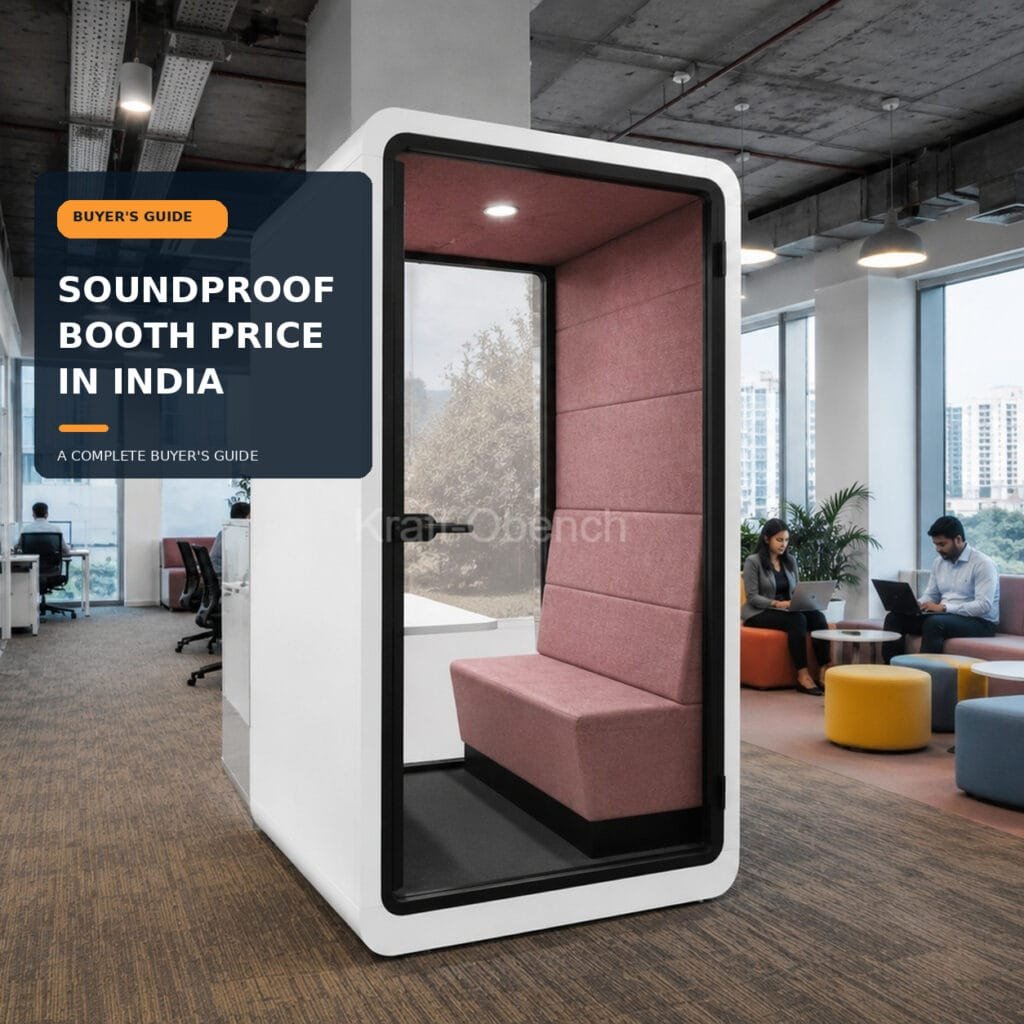
Buying a soundproof booth is a one-time decision that your team will live with for years. Get it right and calls, meetings and recordings move into a quiet, private space. Get it wrong and the booth sits empty because it leaks sound, overheats or is the wrong size. This guide covers everything you need to know before you buy a soundproof booth in India: the main types, what drives the price, what to look for inside, and how to choose a manufacturer. By the end, you will know exactly which booth to ask for, and what a fair quote should include. Get a quote for the right booth: Call +91 79865 38641 · Call +91 85950 03771 What is a soundproof booth? A soundproof booth is a freestanding, sound-insulated room that sits inside an existing office, home, clinic or campus. It has insulated walls, a sound-absorbing interior, a glass door, ventilation, lighting and power. Unlike a built cabin, it needs no civil work. It is installed in about 45 minutes and can be dismantled and moved later. The main types of soundproof booth TypeSeatsBest forPriceOffice phone booth1Private calls and focused workGet priceWork from home pod1A quiet home officeGet priceVocal booth1–2Podcasts, voice-overs, lecture recordingGet priceMeeting pod2–41:1s, interviews, small team meetingsGet price Start by deciding which of these you need. It is the single biggest factor in the price. What drives the price of a soundproof booth 1. Size. A single-person booth uses less material than a 2- or 4-seater pod, so it costs less. 2. Sound insulation. Office booths from Kraft-Obench give up to 75% sound insulation, and vocal booths up to 85%. Higher insulation needs more material and costs more. 3. Glass. 8 mm toughened glass is bright and safe. 22 mm DGU (double-glazed) glass blocks more sound and costs more. 4. Ventilation. Dual fans suit shorter use. Quad fans move more air for long meetings or recording sessions. 5. Finish. Kraft-Obench offers 50+ exterior laminate colours to match your interiors. 6. Delivery. GST, freight to your city and installation are added to the booth price. What to look for inside a soundproof booth A good booth is more than four walls and a door. Check that it has: Insulated walls: Rockwool or similar insulation that reduces sound passing through An acoustic interior: PET or foam panels that absorb echo Soundproof glass: with a stated thickness and type Inlet and exhaust fans: so fresh air comes in and stale air goes out Lighting: LED, ideally with a motion sensor Power and data: charging sockets and a LAN port Furniture: a table at the right height and comfortable seating If any of these is missing from a quote, ask why. Not sure which booth fits your space? Call +91 79865 38641 and describe how you will use it. Who buys soundproof booths in India Corporate offices and IT parks: private calls without booking a meeting room Co-working spaces: bookable call rooms for members Hospitals and clinics: private consultations and telemedicine. See acoustic pods for hospitals and clinics. Schools, colleges and libraries: quiet study and lecture recording. See study pods for campuses. Banks and showrooms: confidential customer conversations HR teams: interviews and appraisals. See soundproof pods for HR. Homes and creators: work-from-home offices and home studios Portable booth or built cabin? A built cabin needs construction, approvals and days of work, and it stays behind when you move. A portable soundproof booth is installed in about 45 minutes, needs no civil work, and moves with you. For leased offices and homes, a portable booth is usually the better choice. For a large boardroom you will use for many years in premises you own, building may still make sense. How to choose a soundproof booth manufacturer in India Ask for the sound insulation percentage in writing. Check the glass type and thickness. Ask how the booth is ventilated. Confirm the warranty and who installs the booth. Ask for client names and installations in your city. Buying from an Indian manufacturer means faster delivery, installation by the maker’s own team, and warranty service from the people who built the booth. Kraft-Obench is a New Delhi-based, Make in India manufacturer with 1,200+ installations for 250+ B2B clients in 50+ cities, including IKEA, Reliance, Cognizant and IIT Delhi. It was a semi-finalist on Shark Tank India Season 2, and its booths carry a warranty of up to 2 years. How to get an accurate quote Share these details with the supplier: The type of booth and how it will be used How many people will use it at once The floor space available, with a photo Your city and when you need it installed Ready to choose your booth? Call +91 7986538641 or +91 8595003771 for today’s soundproof booth price.

Soundproof Booth Price in India: A Complete Buyer’s Guide Read More »

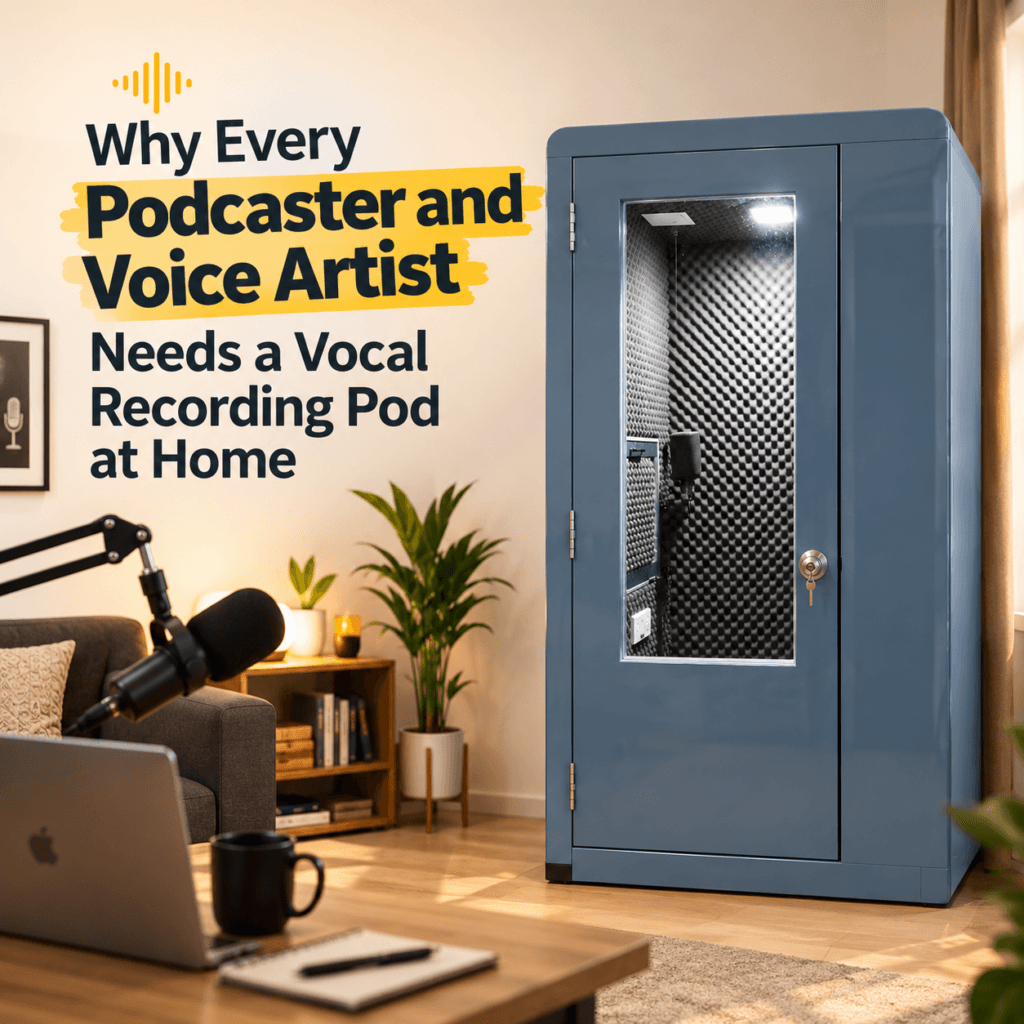
Why Every Podcaster and Voice Artist Needs a Vocal Recording Pod at Home

Why Every Podcaster and Voice Artist Needs a Vocal Recording Pod at Home

Ask any voice artist or podcaster who records from home about their biggest technical challenge, and the answer is rarely the microphone. It’s the room. Echo, outside traffic, barking dogs, and household noise can ruin an otherwise perfect take. You can buy an excellent microphone and still end up with a recording that sounds thin, boxy, or full of background hum.A dedicated vocal recording pod solves this at the source, and it’s becoming standard equipment for serious home-based audio work.The Problem With Recording in a Regular RoomUntreated rooms create two separate issues. First, external noise bleeds in: passing cars, neighbours, appliances, the doorbell, a child playing in the next room. Second, internal echo bounces around hard surfaces like walls, windows, and desks, adding a hollow, reverberant quality to your voice.Many creators try to fix this with blankets, foam panels, or a closet full of clothes. These can help a little, but they rarely address both problems at once, and they tend to be inconsistent from one session to the next. Even expensive microphones can’t fix this in post-production. Software can reduce some noise, but it often leaves audio sounding processed or unnatural.This is why so many podcasters and voice-over artists eventually invest in a dedicated vocal booth rather than continuing to fight their room’s acoustics.What Makes a Vocal Recording Pod DifferentAcoustic treatment, not just soundproofing. These are related but different jobs. Soundproofing keeps outside noise from getting in. Acoustic treatment controls how sound behaves inside. A proper modular vocal recording booth does both: it blocks outside noise from entering and absorbs internal reflections so your voice sounds clean and dry rather than boxy or echoey.Consistent recording environment. Recording every episode in the same acoustically treated vocal recording pod means your audio quality stays uniform. Listeners notice when a show’s sound shifts from week to week. A consistent space also makes editing faster, because you’re not chasing different noise profiles across files.Studio-grade results without studio rental costs. Renting a studio adds up quickly, and booking around someone else’s calendar limits when you can create. A one-time investment in a home vocal booth pays for itself after a relatively small number of sessions, while offering unlimited availability on your own schedule.Who Actually Needs OnePodcasters need consistent, clean audio. A vocal recording pod removes room noise as a variable entirely, so you can focus on content and delivery.Voice-over artists need broadcast-quality audio that meets commercial client standards. Clients often reject files with audible room tone, and a pod helps you deliver clean takes the first time.Dubbing and ADR professionals benefit from a dubbing artist studio pod purpose-built for precision across multiple takes. Matching lip sync and tone demands a very controlled environment.YouTubers and content creators find that viewers notice poor sound quality faster than average video quality. Good audio keeps people watching, and a portable vocal booth makes it easier to achieve.Musicians and singers can practise or record without disturbing housemates or neighbours. The pod keeps your sound in, and outside noise out.Choosing the Right Pod for Your Recording NeedsThe right unit depends on what you record and how much space you have.Podcasting and general voice work: Modular Vocal Recording BoothDubbing, ADR, and audiobook narration: Dubbing Artist Studio PodCompact spaces or occasional recording: Nano Pod, which also supports focused work and callsSmall studio setups needing flexibility: browse the full vocal booth categoryIf you’re unsure, think about how often you record and whether you’ll share the space with other uses. A creator recording daily has different needs from someone who records a few times a month.What to Check Before BuyingSound absorption rating. Look for materials like rockwool insulation, which can absorb up to 85% of ambient noise.Interior dimensions. Make sure there’s enough room to stand comfortably while recording, with space for a microphone stand, a script, and your equipment.Ventilation for extended sessions. Long takes get uncomfortable without airflow, and the ventilation shouldn’t introduce fan noise into your recordings.Delivery and installation support. Check the FAQ for timelines and setup details.Real reviews from other voice artists. Browse the gallery for actual home studio installations, and see how people arrange their gear inside.Beyond Recording: Everyday UseA vocal pod earns its place even when you’re not recording. Many customers find their vocal pod doubles as a private space for calls, focused work, or quiet study. The same acoustic benefits make it a capable work pod or phone booth substitute. If you mainly want a home office, an office pod for home may suit you better. That flexibility helps justify the investment, especially in a small home where every square metre needs to earn its keep.Final ThoughtsIf room noise has been quietly limiting the quality of your recordings, a dedicated vocal recording pod addresses the problem directly rather than trying to fix it after the fact. Explore our full vocal booth range in the shop, read more creator-focused guidance on our blog, learn about us, or contact us to find the right setup for your home studio.

Why Every Podcaster and Voice Artist Needs a Vocal Recording Pod at Home Read More »

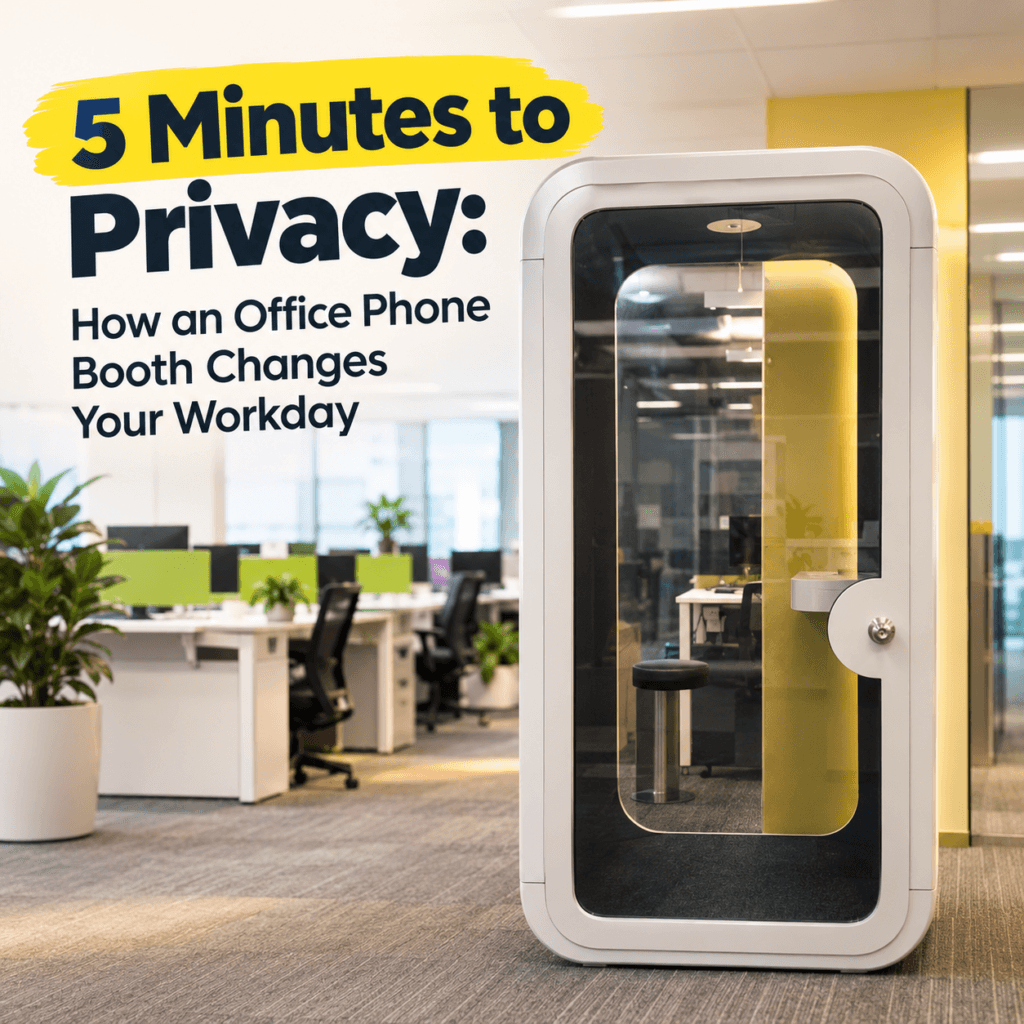
5 Minutes to Privacy: How an Office Phone Booth Can Change Your Workday

5 Minutes to Privacy: How an Office Phone Booth Can Change Your Workday

Not every workplace problem needs a 30-day plan or a company-wide policy change. Sometimes the fix is as simple as walking into a small, quiet space for five minutes. That’s the entire value proposition of an office phone booth, and it’s worth understanding exactly how those five minutes play out.Think of a typical call in an open office. You find a corner, lower your voice, hope nobody wanders past, and half-listen to the noise around you while talking. Now picture the same call in a closed, quiet phone booth. The difference isn’t subtle. Here’s how it unfolds, minute by minute.Minute 1: Stepping out of the noiseThe moment you close the door on a compact phone booth pod, the open-office noise disappears almost instantly. Built with rockwool insulation and soundproof glazing, a well-designed acoustic phone booth absorbs up to 85% of ambient sound.There’s no ceremony. You walk in, close the door, and the floor’s chatter, keyboards, and footsteps fall away. Many people describe the first few seconds as a kind of relief, like taking off a heavy backpack.Minute 2: Mental resetStudies on workplace interruptions show that regaining full focus after a distraction takes several minutes, but stepping into a controlled acoustic space accelerates that recovery. Instead of carrying the stress of the last interruption into your call, you get a moment to settle.You can glance at your notes, take a breath, and arrange your thoughts. Because nothing new is competing for your attention, the reset happens faster than it would at a desk.Minute 3: The call itselfClear audio, no background noise, and full privacy mean the actual conversation goes more smoothly. There’s no apologising for noise, no repeating yourself, and no distracted glances at what’s happening around you.This is where the real payoff appears. The person on the other end hears you clearly, and you hear them. Calls become shorter, more productive, and less tiring. Whether it’s a client update, a supplier check-in, or a chat with a candidate, both sides get a better experience. That’s why sales, HR, and support teams are often first in line for a private call booth.Minute 4: Confidentiality without compromiseIf the call touches on anything sensitive, the enclosed design of an office phone booth ensures nothing is overheard. This is often the deciding factor for teams handling HR or client-confidential conversations.You can discuss salary, feedback, contracts, or personal matters without worrying who’s within earshot. That protects the people involved and the business. It also removes the awkward habit of postponing important conversations until a meeting room frees up, which often means they don’t happen at all.Minute 5: Returning to work, recentredBy the fifth minute, most calls are wrapping up, and people leave the booth noticeably calmer and more focused than when they entered. The call is finished, notes are fresh, and the return to the desk feels like a fresh start.That small transition is easy to underestimate. A short, quiet break between tasks helps people avoid carrying stress from one conversation into the next.Why Five Minutes Matters More Than It SeemsMost workdays involve multiple short private moments: a quick call, a confidential huddle, a five-minute check-in with HR. None of these justify booking a full meeting pod or conference room, but all of them suffer without any private space at all.Multiply those small moments across a team and a week, and the gap becomes obvious. Ten people each taking two short private calls a day is a hundred calls a week that would benefit from a booth. Without one, those calls happen in corridors, stairwells, or at desks.A phone booth is designed for exactly this rhythm. It’s quick to enter, needs no booking process, and is available whenever the need arises. Browse the full range in our shop.Where a Phone Booth Fits Alongside Other PodsA phone booth is one part of a wider toolkit, and knowing where it fits helps you build the right mix.Quick solo calls: Compact Phone Booth PodSmall group discussions: Enclosed Meeting Booth or Portable Meeting PodExtended focused work: Portable Office Pod or Nano PodVoice recording tasks: Modular Vocal Recording BoothBrowsing the phone booth, meeting pod, and work pod categories together often reveals that most offices need more than one type.What to Look for in a Phone BoothNot all booths perform equally, so check these points before you buy:Real acoustic performance data (not just marketing claims). Ask what materials are used and what the sound absorption figures are based on.Proper ventilation for extended use. A booth that gets stuffy after ten minutes won’t get used.Compact footprint that fits in tight office corners. Small footprints make it easier to place several booths around the floor.Integrated power and lighting for a comfortable, functional space. You should be able to charge a laptop and see clearly without extra equipment.Fast delivery and installation. Check the FAQ for typical timelines.Final ThoughtsFive minutes doesn’t sound like much until you multiply it across every private call your team makes in a week. Explore our full phone booth range in the shop, see real office setups in the gallery, read more about us, or contact us to find the right size for your space.

5 Minutes to Privacy: How an Office Phone Booth Can Change Your Workday Read More »

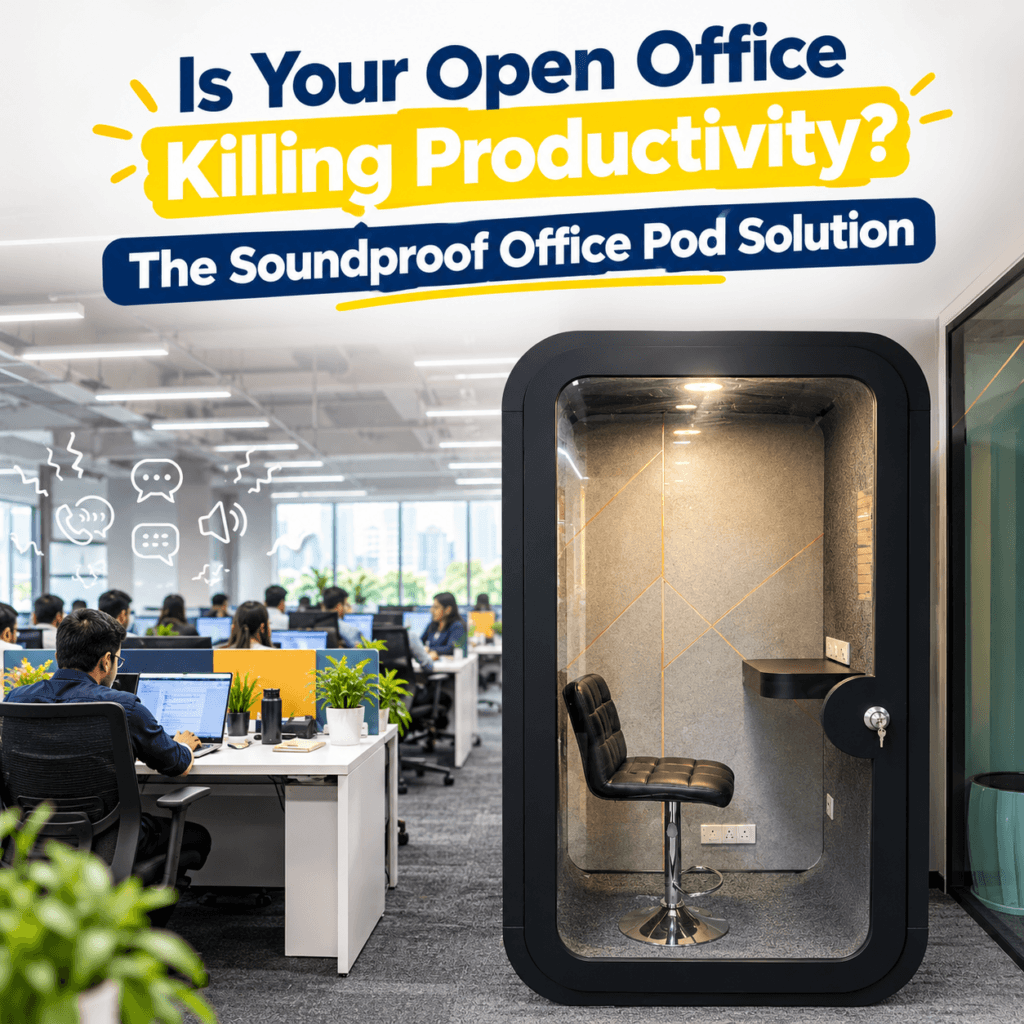
Is Your Open Office Destroying Productivity? The Office Pod Solution

Is Your Open Office Killing Productivity? The Soundproof Office Pod Solution

Open-plan offices were introduced to boost collaboration and cut real estate costs. Nearly two decades later, the evidence tells a more complicated story: constant ambient noise, reduced privacy, and measurable drops in deep-focus output. If your team’s productivity has quietly declined since moving to an open layout, you’re not imagining it. A soundproof office pod is one of the fastest ways to reverse it.The good news is that you don’t have to tear down the open plan to fix the problem. You only have to give people somewhere to go when they need quiet.The Real Cost of Open-Plan NoiseEvery conversation, phone call, and notification in an open office competes for the same limited attention your team needs for actual work. The problem isn’t just volume. It’s unpredictability. A sudden laugh, a ringing phone, or a nearby debate pulls the mind away from a task, and the mind doesn’t snap back instantly.Research on workplace interruptions consistently shows that after being interrupted, it takes several minutes to fully regain focus, and open offices generate dozens of these interruptions per day. Multiply that across a team and the hidden cost becomes significant. People finish the day tired, but with less to show for it.There’s a human cost too. Constant noise raises background stress, and people who never get a quiet moment often feel drained by mid-afternoon. That affects the quality of decisions, the tone of meetings, and how willing people are to stay long term. A phone booth or work pod gives them that moment back.Signs Your Open Office Is Hurting ProductivityEmployees wearing headphones all day just to get anything done. Headphones are a coping mechanism, not a solution.Frequent complaints about difficulty concentrating. If several people raise it independently, it’s a pattern.Longer-than-expected time to complete routine tasks. Tasks that once took an hour now stretch into the afternoon.Employees avoiding the office in favour of working from home. People go where they can focus, and a work from home pod shows what they’re looking for.Meetings running long due to noise-related repetition. A meeting pod fixes that.Sensitive conversations awkwardly conducted in stairwells or parking lots. This is a clear sign the building lacks private space, which an office phone booth can provide.If you recognise three or more of these, the layout is probably working against your team.How a Soundproof Office Pod Fixes ThisAcoustic isolation on demand. A work pod built with rockwool insulation and soundproof glazing can absorb up to 85% of ambient noise. People step in, close the door, and the office fades away. There’s no waiting for a room and no need to leave the floor.Privacy without construction. A portable office pod or enclosed meeting booth can be installed in days and relocated later. You avoid builders, planning delays, and long periods of noise and dust. If your layout changes, the pod moves with it.A middle ground, not a reversal. Adding a mix of phone booths, meeting pods, and work pods preserves the collaborative energy of an open floor plan while giving employees the option to step away when they need quiet.Where to Start: A Practical RolloutYou don’t need to fill the floor with pods on day one. A staged approach lets real usage guide your decisions.Step 1: Identify the biggest pain point. Lack of privacy for calls? Add a compact phone booth pod. Shortage of meeting space? Start with a portable meeting pod. Lack of individual focus space? A Nano Pod or a full office pod for home-style unit solves that. Ask your team where they struggle most and start there.Step 2: Pilot before scaling. Install one or two pods and track usage for a month. Most businesses find that even a single workspace pod meaningfully changes how a floor operates. Watch how often it’s used, at what times, and for which tasks.Step 3: Gather employee feedback. Has call quality improved? Are meetings running more efficiently? Do people feel they have adequate privacy? A short survey and a few conversations will tell you more than any spec sheet. The FAQ can help with any setup questions along the way.Step 4: Expand strategically. Once initial pods prove their value, expand into specialised categories. A vocal recording pod suits content teams, and a dubbing artist studio pod suits media production. Match each addition to a real need.The Business Case, Not Just the Comfort CaseIt’s easy to see pods as a comfort perk, but the return shows up in business terms. Reduced turnover from workplace dissatisfaction, fewer external venue rentals for confidential meetings, and measurable time saved from fewer repeated or rescheduled meetings all contribute to a pod’s return on investment over time.There’s also the value of flexibility. Because pods aren’t permanent construction, they carry less risk than a fixed build-out. If you move offices, you take them with you. If a team shrinks, you redeploy the unit. See how other companies have done it in our gallery.When you present the idea internally, frame it around outcomes: time recovered, calls improved, and privacy protected. Those are the things leadership tends to care about.Final ThoughtsAn open office isn’t inherently broken, but without any provision for privacy or acoustic control, it works against the very productivity it was designed to support. Explore our full range of work pods and meeting pods in the shop, browse real installations in the gallery, check common questions in the FAQ, learn about us, or contact us to start your own pilot.

Is Your Open Office Killing Productivity? The Soundproof Office Pod Solution Read More »

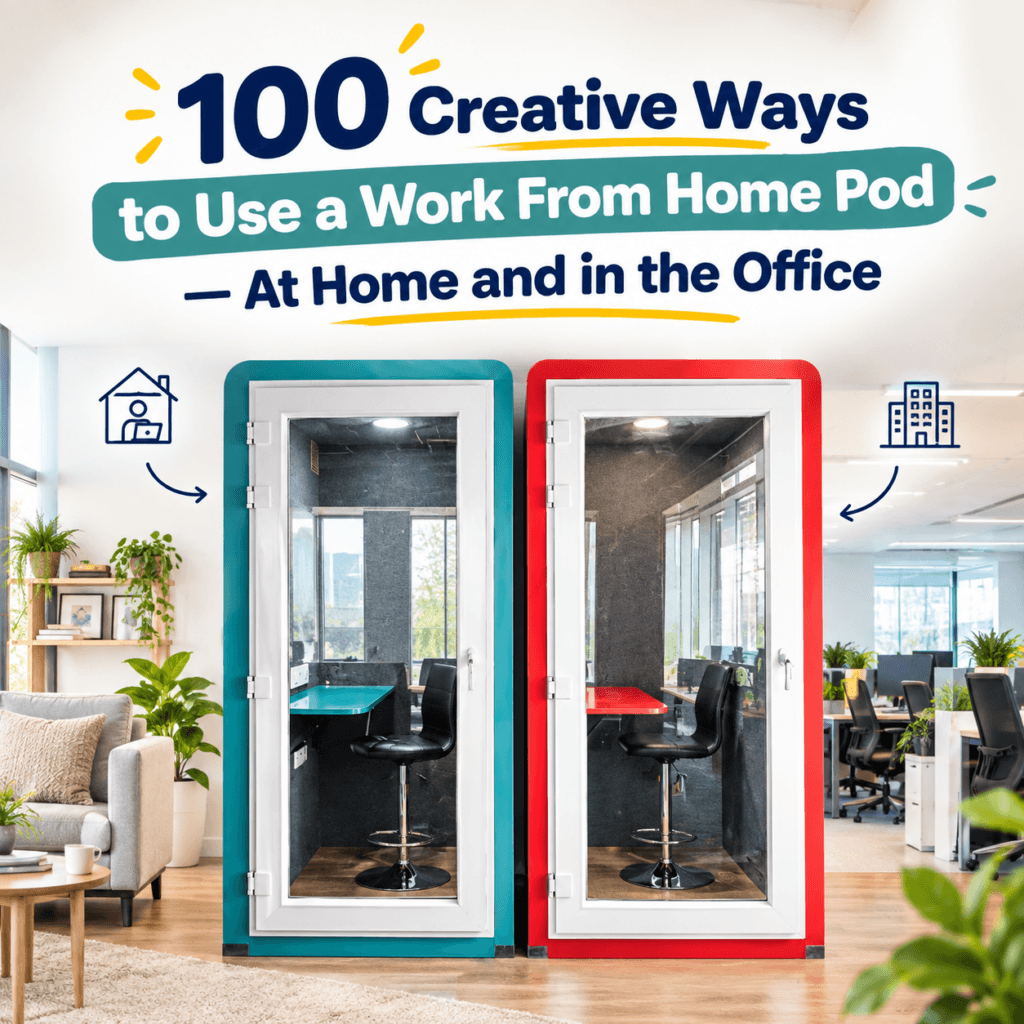
100 Creative Ways to Use a Work From Home Pod – At Home and in the Office

Most people buy a work from home pod expecting to use it for one thing, quiet work, and end up using it for a dozen things they never planned. A space that blocks noise and interruptions turns out to be useful for far more than spreadsheets and video calls. Once it’s in place, family members claim it for study, creators use it for recording, and offices find new uses every quarter.Here are 100 creative, real-world uses collected from our customers, organised by setting. Use them as inspiration for what your own pod could become. Every idea below works in a Nano Pod or a larger work pod.At Home: Work & Productivity (1-20)Full-time remote work station, with a fixed place to start and end the dayFreelance client project space that keeps work separate from homeEarly-morning planning sessions before the household wakes upLate-night deadline work without disturbing familyDedicated bookkeeping and finance management spaceJob interview preparation and mock callsStudying for professional certificationsManaging a side business or e-commerce storeWriting reports or long-form documentsCoding and software development sessionsClient onboarding calls in a compact phone boothReviewing contracts privatelyManaging personal investments and tradingRunning a home-based consulting practicePreparing tax documents each yearHosting virtual assistant or outsourcing coordination callsDrafting business proposalsManaging email overflow distraction-freeRunning quarterly personal goal reviewsUsing it as a “no-phone” deep work sanctuaryAt Home: Family & Personal Life (21-40)A pod isn’t only for work. Many households find it becomes the calmest room in the house, and an office pod for home fits that role well.A quiet study space for children during examsTeenagers attending online classes without distractionA reading nook for personal downtimeJournaling or personal reflection spaceMeditation and mindfulness practicePrivate space for therapy or counselling sessionsA hobby room for painting, drawing, or craftsStoring important family documents securelyA quiet space for elderly family members to restManaging household finances privatelyA place for religious or spiritual practiceVideo calls with family abroad without household noiseA digital detox corner away from shared TV roomsPractising a musical instrument without disturbing others, ideally in a portable vocal boothA private space for personal fitness planning or telehealth callsWrapping gifts or planning surprises privatelyA quiet space for pet training sessionsManaging home renovation planning and vendor callsA dedicated space for genealogy or personal researchSetting up a small personal library cornerAt Home: Content Creation (41-55)Sound quality is the biggest challenge for home creators, and a treated vocal booth solves it directly.Recording podcasts using a vocal recording podYouTube voiceovers and narrationStreaming or Twitch commentaryRecording online course contentPractising public speakingVoice acting auditions from homeRecording audiobook chaptersProducing music demos in a Modular Vocal Recording BoothRecording language-learning practice sessionsHosting virtual open-mic style rehearsalsTesting microphone and recording equipmentEditing audio with reliable acoustic monitoringRecording dubbing work in a dubbing artist studio podCreating ASMR or wellness audio contentRecording customer testimonial videos for a small businessIn the Office: Calls & Meetings (56-75)In a workplace, the same acoustic isolation supports everything from routine calls to sensitive conversations. A phone booth handles most of them.Private client calls in a compact phone boothHR and performance review conversationsVendor negotiation callsInvestor or board update callsRecruitment interviewsExit interviewsTeam huddles in an enclosed meeting boothCross-timezone international callsLegal and compliance discussionsSales pitch rehearsalsCustomer support escalation callsInternal training sessionsProduct roadmap discussions in a meeting podQuick stand-ups for small teamsConfidential restructuring conversationsMentorship or coaching sessionsWebinar hosting from the officeAnalyst briefingsMedia interviewsBooking a portable meeting pod for client visitsIn the Office: Focus & Wellbeing (76-100)Modern workplaces are also learning that quiet space supports people, not just tasks. A soundproof office pod gives everyone somewhere to reset.Solo deep-work sessions away from desk noiseA quiet space for new hires to settle in during onboardingA private space for difficult personal conversations at workPrayer or meditation breaks during the workdayA quiet corner for lactation or wellness needsReviewing sensitive financial reportsStudying for work-related certifications during breaksA “focus booking” system for shared desksTaking a mental health break in a low-stimulation spacePractising a presentation before a big meetingReviewing legal documents before signingA quiet space for job seekers doing virtual interviews on-siteHosting small workshops using a work podA dedicated space for compliance auditsTesting new product prototypes privatelyCoordinating crisis communicationsRunning usability testing sessions with clear audioHosting internal podcasts or leadership updatesA rotating “quiet hour” booking system across teamsOnboarding contractors who need temporary desk spaceA private space for consultants visiting the officeSupporting neurodivergent employees who need lower-stimulation environmentsA flexible space for satellite or hot-desking employeesHosting portfolio or design reviews with clientsMaking the work from home pod a permanent fixture of hybrid work cultureWhat These 100 Uses Have in CommonLook through the list and a pattern emerges. Almost every use depends on the same three things: reduced noise, real privacy, and a space that belongs to the person using it. Whether someone is recording an audiobook chapter or holding a difficult HR conversation, the pod gives them control over their environment.That’s also why so many owners find new uses over time. A pod bought for calls becomes a study room for a teenager. One bought for recording becomes a meditation space on quiet evenings. See real examples in our gallery. Choosing Based on Your Top Use CasesStart with your top three uses. If your list leans toward content creation, start with our vocal booth category. If it’s mostly calls, browse phone booths. For team-based uses, meeting pods are the better fit, and for pure focus work, explore work pods and the Nano Pod.If your uses span several categories, pick a flexible unit and use the FAQ to check sizing and setup before you decide.Final ThoughtsA work from home pod rarely stays a single-purpose product for long. Explore the full range in our shop, see real setups in the gallery, or contact us to find the configuration that matches your household or office. You can also read more about us or browse the blog

100 Creative Ways to Use a Work From Home Pod – At Home and in the Office Read More »

Meeting Pod

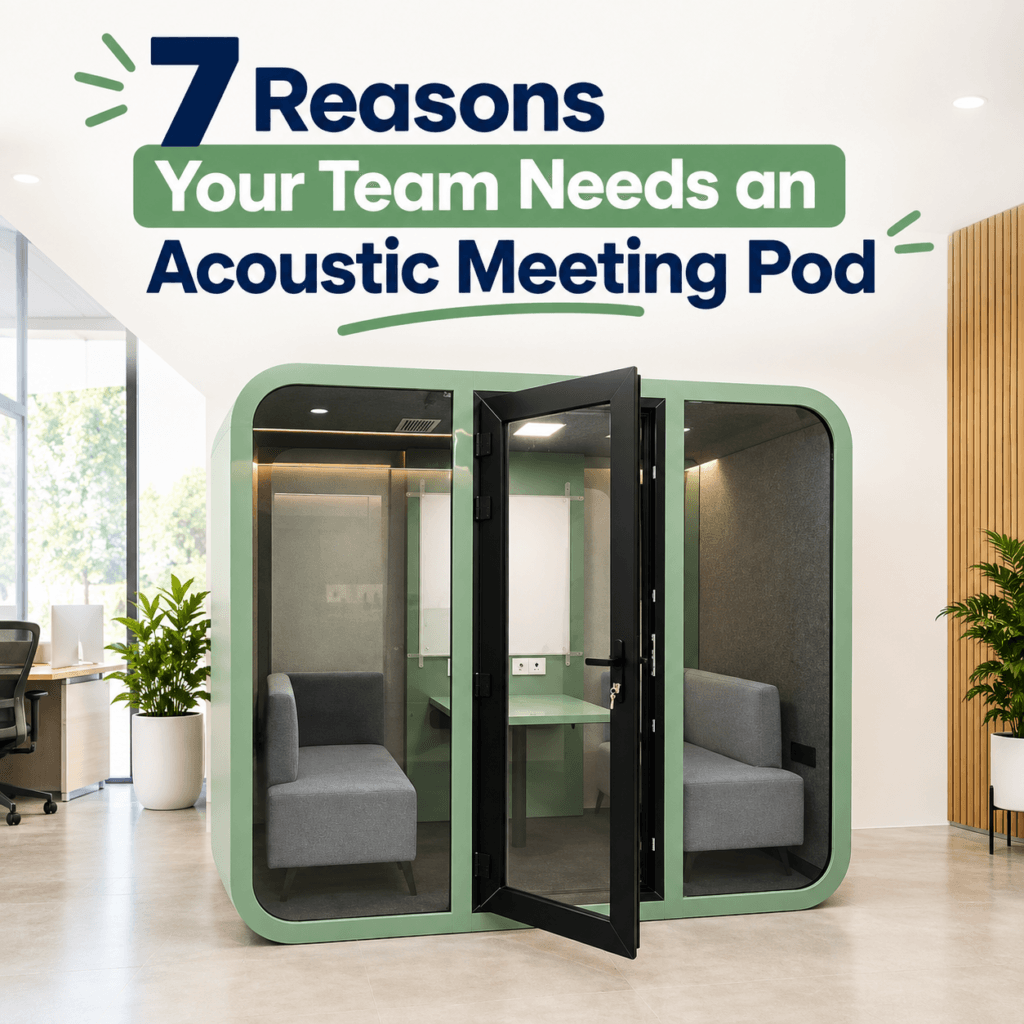
7 Reasons Your Team Needs an Acoustic Meeting Pod

Meeting room scarcity is one of the most common (and most fixable) complaints in modern offices. Teams wander between floors looking for a free space, book rooms days ahead for a fifteen-minute chat, or give up and hold discussions at their desks, where everyone else can hear.Rather than expanding your floor plan or booking external venues, more teams are solving this with an acoustic meeting pod. It’s a self-contained, pre-engineered space that drops into your existing layout. Here are seven concrete reasons it’s worth the investment.1. It solves the “no rooms available” problem instantlyMost offices have far fewer meeting rooms than they need for their headcount. As teams grow and hybrid schedules concentrate attendance on certain days, the shortage gets worse. A meeting pod adds capacity without construction. There are no walls to build, no permits to file, and no weeks of disruption.Teams using a portable meeting pod can even relocate it as departments grow or shrink. If a project team needs a space for three months, the pod goes to them.2. It actually delivers on acoustic privacyMany “private” meeting rooms are just glass boxes with a door. Sound leaks through thin panels and gaps around the frame, and people walking past can still hear what’s said.An enclosed meeting booth built with rockwool insulation and soundproof glazing absorbs up to 85% of ambient sound. Discussions stay inside, and outside noise stays out. Teams can talk about budgets, hiring, or client strategy without lowering their voices. See how it looks in real offices in our gallery.3. It improves meeting quality, not just meeting accessGetting a room is one thing. Having a good meeting in it is another. Without competing against open-office noise, people speak more naturally and need fewer clarifying repeats. Conversations flow, and attention stays on the topic.Small improvements add up. If each meeting saves a few minutes of repetition and restarts, a team that meets several times a day recovers meaningful time each week. Even a phone booth nearby helps, because quick calls stop spilling into meeting rooms.4. It’s more cost-effective than building new roomsTraditional construction is slow and expensive. Walls, electrics, ventilation, and acoustic treatment all need separate planning and trades. A pre-engineered workspace pod arrives with insulation, lighting, and ventilation already integrated. It’s a fraction of the cost and disruption of new construction.There’s also less risk. You know what you’re getting and when it arrives, and you’re not exposed to the budget overruns that often come with building work. Compare options in our shop.5. It supports hybrid and distributed teamsHybrid work has made video calls a permanent fixture of the office. A meeting pod gives hybrid teams a consistent, echo-free space for video calls with remote colleagues. Remote participants hear clearly, and in-room participants aren’t competing with background noise.That consistency matters. When people know a quiet, well-equipped space is available, they’re more willing to come in on the days that count. Staff who work from home part of the week can also use a work from home pod for the days they’re not in.6. It reduces the need for external venue bookingsTeams that regularly rent external meeting spaces for confidential or client-facing discussions pay for it every time. Hourly fees, travel time, and scheduling hassle add up. Teams that meet externally can often eliminate that recurring cost with an in-office meeting pod.Because you own the space, you can use it whenever you like. Spontaneous meetings become possible again.7. It signals a modern, employee-focused workplaceInstalling acoustic meeting pods shows a company is investing in how its people actually work. Employees notice when leadership solves everyday problems. Visitors notice too, and a well-designed pod tells clients and candidates you take focus, privacy, and professionalism seriously.In a competitive hiring market, small signals like this shape how people feel about joining or staying. You can read more about who we are and how we build our pods. Complementary Additions Worth ConsideringA meeting pod rarely works alone. For solo private calls, add a Compact Phone Booth Pod. For individual focused work, consider a Portable Office Pod or the Nano Pod. For content or training recording, look at the Dubbing Artist Studio Pod or Modular Vocal Recording Booth. For flexible, coworking-style setups, the Portable Meeting Pod is a natural fit.Browsing the phone booth, vocal booth, and work pod categories alongside meeting pods usually reveals a fuller picture of what a team needs across a typical week.How to Get StartedAudit current meeting room usage. Identify the biggest bottleneck: privacy, availability, or acoustics. Look at booking data and ask employees where they struggle.Choose your format. Decide between a fixed enclosed meeting booth or a relocatable portable meeting pod based on how often your layout changes.Check the practical details. Read the FAQ for sizing, delivery, and installation timelines.See it in real settings. Review real office installs in the gallery before finalising your configuration. You can also browse our blog for layout ideas.Final ThoughtsA soundproof meeting pod isn’t a luxury add-on. For most growing teams, it’s the fastest and most cost-effective fix for a problem nearly every office eventually runs into. Explore the full meeting pod range in our shop, learn more about our approach on the about us page, or contact us to plan the right setup for your team.

7 Reasons Your Team Needs an Acoustic Meeting Pod Read More »

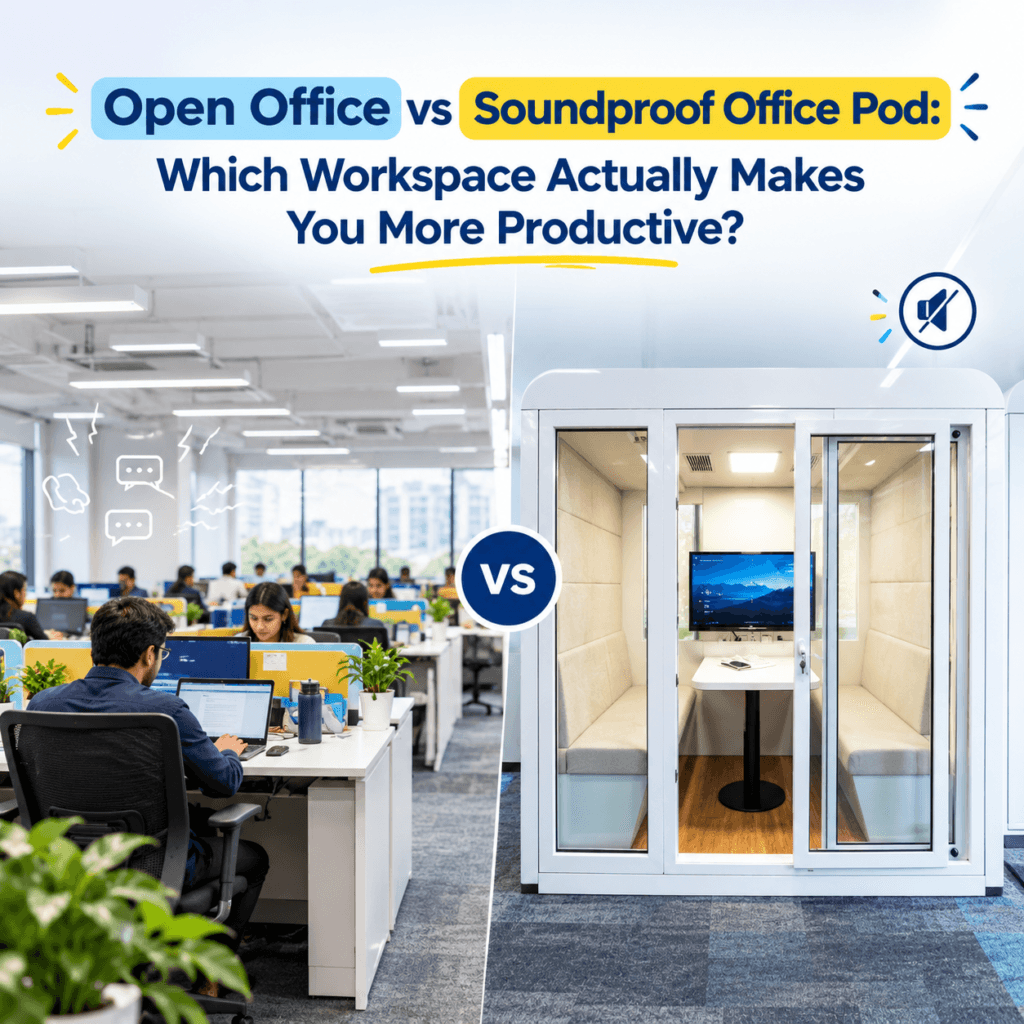
Open Office vs Soundproof Office Pod: Which Workspace Actually Makes You More Productive?

Open Office vs Soundproof Office Pod: Which Workspace Actually Makes You More Productive?

Open offices promised collaboration, transparency, and lower real estate costs. A decade later, most productivity research points the same direction: they’ve also introduced chronic noise, constant interruption, and a measurable drop in deep-focus work. Employees compensate with headphones, early starts, or working from home, which undercuts the togetherness the layout was meant to create.A soundproof office pod has emerged as the practical middle ground. It doesn’t replace the open floor. It gives people a way to step out of it when the work demands it. Whether it’s a phone booth for calls or a meeting pod for small teams, here’s how the two layouts compare on the factors that matter most.Noise LevelsOpen office: Ambient noise from conversations, phone calls, printers, and foot traffic is constant and largely uncontrollable. Carpets or ceiling panels help slightly, but you can’t switch the noise off.Soundproof office pod: A properly built work pod using rockwool insulation and soundproof glazing absorbs up to 85% of ambient sound. Closing the door changes the acoustic environment immediately, and the person inside controls how quiet it is.Winner: pod, decisively.PrivacyOpen office: Visual and acoustic privacy are both limited. Anyone can see your screen, watch your body language, and overhear your calls.Soundproof office pod: An office booth or phone booth offers full visual and acoustic enclosure. Sensitive HR conversations, client calls, and financial discussions can happen without workarounds. A compact phone booth pod is the simplest way to start.Winner: pod.CollaborationOpen office: This is where the open plan earns its reputation. It’s genuinely better for spontaneous, informal collaboration. Quick questions and impromptu huddles happen naturally when people share space.Soundproof office pod: Meeting pods like the enclosed meeting booth support structured, focused collaboration for small groups. They work well for planned discussions but aren’t designed for large, spontaneous gatherings.Winner: open office for informal collaboration; pod for structured small-group work.CostOpen office: Lower upfront real estate cost per employee, but hidden costs accumulate through lost productivity and turnover.Soundproof office pod: Higher one-time cost per unit, but no construction, and pods like the portable office pod can be relocated or resold as needs change. You can compare current options in our shop.Winner: depends on time horizon. Over the short term the open plan is cheaper. Over several years, the pod’s ability to recover lost focus time and adapt to change often tips the balance.Focus & Deep WorkOpen office: Studies consistently show reduced task completion speed and increased error rates in high-noise environments. Writing, analysis, and coding suffer most.Soundproof office pod: Purpose-built for uninterrupted focus. A work from home pod or Nano Pod isolates the user from audio and visual distractions, letting people settle into demanding tasks.Winner: pod.FlexibilityOpen office: A fixed floor plan is expensive to reconfigure. Moving walls means contractors, permits, and downtime.Soundproof office pod: A portable meeting pod can be moved, added, or removed as needs change. When a team grows, shrinks, or relocates, the pod goes with it.Winner: pod.Employee WellbeingOpen office: Linked to higher stress levels from constant low-grade noise exposure. Being always “on show” adds a subtle social pressure many people find draining.Soundproof office pod: Gives employees agency to step into a controlled, quiet space on demand. That choice matters as much as the quiet itself, because people feel trusted to manage their own working conditions.Winner: pod.So, Which Should You Choose?The most effective modern offices combine both. Keep an open floor plan for collaboration, and supplement it with phone booths for private calls, meeting pods for small-group discussions, work pods for individual deep-focus sessions, and vocal booths for teams doing content or media work.Think of the open floor as the town square and the pods as the meeting rooms and libraries around it. Each has a purpose, and a healthy workplace needs both.A Simple Decision FrameworkDo employees frequently complain about noise or lack of privacy? Add pods. Even one or two units can show quickly whether demand is there.Is spontaneous collaboration suffering due to too many enclosed spaces? Keep more open floor plan.Are meeting rooms constantly booked? A portable meeting pod adds capacity fast, without construction.Do teams need studio-quality audio for content? A vocal recording pod fills that specific gap, and the Modular Vocal Recording Booth suits studios.Start with your loudest complaint and solve that first. You can always add more later. The FAQ covers sizing, delivery, and installation.Final ThoughtsThe debate isn’t really “open office vs. pod.” It’s about giving employees the choice between collaborative and focused environments, rather than forcing one layout on every task. Explore the full range of workspace pods in our shop, browse combined office setups in the gallery, read about our story, or contact us to plan a hybrid layout for your team.

Open Office vs Soundproof Office Pod: Which Workspace Actually Makes You More Productive? Read More »

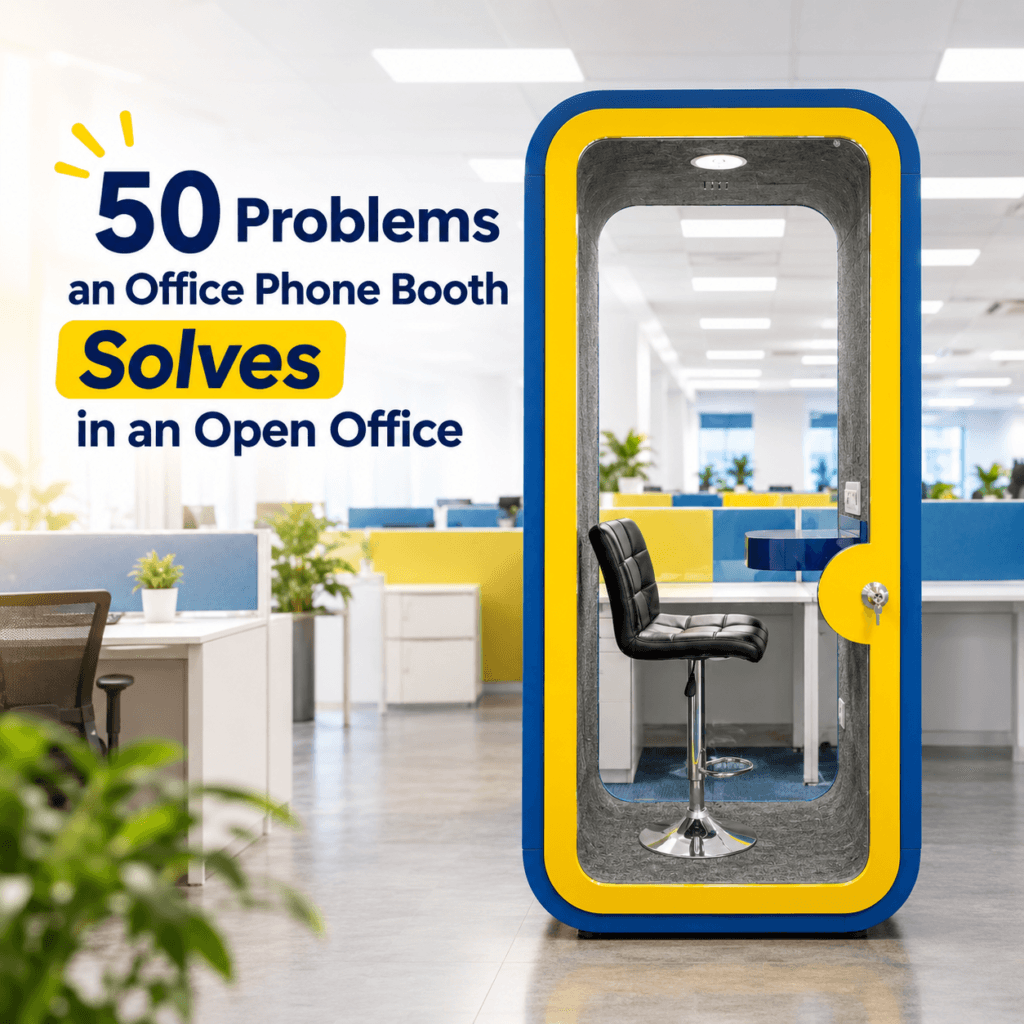
50 Problems an Office Phone Booth Solves in an Open Office

50 Problems an Office Phone Booth Solves in an Open Office

Open-plan offices were supposed to increase collaboration. In practice, they’ve created a new category of daily friction: nowhere private to take a call. Walk through any open floor at 11 a.m. and you’ll see the symptoms. People pacing near windows with a phone pressed to one ear, others whispering into headsets, someone hunting for a free room that doesn’t exist.An office phone booth solves this in a way glass meeting rooms and “quiet corners” never quite manage. It’s small, self-contained, available on demand, and built for one job: giving one person a quiet, private place to talk. A compact phone booth pod fits into a corner without rearranging your floor, and a well-built soundproof office phone booth keeps calls clear and confidential. Below are 50 specific problems it addresses, grouped for clarity. Most teams will recognise at least a dozen from their own week.Noise & Distraction Problems (1-15)Noise is the most visible cost of an open floor. It affects call quality, concentration, and how tired people feel by mid-afternoon. A phone booth removes most of it the moment the door closes.Background chatter bleeding into client calls. The client hears your colleagues as clearly as they hear you.Colleagues overhearing personal conversations. A quick call to a doctor or family member becomes a public event.HVAC and printer noise disrupting audio quality. Mechanical hum degrades microphone input more than most people realise.Open-plan echo making voices hard to understand. Hard surfaces bounce speech around and blur consonants.Difficulty concentrating during back-to-back calls. A private call booth gives each call a calm start.Coworkers unintentionally listening in on sensitive discussions. Nobody means to eavesdrop, but proximity makes it unavoidable.Video call audio picking up unrelated office conversations. Remote participants end up hearing your whole floor.Interruptions from people walking past your desk mid-call. A passing wave or whispered question breaks your train of thought.Difficulty hearing on calls during busy office hours. Peak-hour volume forces you to raise your voice.Noise from nearby meeting pods or huddle areas. Poorly insulated collaboration zones leak sound into the rest of the floor.Distracting notification sounds from shared spaces. Other people’s pings and ringtones pull your attention away.Overlapping conversations in hot-desking areas. Rotating seating means unpredictable neighbours and unpredictable noise.Music or radio from nearby desks. One person’s focus soundtrack is another person’s distraction.Construction or renovation noise nearby. Drilling next door doesn’t pause for your scheduled calls.Reverberation in high-ceilinged open offices. Industrial-style ceilings look great but make speech muddy. An acoustic phone booth absorbs that echo.Privacy & Confidentiality Problems (16-28)Some conversations simply can’t happen on an open floor. Without a private option they get delayed, watered down, or held in awkward places. A soundproof booth turns any corner into a confidential space.Discussing compensation or HR matters within earshot of others. Salary and grievance topics need a closed door.Handling client-sensitive information in view of competitors visiting the office. Visitors hear what they walk past.Taking recruitment calls without candidates overhearing office gossip. Candidates form impressions from background noise too.Reviewing legal or compliance matters privately. These discussions carry real risk if overheard.Protecting unreleased product information during calls. A leaked roadmap detail can be costly.Managing difficult conversations without an audience. Hard feedback lands better when nobody else is listening.Taking personal calls (medical, family) without discomfort. People shouldn’t have to choose between privacy and an important call.Discussing internal restructuring plans securely. Rumours spread fast when leaders talk in the open.Handling vendor negotiations without competitors nearby. Pricing and terms deserve discretion.Protecting client data shared verbally during support calls. Account details spoken aloud shouldn’t travel across the floor.Conducting performance-related conversations discreetly. Reviews are personal and should feel that way.Managing whistleblower or grievance calls confidentially. Trust depends on absolute privacy.Avoiding visual exposure of sensitive documents during video calls. Screens and paperwork behind you are visible to everyone on the call.Professionalism & Client Perception Problems (29-38)Clients and candidates judge you partly by how you sound and look on a call. A calm office phone booth protects that impression.Sounding unprofessional due to background noise on client calls. Noise signals disorganisation, even when you’re well prepared.Losing credibility when clients hear office chaos. First impressions form in seconds.Struggling to present clearly during investor calls. High-stakes pitches deserve a calm setting.Appearing distracted during interviews due to visible movement behind you. Moving colleagues pull the viewer’s eye away from you.Poor lighting and background during video meetings. Uneven office lighting rarely flatters anyone.Clients repeatedly asking you to repeat yourself. Each repetition chips away at momentum.Losing deals due to poor call quality impressions. Audio quality shapes how competent you seem.Difficulty building rapport over noisy calls. Warmth is hard to convey through interference.Awkward pauses caused by cross-talk in open offices. Overlapping voices disrupt conversation rhythm.Reduced confidence when taking high-stakes calls in public view. Knowing people are watching changes how you speak.Space & Logistics Problems (39-50)Beyond noise and privacy, there are practical problems: too few rooms, too little flexibility, and too much cost for the alternatives.No available meeting rooms for quick 1:1 calls. A ten-minute call shouldn’t need a room booking.Wasting time walking to find a quiet spot. Searching for space eats into productive time.Booking conflicts for shared conference rooms. Small calls crowd out larger meetings.Overcrowded “quiet zones” during peak hours. Quiet areas stop being quiet once everyone uses them.Lack of dedicated space for remote employees visiting the office. Visiting staff often have nowhere to take calls.Difficulty scaling office space as headcount grows. Adding people rarely adds meeting rooms.High cost of building additional soundproofed rooms. Construction is slow, disruptive, and expensive. A pre-built office booth avoids it.Underused corners of the office with no clear function. Dead space can become a useful private call area.Coworking spaces lacking any private call option — solved with a portable meeting pod. Shared workspaces often offer desks but no privacy.Employees resorting to parking lots or stairwells for private calls. Improvised solutions hurt comfort and professionalism.No consistent solution across multiple office locations. A standard, repeatable unit gives every site the same experience.Needing a flexible, relocatable solution as teams reorganise — solved with a compact phone booth pod. Layouts change,…

50 Problems an Office Phone Booth Solves in an Open Office Read More »

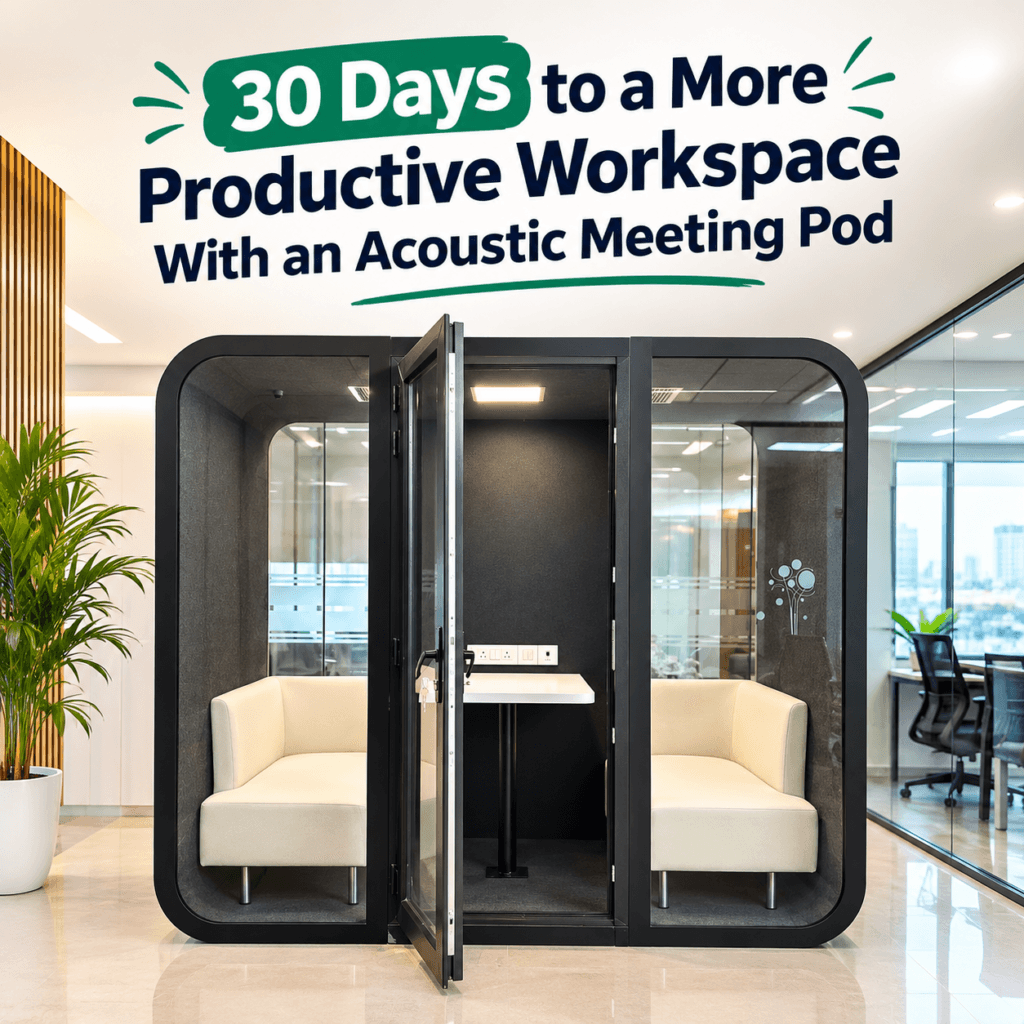
30 Days to a More Productive Workspace With an Acoustic Meeting Pod

30 Days to a More Productive Workspace With an Acoustic Meeting Pod

Most productivity advice focuses on habits — wake up earlier, block your calendar, use the Pomodoro method. Useful, but incomplete, because it ignores the environment those habits have to survive in. Installing an acoustic meeting pod changes the environment itself. Here’s a realistic 30-day breakdown of what changes, week by week, once your pod is in place.Why Environment Matters More Than Habits AloneHabit-based productivity advice assumes a stable environment — the same desk, the same background noise level, the same interruptions every day. In reality, most workplaces are noisy, unpredictable, and full of small frictions that quietly derail even the best-intentioned habits. A pod doesn’t ask you to be more disciplined; it removes an entire category of distraction before discipline is even needed. That’s why the changes below tend to show up on a fairly predictable timeline, regardless of the team or industry.Week 1 (Days 1–7): Adjustment and AwarenessThe first week is mostly about noticing what used to go unnoticed. Once you’re inside a meeting pod, the absence of background noise makes you suddenly aware of how much mental energy open-office chatter, hallway conversations, and HVAC hum were quietly consuming. Teams using a portable meeting pod for the first time often report shorter, more focused discussions almost immediately not because the meetings changed, but because the distractions disappeared. By Day 7, most teams have stopped commenting on “how quiet it is” and started simply using the space as normal infrastructure.It’s common during this first week for usage to be somewhat novelty-driven people book the pod partly out of curiosity. That’s fine, and even useful, since it gets more of the team familiar with the space early, which accelerates adoption in the weeks that follow.Week 2 (Days 8–14): Behaviour Starts to ShiftThis is where real change begins. Meetings that used to run long because of interruptions someone stepping out to take a call, a side conversation breaking focus start running closer to their scheduled time. An enclosed meeting booth designed for up to four people forces a kind of discipline: fewer people means fewer tangents, and better acoustics mean less talking over each other. Employees also start booking the pod proactively for sensitive conversations performance reviews, client negotiations, or HR matters rather than searching for an empty conference room.By the end of this week, booking patterns typically start to solidify. Certain time slots become predictably busy, and it becomes clearer whether one pod is enough or whether demand is already outpacing supply useful information for planning any future expansion.Week 3 (Days 15–21): Measurable Time SavingsBy the third week, patterns become measurable: meetings starting on time more consistently, fewer rescheduled meetings due to room unavailability, shorter meeting durations overall, and fewer follow-up meetings needed to “re-cover” what was missed due to noise or interruption. If your organisation also uses a compact phone booth for 1:1 calls alongside the meeting pod, this is usually when the two start working together quick calls go to the phone booth, small-group discussions go to the pod, and larger meetings stay in the main conference room.This is also typically when teams start tracking the numbers formally rather than relying on general impressions, which sets up the final week’s evaluation.Week 4 (Days 22–30): The Pod Becomes Invisible InfrastructureBy the final week, the pod stops being a novelty and becomes something people simply expect to be available the same way they expect a working printer or stable Wi-Fi. This is the real marker of success: when a work pod or meeting pod is no longer discussed, it’s because it’s doing its job quietly in the background. Facilities teams typically use this point to evaluate whether additional pods are needed often adding a second portable meeting pod or a phone booth based on actual usage data from the first month.What Makes the 30-Day Shift PossibleKraft-Obench pods use rockwool insulation and soundproof glazing capable of absorbing up to 85% of ambient sound the technical foundation that makes behavioural change possible. Integrated lighting, ventilation, and ergonomic seating in every workspace pod mean people are actually willing to spend extended time inside, rather than avoiding it after the first use. And because options like the portable meeting pod don’t require permanent construction, businesses can test, relocate, or scale their pod setup without long-term commitment.The acoustic performance matters more than most people expect going in. A pod that only partially blocks noise will still leave the low-level awareness of the outside environment intact, which undermines the entire psychological shift this 30-day process depends on. That’s why absorption percentage not just appearance is worth checking closely before you start the trial at all.A Simple 30-Day Tracking TemplateTrack weekly: average meeting length (before vs. after), number of meetings rescheduled due to room unavailability, employee feedback on call/meeting audio quality, and the number of “sensitive conversation” bookings (HR, reviews, client calls).Keeping this tracking lightweight matters a simple shared spreadsheet updated once a week is enough. The goal isn’t rigorous data science, it’s having enough evidence by Day 30 to make a confident decision about expanding, relocating, or adjusting how the pod is used.Expanding Beyond MeetingsOnce the meeting pod proves its value, many businesses extend the same logic to individual work. A portable office pod or Nano Pod applies the same acoustic principles to solo, focused work, while a vocal recording pod covers content and media teams recording voiceovers or training material. Many teams find that once the pattern is proven with one meeting pod, the case for expanding into other pod types becomes an easy internal conversation, backed by a month of real usage data rather than a hypothetical pitch.Final ThoughtsThirty days isn’t long enough to change company culture but it is long enough to prove whether an acoustic meeting pod earns its place in your office. If the last month of noisy, interrupted meetings has cost you more time than you’d like to admit, explore our meeting pod range in the shop, browse real setups in the gallery, or contact us to plan your own…

30 Days to a More Productive Workspace With an Acoustic Meeting Pod Read More »

Kraft-Obench · Vocal Booth Rentals
Soundproof Vocal Booths for Rent

Noise-free calls, focused work & a professional recording booth for work from home.

Flat 10% OFF on Rentals⏱ Limited-time offer
  • Professional recording booth
  • Ideal for WFH, meetings & recordings
  • Easy installation & flexible rentals

Available only in Delhi NCR, Mumbai, Chennai, Bengaluru & Hyderabad

Soundproof vocal booth available for rent