The Rise of the Home Studio: How Vocal Booths Are Powering India’s Podcast Boom
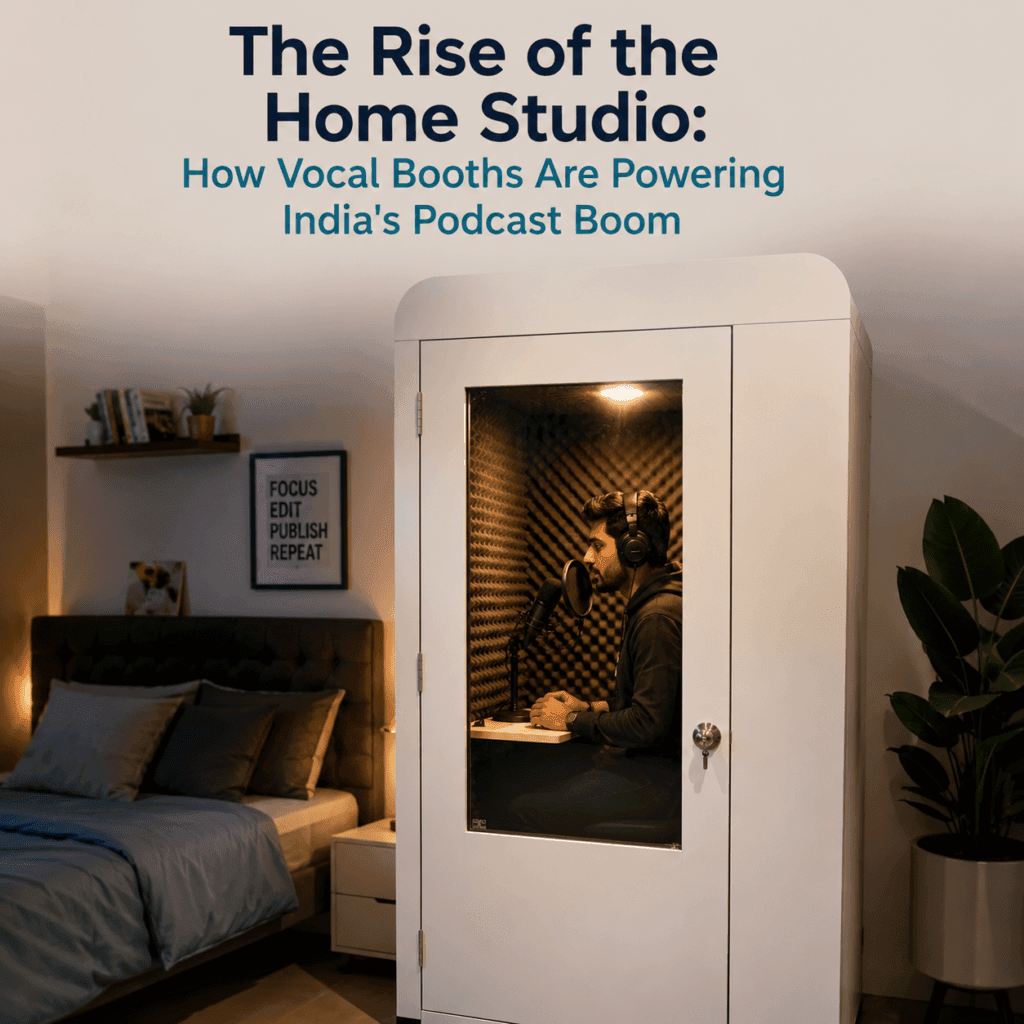
A few years ago, starting a podcast in India usually meant borrowing time in a rented studio, working around someone else’s schedule, and paying by the hour for a space that may or may not have had decent acoustics. Today, a growing number of podcasters, voice-over artists, and content creators are recording entirely from home and doing it at a quality level that would have required a professional studio not long ago. The single biggest reason for this shift isn’t a change in microphones or software. It’s the arrival of affordable, compact vocal booths that bring studio-grade acoustics into a bedroom, a spare corner, or even a small apartment.
Why Home Recording Used to Be So Hard
Anyone who has tried recording audio at home without proper treatment knows the problem immediately: rooms are not built for sound. Hard walls, bare floors, and large windows all reflect sound rather than absorbing it, creating echo and reverb that make even a decent microphone sound amateurish. On top of that, most homes are full of ambient noise traffic outside, an air conditioner humming, a neighbour’s television, a family member’s footsteps upstairs all of which a sensitive microphone picks up far more than the human ear notices in the moment.
This left creators with a narrow set of options: invest heavily in treating an entire room with foam panels and bass traps, rent studio time by the hour, or simply accept lower audio quality and hope listeners wouldn’t mind. None of these were great long-term solutions for someone recording regularly.
What Changed: Purpose-Built Portable Booths
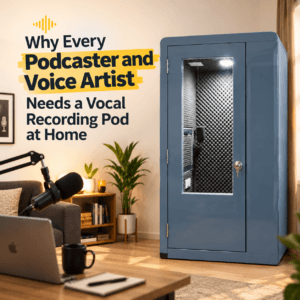
The alternative that’s changed the equation is the portable vocal booth a self-contained, acoustically treated enclosure that can be set up in an existing room without renovating it. Instead of treating an entire bedroom or living room, a creator treats a much smaller volume of space specifically designed for sound isolation, which is both cheaper and far more effective per square foot.
A few features make this approach work particularly well for podcasters and voice artists:
Acoustic foam interiors that actually do their job. Rather than generic foam stuck to a wall, a properly designed portable vocal booth uses foam specifically arranged to minimise reflections and capture clean, dry vocals the kind of sound that doesn’t need heavy post-production editing to sound professional.
No permanent installation required. Many portable sound booths are designed for quick setup with no tools or complex assembly, which matters enormously for renters, creators who move frequently, or anyone who doesn’t want to commit to permanently altering a room.
Genuine noise isolation, not just noise reduction. A soundproof vocal session booth is built to block external noise rather than simply dampen echo within the room meaning traffic, air conditioning, and household activity stay outside the recording.
Options built for singers, voice artists, and podcasters specifically. Products like the personal vocal booth for singers and voice artists are designed around the specific acoustic needs of vocal performance, rather than being a generic quiet box.
Why Podcasting Specifically Benefits
Podcasting has a particular set of demands that make a dedicated vocal booth especially valuable, more so than for some other kinds of recording.
1. Long Recording Sessions
A podcast episode often runs 30 to 90 minutes, sometimes longer with multiple guests. Unlike a quick voiceover, there’s no room for a stray noise to force a re-take halfway through every interruption means editing around it or, worse, re-recording an entire section. A properly isolated booth removes this risk almost entirely.
2. Consistency Across Episodes
Listeners notice inconsistency. If one episode sounds crisp and another has noticeable room echo because it was recorded in a different part of the house, it affects the show’s perceived quality. A dedicated vocal booth for home studios ensures every episode is recorded in the same acoustic environment, which keeps sound quality consistent from episode to episode.
3. Multiple Voices, One Setup
Many Indian podcasts feature co-hosts or recurring guests, often recording remotely and mixing tracks together in post-production. When each person records with the same level of acoustic isolation, mixing becomes far easier there’s no fighting to match the “roominess” of one track against the cleanliness of another.
4. Apartment Living Realities
A large share of India’s podcast creators record from apartments, where full-room acoustic treatment isn’t practical or even permitted by building rules. A soundproof vocal booth for apartments is specifically designed for this constraint — compact enough to fit in a bedroom or a spare corner, without any need for renovation or permanent fixtures.
Beyond Podcasting: Voiceover, Music, and Content Creation
While podcasting is a major driver of this trend, the same booths serve a much wider range of creators:
- Voiceover artists recording commercial, e-learning, or audiobook content benefit from the clean, echo-free capture a home vocal booth with acoustic panels provides, without the recurring cost of studio rental.
- Musicians tracking vocals or scratch takes at home get a controlled environment through a properly built portable vocal booth, useful for demoing ideas before a full studio session.
- YouTube creators recording voiceovers for videos often cite exactly this improvement — cleaner audio recorded in a small dedicated space rather than a noisy, echo-prone room.
- Corporate content teams producing internal training videos or narration increasingly use the same acoustics booth technology originally designed for office privacy, repurposed for clean audio capture.
Choosing the Right Booth for Your Setup
Not every creator needs the same size or type of booth, and picking the wrong one is a common early mistake. A few practical questions help narrow it down:
How much space is actually available? A creator working from a shared apartment bedroom has very different constraints than someone with a spare room to dedicate entirely to recording. For the former, a compact option built specifically for tight spaces, like the soundproof vocal booth for apartments, tends to be the more realistic starting point.
Is the booth staying put, or does it need to travel? Creators who record on location, at events, or in hotel rooms while travelling benefit more from something explicitly designed for portability, such as the ultimate portable sound booth for creators, rather than a bulkier fixed installation.
What’s actually being recorded? A singer or vocal performer has slightly different acoustic needs than someone reading audiobook narration or recording a two-person podcast conversation. Reviewing the personal vocal booth for singers and voice artists alongside more general options helps match the booth’s acoustic treatment to the specific type of content being produced.
How often will it actually be used? For occasional use, a lighter, faster-to-set-up option may be enough. For daily or near-daily recording, investing in a more permanent, higher-isolation setup tends to pay off faster, since the cost is spread across far more sessions.
The Economics of Owning vs. Renting Studio Time
For a creator recording occasionally, renting studio time by the hour might still make sense. But for anyone publishing regularly a weekly podcast, ongoing voiceover work, a steady stream of YouTube content the economics shift quickly in favour of owning a dedicated space. A booth purchased once continues to pay for itself with every session that would otherwise have required a studio booking, travel time, and working around someone else’s availability.
This is also where rental options for booths themselves become useful. Creators who want to test whether a home setup genuinely improves their output before committing to a purchase can explore rental terms, typically detailed on the FAQ page, before deciding whether to buy outright.
Setting Up Without a Renovation
One of the most appealing aspects of this approach is how little disruption it requires. Instead of a construction project, most portable booths follow the same kind of structured, fast installation process used for office pods meaning a creator can go from an empty corner to a fully functional recording space within a single day, without contractors, permits, or weeks of waiting.
For creators evaluating which model fits their space and budget, browsing the product-category listing for phone booths and vocal booths or the complete shop catalogue is a useful starting point. The gallery is also worth a look, since seeing real setups in actual homes and small apartments often makes it easier to picture how a booth would fit into a specific room.
A Trend That’s Bigger Than Podcasting
It’s worth zooming out slightly. The rise of the home vocal booth reflects a broader pattern that’s also playing out with work pods for home and general home office booths: people increasingly expect their homes to support professional-grade work, not just casual use. Whether it’s a remote employee taking confidential client calls or a podcaster recording a weekly episode, the underlying need is the same a small, acoustically controlled space that turns an ordinary room into something that performs like a dedicated studio or office.
This shift is happening across Indian cities of very different sizes, from creators setting up booths in major metros to those in smaller markets like Indore and other growing cities where studio rental options may be limited or expensive. Checking the locations page gives a sense of how widely this kind of setup has already spread.
Final Thought
India’s podcast boom didn’t happen because equipment got dramatically better overnight it happened because the barrier to recording professional-quality audio dropped low enough for far more people to clear it. A compact, well-designed vocal booth removes the single biggest obstacle home creators used to face: a room that fights against clean sound instead of supporting it.
For anyone recording regularly whether that’s a weekly podcast, ongoing voiceover work, or music demos the question isn’t really whether a dedicated recording space is worth it anymore. It’s simply a matter of finding the size and setup, whether that’s a full vocal booth or a smaller compact option, that fits the room already available. For questions on sizing or customisation, reaching out through the contact page is usually the fastest way to get a clear answer before deciding.
What used to require a rented studio, a scheduled slot, and a fair bit of travel time can now happen in a corner of a bedroom, whenever inspiration or a recording deadline strikes which, for a growing number of India’s podcasters and voice artists, has made the difference between recording consistently and recording occasionally.