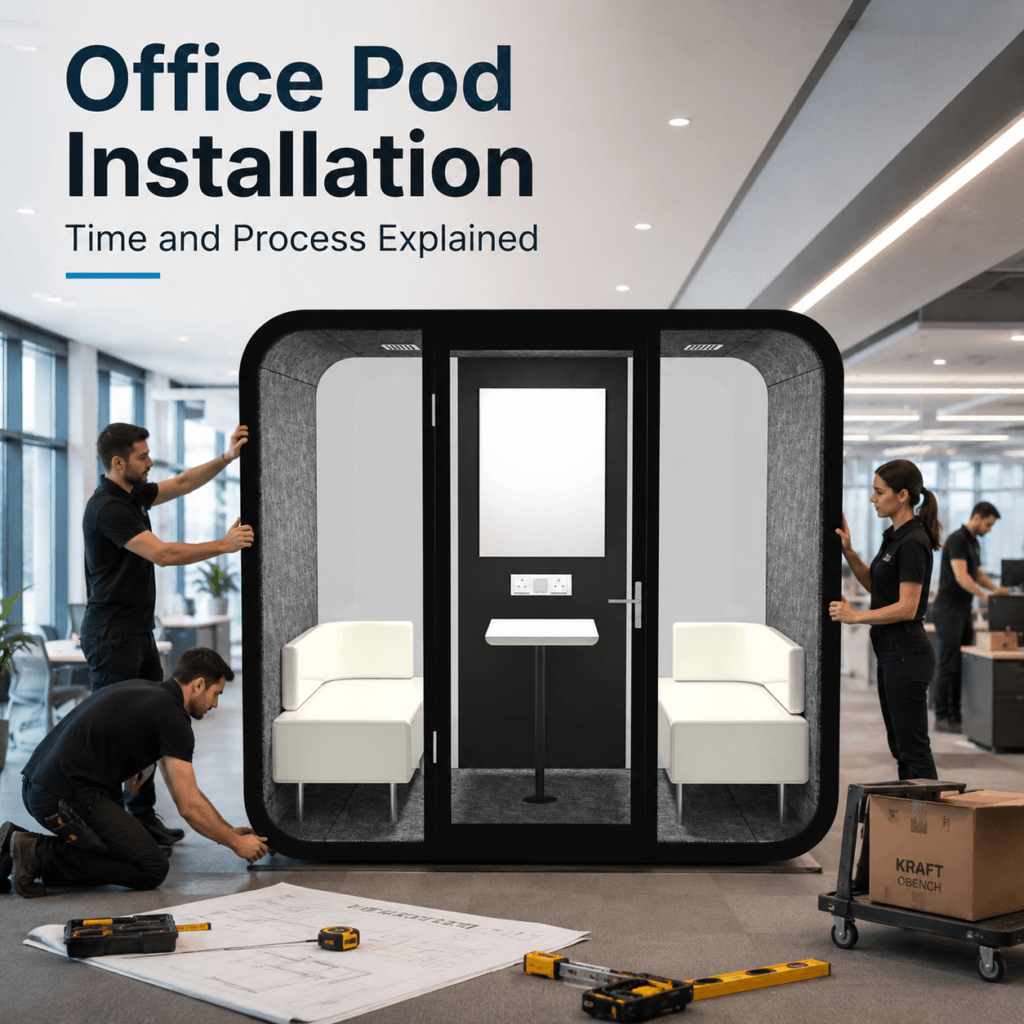
How Long Does It Take to Install an Office Pod?
One of the most common questions from first-time pod buyers is about installation: how long does it take, what does the process involve, and how disruptive will it be to ongoing office operations? These are entirely reasonable concerns for facilities managers and office operations teams responsible for minimising workplace disruption.
The short answer is that most single-person pods install in 4 to 6 hours and a 4-person Meeting Pod takes 6 to 10 hours. The process is clean, quiet, and minimally disruptive fundamentally different from any construction-based workspace improvement. This guide covers every phase of the Kraft-Obench installation process in detail. Explore our full range at Kraft-Obench to understand which model best fits your space before booking.
Phase 1: Pre-Installation Site Survey
Every Kraft-Obench installation begins with a pre-installation site survey conducted by one of our technical team members. This survey assesses floor space and confirms the pod footprint fits within the available zone. Ceiling height is measured and confirmed against the pod’s height specification. Power socket locations are identified and the cable routing plan is confirmed.
Freight elevator dimensions are measured to confirm that flat-pack panels can be transported to the installation floor. Building access protocols, contractor registration requirements, and any specific building management requirements are identified and addressed in advance of installation day. This survey applies to all models the Nano Pod, Phone Booth, Work Pod, Meeting Pod, and Vocal Pod.
Phase 2: Delivery and Unboxing (1–2 Hours)
Pods arrive on installation day in flat-pack panels, carefully protected in transit packaging. No individual panel exceeds 30kg, allowing two-person carrying without mechanical lifting equipment. For upper-floor installations in buildings without freight elevators common in older commercial properties in Delhi and Mumbai our team uses a panel-by-panel manual carry protocol that moves all components to the installation floor efficiently.
All panels are placed in sequence within the installation zone before assembly begins. Panel layout is confirmed against the installation plan, and any floor protection sheeting is placed before assembly tools and components are unpacked.
Phase 3: Frame Assembly (1–2 Hours)
The structural steel frame assembles using a quarter-turn locking cam system no drilling, welding, adhesives, or power tools required. Two technicians work simultaneously from opposite ends of the pod frame, meeting in the middle with precise alignment. The frame is self-squaring by design, eliminating the measurement and shimming work required in traditional construction.
This phase is identical in process and duration across all cities and building types whether our teams are working in Bangalore tech campuses, Hyderabad pharmaceutical offices, or Gurgaon financial services towers. The process is quiet enough that adjacent workstations can remain occupied throughout.
Phase 4: Panel Installation (1 – 2 Hours)
Acoustic panels click or bolt into the structural frame in a defined sequence. Electrical cables route through pre-designed channels built into the panel system no surface-mounted conduit or visible cable management required. The door frame, double-glazed glass panels, and ventilation grilles install last in this phase.
Each panel is checked for flush alignment and acoustic seal integrity as it is installed. The installation team works inward from the base panels upward, ensuring that each layer properly seats against the preceding one before proceeding. The acoustic performance of the completed pod is directly dependent on the quality of this sequential assembly process.
Phase 5: Electrical and Ventilation Connection (30 – 60 Minutes)
The pod’s internal power distribution unit connects to your building’s standard 15A electrical socket via a standard power cable identical to plugging in any office appliance. There is no electrical work required within the building’s fixed wiring. The ventilation system powers on automatically and is verified for airflow rate and noise level.
Smart lock or IoT booking systems are paired with the building’s WiFi network during this phase. Facilities teams in Chennai, Noida, and Pune handle the electrical handover as a standard part of the site manager’s installation checklist.
Phase 6: Testing and Handover (30 – 45 Minutes)
The final phase is a comprehensive functional test before handover to the client. Door seals are checked for full perimeter contact. Ventilation airflow is measured and confirmed. LED lighting is tested across all modes. All power and USB points are tested with live loads. An acoustic attenuation test using a calibrated sound level meter confirms that the pod meets its specified STC rating.
All test results are documented in a written handover report provided to the client at handover. This documentation is useful for workplace acoustic compliance audits and insurance purposes. View completed installations in our Gallery and client stories at our Clients page.
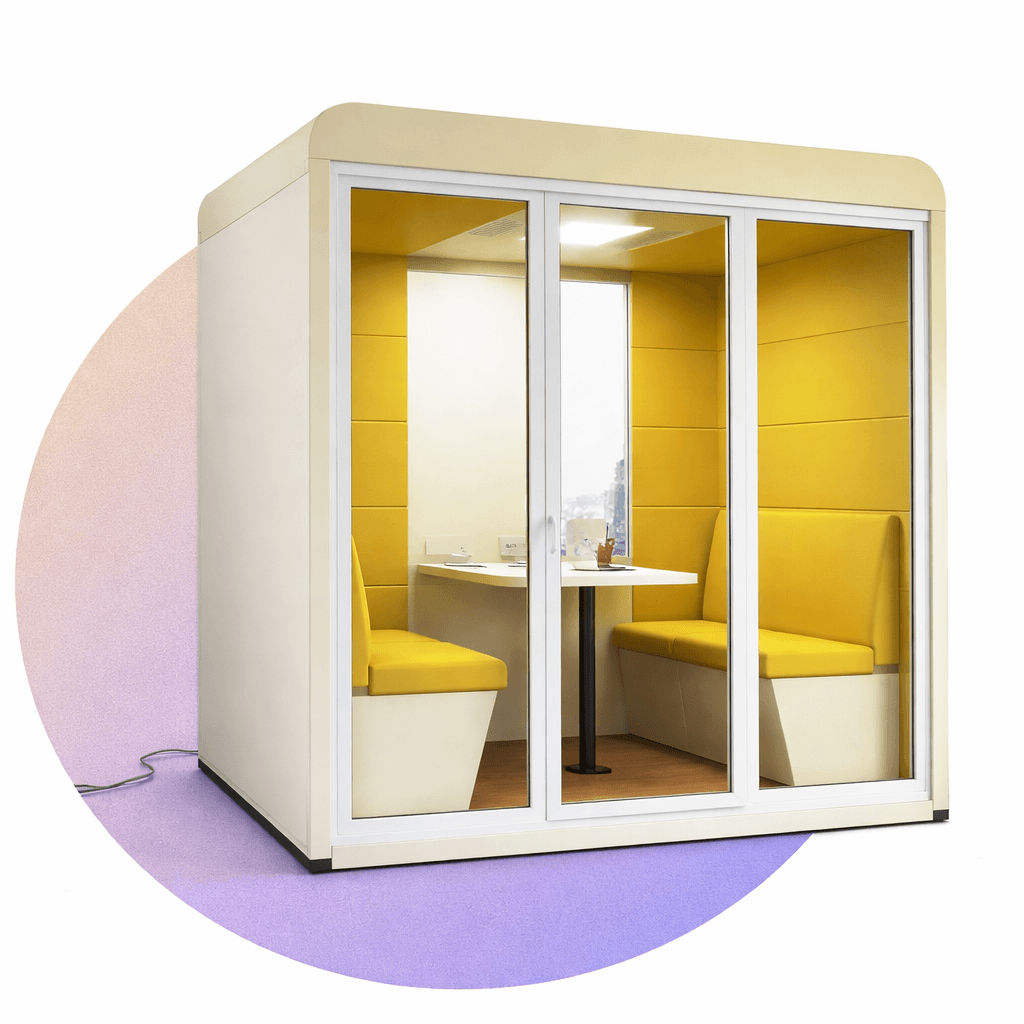
What to Prepare Before Installation Day
Ensuring a smooth, on-time installation requires a few simple preparations from your side. Clear the installation zone of all furniture, equipment, and obstructions. Book the freight elevator for the installation team’s exclusive use during the delivery and assembly window. Confirm that a 15A power socket is available within 3 metres of the installation position. Inform building management of contractor access and provide required documentation in advance.
For rental installations, all logistics including building management liaison are managed directly by Kraft-Obench see our Rentals page. To book your installation, contact us at our Contact page.
Frequently Asked Questions
Q1: Can installation happen on a weekend to avoid office disruption? Yes. Kraft-Obench offers weekend installation slots in all major cities. This is popular for corporate offices in Gurgaon and Noida where weekday installation is disruptive.
Q2: What tools are required for installation? Kraft-Obench installation teams bring all required tools. For standard models, only Allen keys and a torque wrench are required all provided by our crew.
Q3: Can I install a Kraft-Obench pod myself without the installation team? We do not recommend self-installation as it can compromise acoustic seal integrity and void the warranty.
Q4: What if my building does not allow external contractors? Kraft-Obench’s installation team can register as authorised service contractors with your building management. Contact our Contact page for contractor registration support.
Q5: How far in advance should I book an installation? For major cities including Delhi and Bangalore, installation slots are typically available within 5 to 7 business days. For Tier 2 cities, 7 to 14 days advance booking is recommended.
Q6: Can multiple pods be installed simultaneously to save time? Yes. For orders of 3 or more pods, multiple teams can work simultaneously, completing a 3-day sequential installation in a single day. This is popular for large fit-outs in Kolkata and Visakhapatnam.
Q7: Is a post-installation acoustic test always performed? Yes. An acoustic attenuation test is conducted at the end of every Kraft-Obench installation. Results are provided as a written report confirming STC compliance.