Uncategorized

Vocal Booth Benefits

Vocal Booth Benefits for Voiceover Artists India

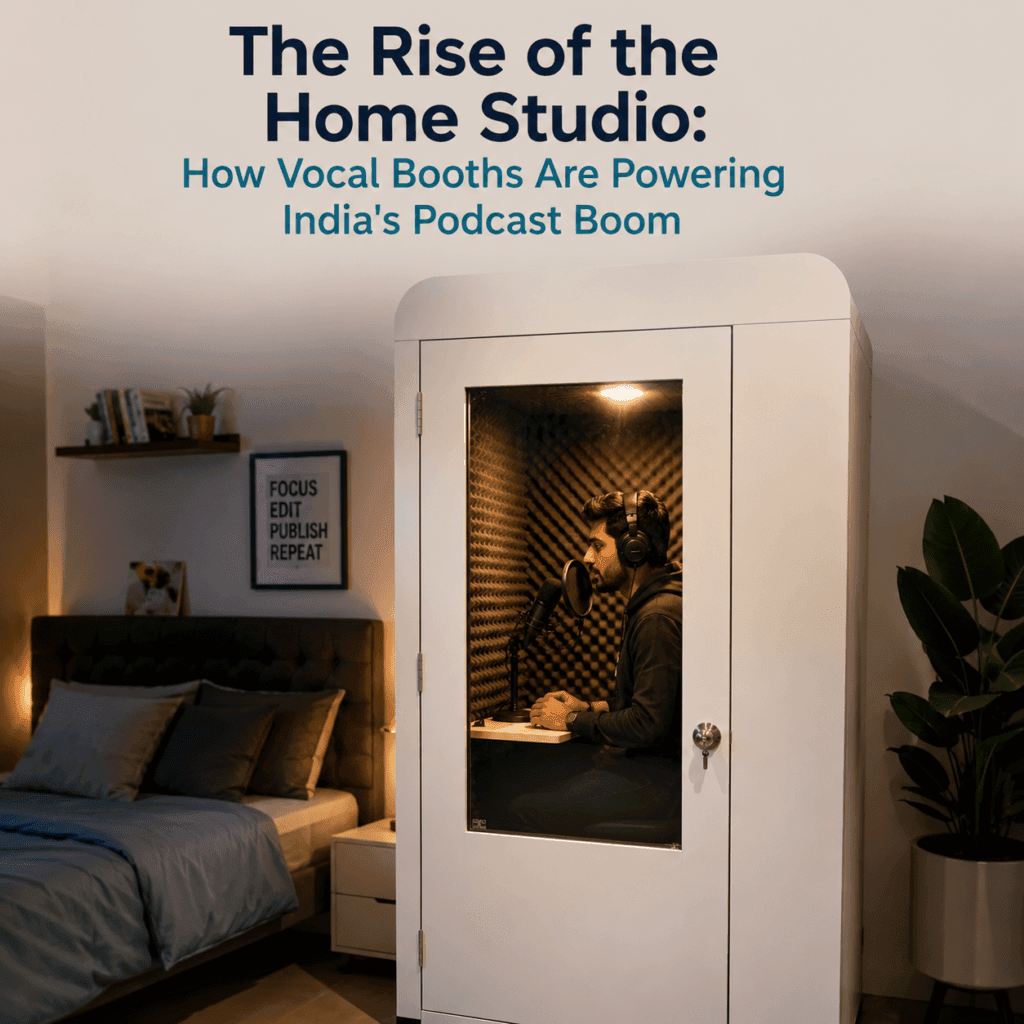
Vocal Booth Benefits for Voiceover Artists in India The Indian voiceover industry is growing fast. From OTT dubbing to e-learning narration, corporate videos to ad spots, the demand for professional voice talent in multiple Indian languages has never been higher. But for every talented voice artist losing work to competitors, the differentiator is rarely the voice itself it is the audio quality of the recording. A vocal booth is the single most impactful investment a voiceover artist can make. Here is why. The Noisy Reality of Recording Voiceovers in Indian Homes Ask any Indian VO artist about their recording setup and you will hear the same stories. The power cut at 2pm that fires up the generator and ruins three takes. The neighbour who starts drilling the moment you hit record. The dog that starts barking precisely during your most difficult line read. Indian urban environments are not quiet. Ambient noise levels in Delhi, Mumbai, Bangalore, and other cities regularly exceed 60 to 70 decibels well above the near-silent conditions required for professional voiceover recording. Most home studios without acoustic treatment add significant room reverb on top of that noise floor. The result is recordings that require extensive noise reduction processing processing that degrades audio quality and is immediately audible to professional clients. Many Indian VO artists are losing high-value work not because their voice or performance is inferior, but because their recording environment cannot compete with artists abroad or in dedicated studios. What Is a Vocal Booth and Do You Really Need One? A vocal booth is an acoustically treated enclosure designed to create a controlled, low-noise recording environment for the human voice. Unlike a general soundproofed room, a vocal booth is specifically optimised for voice with absorption tuned for the vocal frequency range, minimal internal reflections, and noise isolation that handles typical ambient noise sources. Modern purpose-built vocal booths like the Kraft-Obench Vocal Pod are freestanding, portable structures that you assemble inside your home. They include built-in acoustic treatment, a ventilation system, integrated lighting, and cable management for microphone and power everything a professional VO recording setup requires. Do you really need one? If you are doing voiceover work commercially for clients who are paying for professional output then yes. Absolutely. The question is not whether you need it, but how long you can afford to delay the investment while substandard audio limits your bookings. Benefit 1: Clean, Broadcast-Quality Audio Every Take A dedicated vocal booth eliminates the two main audio quality problems in Indian home recording: background noise and room reverb. Background noise traffic, neighbours, appliances, family is blocked by the booth’s acoustic shell before it reaches your microphone. A quality booth with an STC rating of 35 to 45 reduces typical urban ambient noise by enough to give you a clean, noise-free noise floor. Room reverb the echo of your voice bouncing off walls is eliminated by the booth’s internal acoustic treatment. Your voice is recorded direct and dry, giving clients and engineers a clean signal they can process exactly as the project requires. The result is audio that needs no noise reduction processing and minimal post-production intervention. It sounds natural, clear, and professional from the first take. Benefit 2: Win More Clients with Professional-Grade Demos Your demo reel is your most important business asset as a voiceover artist. It is the first and often only thing a potential client listens to before deciding whether to book you. A demo recorded in a proper vocal booth sounds fundamentally different from one recorded in an untreated room even to a non-professional listener. The clarity is immediate. The professional sound is evident. The confidence it gives the client that you can deliver consistent quality on real projects is worth more than any marketing. VO artists who upgrade to a dedicated booth consistently report an increase in booking rate from the same demo content because the audio quality itself becomes a selling point rather than a liability. On platforms like Fiverr, Voices.com, and Voice123, your audio quality is visible in your profile samples before a client even contacts you. A clean, professional booth recording stands out immediately in a crowded marketplace. Benefit 3: Fewer Retakes = More Projects Per Day Recording voiceover in an untreated or noisy environment is inefficient. You record a take, listen back, hear a truck passing in the background or a door slamming, and do it again. And again. A session that should take one hour stretches to three. You are exhausted. Your voice is fatigued. And you have still not achieved a clean recording. Inside a properly designed vocal booth, the environmental variables that force retakes disappear. You record the content, review it for performance, and move on. Sessions run to time. You can take more projects in the same day, deliver faster, and receive better reviews for professionalism and turnaround speed. For freelance VO artists, throughput is directly linked to income. A vocal booth is not just an acoustic tool it is an earnings multiplier. Benefit 4: Record Anytime – Even During Busy Hours One of the most significant practical benefits of a good vocal booth is temporal freedom. Without a booth, recording is dictated by the noise schedule around you. Early morning before the neighbourhood wakes up. Late at night after traffic dies down. Between the domestic help arriving and leaving. These windows are narrow, unpredictable, and incompatible with professional client deadlines. Inside a well-isolated vocal booth, you can record at 2pm on a Saturday when the building society is having its quarterly meeting outside. You can record with the kitchen running and the TV on in the next room. The booth handles the isolation. This transforms your ability to manage client deadlines, take urgent work, and maintain a professional recording schedule regardless of what is happening around you. It is a fundamental change in how you work. Best Vocal Booths for Indian VO Artists: Budget to Premium Entry level – Reflection filter setup (₹8,000 to ₹20,000): A desktop reflection filter

Vocal Booth Benefits for Voiceover Artists India Read More »

Acoustic Treatment for Home Studio in India

Acoustic Treatment for Home Studio India Complete Guide

Acoustic Treatment for Your Home Studio in India: A Complete Guide You spent months choosing the right microphone, audio interface, and studio monitors. You have set everything up and your recordings still sound like they were made in a bathroom. This is the most common and most frustrating home studio problem in India, and the cause is almost always the same: untreated room acoustics. This guide explains exactly what acoustic treatment is, why Indian rooms need it urgently, and how to treat your space step by step from free changes to professional solutions. Why Acoustic Treatment Matters More Than Expensive Equipment Here is a truth that most gear-focused musicians learn the hard way: a ₹5,000 microphone recorded in a well-treated room will sound better than a ₹50,000 microphone recorded in an untreated room. Equipment captures what the room gives it. If your room is full of flutter echo, bass buildup in the corners, and harsh high-frequency reflections, your expensive microphone will capture all of that perfectly. No amount of EQ or processing in a DAW fully removes room sound once it is baked into a recording. Acoustic treatment changes what the room gives the microphone in the first place. It is the foundation that everything else sits on. Understanding Sound: Reflection, Absorption, and Diffusion Before treating a room, you need to understand what you are dealing with. Reflection happens when sound waves hit a hard surface a wall, floor, or ceiling and bounce back. In an untreated room, reflections from multiple surfaces arrive at your microphone milliseconds after your direct voice, creating echo and a smeared, unclear sound. Absorption is the process of converting sound energy into heat by forcing sound waves through porous material. Acoustic foam, mineral wool, and thick fabric all absorb sound to varying degrees. Heavy materials absorb low frequencies. Lighter materials absorb mid and high frequencies. Diffusion scatters sound waves in multiple directions rather than reflecting them back directly. Diffusers break up standing waves and flutter echo without deadening the room — they make the acoustic environment feel natural and alive rather than flat and dead. A well-treated room uses all three. Absorption at first reflection points. Bass traps in corners. Diffusion on rear walls. The Three Pillars of Acoustic Treatment Every home studio treatment plan is built on three elements: Bass traps address low-frequency buildup. In any rectangular room, low frequencies accumulate in corners and create resonant peaks that make bass sound uneven and muddy. Bass traps are thick, dense absorptive panels placed in corners floor to ceiling if possible. Absorption panels address mid and high-frequency reflections. These are the panels you see on walls in recording studios fabric-wrapped frames filled with mineral wool or open-cell foam. They are placed at the primary reflection points: the side walls adjacent to the listening position, the ceiling above, and the wall behind you. Diffusers go on the rear wall behind the listening position. They scatter remaining reflections rather than absorbing them, preserving some of the room’s natural energy and preventing the over-damped, airless sound that too much absorption creates. Bass Traps: Where to Place Them in Indian Rooms Indian rooms particularly tiled apartments have significant bass buildup problems. Hard, reflective surfaces on all sides, combined with room dimensions that create resonant frequencies, make bass management essential. Place your first bass traps in the four vertical corners of the room, from floor to ceiling if budget allows. These corner positions are where bass energy is highest filling them with thick absorptive material makes the biggest acoustic improvement per rupee spent. Second priority: the two horizontal corners where the ceiling meets the front wall and the ceiling meets the rear wall. These are also high-energy zones for low frequencies. For DIY bass traps in India, 100mm to 150mm thick rockwool (Saint-Gobain ISOVER is widely available) wrapped in acoustically transparent fabric is highly effective. A single 600 x 1200mm panel of 150mm rockwool, floor mounted in a corner, costs approximately ₹1,500 to ₹3,000 in materials. Acoustic Panels: DIY vs Ready-Made Options in India DIY panels are the most cost-effective option if you are comfortable with basic woodworking. You build a timber frame, fill it with rockwool or high-density acoustic foam, wrap it in fabric, and mount it on the wall. A 600 x 900mm DIY panel costs approximately ₹2,000 to ₹5,000 in materials. With ten to twelve panels for a modest room, total cost is ₹20,000 to ₹60,000. Ready-made acoustic panels from Indian suppliers save time and look more professional. They are available from acoustic treatment specialists in Delhi, Mumbai, and Bangalore, as well as online. Prices range from ₹3,000 to ₹10,000 per panel depending on size and quality. Acoustic pods as an alternative: If treating an entire room is not practical because you rent, share the space, or cannot commit to permanent wall fixings a dedicated acoustic pod like the Kraft-Obench Vocal Pod is a complete pre-treated acoustic environment in a single product. It is particularly practical for Indian homes where room treatment options are limited. Diffusers for a Natural-Sounding Room Diffusers are often neglected in Indian home studios because they are less intuitive than absorption panels you cannot easily hear the difference on a basic level. But without diffusion, a heavily absorbed room sounds unnaturally dead and fatiguing to work in for long sessions. The most common diffuser type for home studios is the quadratic residue diffuser (QRD) a panel with wells of varying depths that scatter sound at different frequencies. Wooden QRD diffusers are available from Indian acoustic suppliers, or can be built from timber with basic carpentry skills. Place diffusers on the rear wall of your studio, opposite the monitoring position. Ceiling cloud diffusers are also effective in rooms with parallel floor-ceiling reflections. Best Budget Acoustic Treatment Materials Available in India Saint-Gobain ISOVER glass wool / rockwool slabs: Available at building material suppliers across India. 75mm to 100mm thickness for panels, 150mm for bass traps. Excellent acoustic performance at low cost. Acoustic foam tiles: Available

Acoustic Treatment for Home Studio India Complete Guide Read More »

Portable vocal booth

Portable Vocal Booth vs Soundproof Room for Singers India

Portable Vocal Booth vs Soundproof Room for Singers in India: Which Is Right for You? Every Indian singer recording at home faces this decision eventually. Your current setup has too much room noise, too much reverb, or too much neighbourhood chaos leaking into your takes. You need a proper acoustic recording solution. But which one? A portable vocal booth or a fully soundproofed room? Both solve the problem but they do it differently, at different costs, and with very different implications for your living situation. This guide breaks it down completely. The Home Recording Dilemma Every Indian Singer Faces Recording vocals at home in India presents challenges that singers in quieter countries simply do not deal with at the same intensity. Urban noise traffic, construction, honking, generator hum is constant and unpredictable. Family environments mean someone is always moving, cooking, or speaking. The gaps of silence you need for clean takes are rare. Even when you get silence, most Indian rooms have hard walls, tiled floors, and minimal soft furnishings all of which create harsh reflections that make vocals sound amateur regardless of how good your microphone is. The solution is either to treat the whole room or to create a treated environment within the room. These are fundamentally different approaches. What Is a Portable Vocal Booth? How It Works A portable vocal booth is a freestanding acoustic enclosure typically lined with high-density acoustic foam — that you stand or sit inside while recording. It blocks a significant portion of external noise from reaching the microphone and absorbs internal reflections so your voice sounds direct and controlled. The best portable vocal booths for professional use in India are full-body enclosures rather than the small desktop shields you see at entry price points. A standing or seated full-body booth like the Kraft-Obench Vocal Pod creates a genuinely professional recording environment with ventilation, cable management, and acoustic performance that rivals a treated room. Portable booths can be assembled and disassembled. They do not require any modification to your home. They can be moved between rooms or properties. What Does a Proper Soundproof Room Require? A properly soundproofed room is a construction project. It involves adding mass to walls often a second layer of drywall with damping compound sealing all gaps and penetrations, decoupling the room’s structural elements to prevent vibration transfer, and adding acoustic treatment to all interior surfaces. In India, a professional soundproof room build typically costs ₹5,00,000 to ₹20,00,000 or more depending on the room size, the degree of isolation required, and the quality of finish. It takes several weeks to build, requires professional contractors with acoustic construction experience, and permanently modifies the property. For renters which is the majority of urban Indian singers a proper soundproof room is simply not an option. Even owners must weigh the cost, the permanence, and whether they want a significant portion of their home given over permanently to a recording space. Sound Quality Comparison: Booth vs Room Honestly a properly built soundproof room with full acoustic treatment will outperform any portable booth on both isolation and internal acoustics. This is simply the physics of construction mass versus portable panels. However, the gap in real-world performance is smaller than you might expect. A quality portable vocal booth like the Kraft-Obench Vocal Pod achieves STC ratings that block the majority of ambient urban noise. The internal acoustic treatment in a quality pod delivers NRC performance comparable to a professionally treated room. For most vocal recording singles, album tracks, voiceovers, demo reels a top-tier portable booth is indistinguishable from a treated room in the final mix. Where a room outperforms a booth is at the extremes: very low frequencies (bass and room modes), very high isolation requirements (recording next to a busy road with heavy construction), and recording full ensembles or instruments. For solo vocals and voice, the booth closes the gap significantly. Cost Breakdown for Indian Musicians Portable vocal booth (professional grade): Kraft-Obench Vocal Pod approximately ₹1,00,000 to ₹2,50,000 depending on specification. Includes delivery and assembly. No additional construction cost. Fully reversible can be sold or moved. DIY soundproof room (basic): Additional drywall layer, Green Glue damping compound, acoustic panels for interior, and professional labour ₹3,00,000 to ₹6,00,000 for a small room. Permanent modification. No resale value of the construction. Professional soundproof room: ₹8,00,000 to ₹20,00,000 for serious isolation with proper acoustic treatment. Professional-grade result but a major capital commitment. For the vast majority of Indian singers, the portable booth delivers 80 to 90% of the acoustic performance at 20 to 30% of the cost. Space and Portability: A Major Factor in Indian Homes Indian homes particularly rental apartments in metro cities are not large. Dedicating an entire room to a soundproof recording space is a luxury very few can afford. A portable vocal booth occupies the footprint of a wardrobe. When you are not recording, it is simply a piece of furniture. If you move which renters in Indian cities do frequently it comes with you. You are not starting over with your acoustic environment every time you change address. A soundproofed room stays behind when you move. All the investment stays in the walls of a property you no longer live in. Our Recommendation: Independent Artists vs Professionals For independent artists, home studio creators, voiceover artists, and musicians at any level below a full professional recording contract a portable acoustic vocal booth is the right choice. The cost is manageable, the performance is professional, and the flexibility is essential for India’s mobile urban lifestyle. For professional recording studios, film score composers, or artists for whom absolute sonic perfection is a commercial requirement a properly built soundproof room is the long-term investment that makes sense. But this is a very small minority of India’s recording community. Professional recording quality without construction. See the Kraft-Obench Vocal Pod India’s leading portable vocal booth.

Portable Vocal Booth vs Soundproof Room for Singers India Read More »

How to Choose an Office Pod for Home India

How to Choose the Right Office Pod for Your Home in India The Indian market for home office pods has grown rapidly. Where two years ago there were almost no options, today there are pods at multiple price points, sizes, and specifications and choosing the wrong one is an expensive mistake. This guide walks you through the five decisions that matter most, so you buy the right pod the first time. Why More Indians Are Buying Home Office Pods in 2026 Hybrid and remote work is now the permanent reality for a large portion of India’s professional workforce. IT professionals, consultants, lawyers, designers, educators, and coaches are all spending significant portions of their working week at home and discovering that Indian homes were never designed for this. The problems are structural. Apartments in Indian cities are dense, noisy, and shared. The work-from-home professional is competing with family noise, construction, traffic, and neighbours. Standard acoustic fixes headphones, closed doors, Do Not Disturb signs work for a while, but they are not sustainable for someone whose livelihood depends on concentration and clear communication. Office pods solve this at the source. Instead of trying to control an entire home environment, you create a controlled private space inside it. Demand has surged across Delhi, Mumbai, Bangalore, Hyderabad, and Pune and is growing in Tier 2 cities as well. Step 1: Measure Your Available Space This is where most people make their first mistake. They find a pod they like online, order it, and then discover it does not fit through their door, cannot fit in the room they planned, or requires ceiling clearance they do not have. Before you look at any pod specifications, measure the following: The floor area where you plan to place the pod in square feet. Account for the pod footprint plus at least 60cm clearance on at least two sides for comfortable entry and exit. The ceiling height of that room. Most pods require a ceiling of at least 230 to 240cm. If you have a low-ceiling room or a mezzanine setup, confirm dimensions before ordering. The width of your main door, staircase, and any corridors the pod components will need to pass through during delivery. Pod components come in flat-pack sections, but the largest panel sections can be 120cm wide. The Kraft-Obench Nano Pod is the most compact option for tight spaces, while the Work Pod suits larger rooms with more space to work with. Step 2: Understand Soundproofing Ratings (NRC vs STC Explained) Pods use two key acoustic measurements. Understanding them prevents you from buying based on marketing language rather than actual performance. STC (Sound Transmission Class) measures how much airborne sound is blocked from passing through the pod walls. A standard interior wall has an STC of around 33 to 40. A quality acoustic pod should achieve STC 30 to 45. The higher the STC, the less outside noise reaches you inside the pod. NRC (Noise Reduction Coefficient) measures how much sound is absorbed by the internal surfaces rather than reflected. A value of 0 means total reflection, 1.0 means total absorption. For recording and call quality, you want NRC as close to 1.0 as possible inside the pod. When comparing pods, ask manufacturers for both figures. Vague language like “highly soundproofed” without numbers is a warning sign. Step 3: Check Ventilation and Comfort Features A poorly ventilated pod becomes uncomfortable within twenty minutes, especially in Indian summer conditions where ambient temperatures can exceed 35°C. Look for a built-in ventilation system with at least two air exchange points ideally an inlet and an exhaust fan. The fan should have a noise rating below 35 decibels so it does not appear as background hum in your recordings or calls. Check whether the pod has interior lighting. Working in a dim pod strains your eyes quickly. LED panel lighting at the right colour temperature (4000K to 5000K for focused work) makes a significant difference to comfort over a long day. Check the floor. A padded or raised floor is more comfortable for long sitting sessions than a bare wooden panel. Kraft-Obench pods include ventilation, integrated lighting, and thoughtfully designed interiors these are not afterthoughts in their design. Step 4: Compare Assembly Requirements Some pods require two to four people to assemble and take a full day. Others are designed for one to two people and assemble in two to three hours. Before purchasing, ask the manufacturer for a realistic assembly time estimate and whether they provide installation support. Confirm whether you need any tools beyond what is provided in the kit. Most quality pods include all required hardware and provide clear instruction manuals or video guides. Ask whether the pod can be disassembled and reassembled if you move. Portability is one of the key advantages of pods over construction but only if the pod is genuinely designed to be moved. Step 5: Set a Realistic Budget Home office pods in India range from approximately ₹80,000 for a compact phone booth style pod to ₹3,00,000 or more for a full-size work pod with premium finishes. Do not fall into the trap of buying the cheapest option available. Very low-cost pods often cut corners on acoustic lining density, ventilation quality, and structural rigidity which means they do not deliver the acoustic performance you are paying for. Set your budget based on how much of your working day you will spend inside the pod. If it is more than four hours per day, invest in a quality pod with proper ventilation and comfort features. If you are using it primarily for calls two to three per day a more compact option may be sufficient. Top Questions to Ask Before You Buy What is the STC and NRC rating of this pod? Any reputable manufacturer should be able to provide both figures. STC measures how much external noise is blocked, while NRC measures how much sound is absorbed inside the pod. For home office use, look for STC ratings between 30–45

How to Choose an Office Pod for Home India Read More »

Soundproof Your Home Office for Zoom Calls

How to Soundproof Your Home Office for Zoom Calls in India

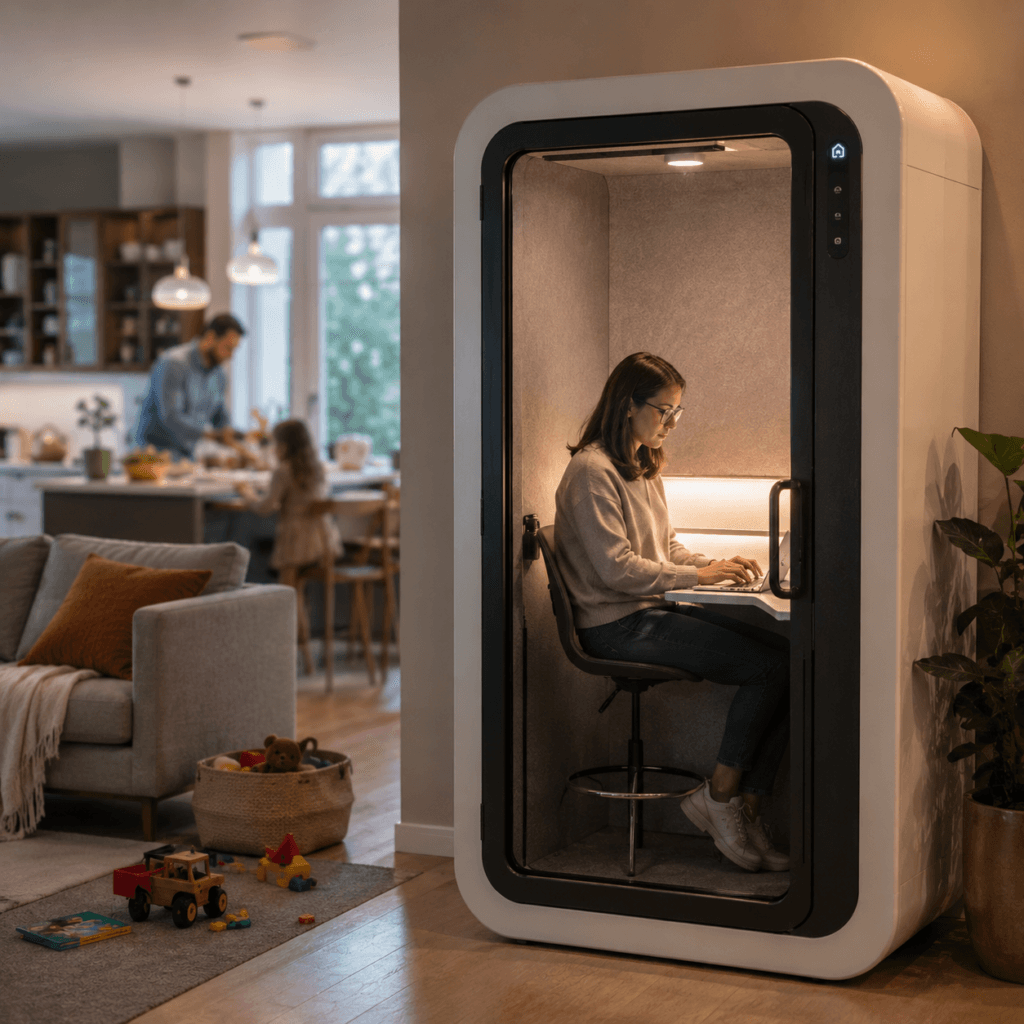
How to Soundproof Your Home Office for Zoom Calls in India You are mid-presentation, your client is listening, and suddenly a pressure cooker whistles, a neighbour blasts music, or a family member walks in. Sound familiar? For millions of work-from-home professionals in India, noise is the number one enemy of productive Zoom calls. The good news: you do not need to gut your flat or spend lakhs on construction. With the right soundproofing strategy or a purpose-built acoustic pod you can sound like you are sitting in a professional studio, even from a 1BHK in Mumbai or a noisy colony in Delhi. This guide covers everything from free DIY tricks to the most effective long-term solution: an acoustic office pod. Why Noise Ruins Your Zoom Calls (And Your Professional Image) Sound quality on video calls is not just a comfort issue it is a professional one. Research consistently shows that people judge the competence of a speaker based on audio clarity. If your audio crackles, echoes, or picks up background sounds, clients and colleagues mentally downgrade your credibility. In India, home soundproofing is especially challenging because of: High ambient noise from traffic, construction, and neighbours Thin walls in apartments and builder floors Shared living spaces with family members and domestic help Hard floors and bare walls that reflect sound and cause echo The two problems you need to solve are different. Soundproofing stops outside noise from entering. Acoustic treatment stops your voice from bouncing around inside the room and causing echo. Most people need a combination of both. DIY Soundproofing Techniques for Indian Homes Before investing in a product, try these no-cost and low-cost fixes: Use heavy curtains. Thick curtains on windows block a surprising amount of street noise. Velvet or blackout curtains work best. Double-layer them for more effect. Add a bookshelf. A bookshelf filled with books on a shared wall absorbs and breaks up sound. It is one of the easiest passive soundproofing tricks available. Put rugs on the floor. Hard floors reflect sound and add echo to your voice. A thick rug under your desk area reduces this significantly. Seal door gaps. Use adhesive foam tape or a door sweep to seal the gap under your door. A large percentage of noise enters through these gaps. Record in a closet temporarily. Clothes absorb sound brilliantly. Many podcasters and voice artists record inside wardrobes when they need a quick fix. It is not glamorous, but it works. Rearrange furniture. Position your desk against the wall that has the least noise coming through it. If your neighbour is on the left, sit facing right. These methods help but have real limits. For professionals who are on calls all day, they are not enough. Acoustic Panels vs Office Pods: Which Works Better? Once you have exhausted the free fixes, you have two main options: acoustic panels or an office pod. Acoustic panels are foam or fabric-wrapped boards that you mount on walls. They absorb sound reflections and reduce echo inside your room. They are affordable a basic set costs ₹3,000 to ₹12,000 and they make a noticeable difference to your voice quality on calls. However, they do nothing to block outside noise from entering your room. Acoustic office pods are self-contained structures that you assemble inside your home. They solve both problems at once: they block external noise from entering, and they control the acoustics inside. You step in, close the door, and you are in a completely different sonic environment. Products like the Kraft-Obench Work Pod and Nano Pod are designed exactly for this use case. If you are on calls for more than two to three hours a day, or if your home noise situation is severe, an acoustic pod gives you results that panels simply cannot match. Top Soundproofing Materials Available in India If you are going the DIY route, here are the materials to look for: Acoustic foam panels are widely available on Amazon India and local hardware stores. Look for wedge-cut or pyramid-cut foam with a thickness of at least 50mm for meaningful absorption. Mass Loaded Vinyl (MLV) is a dense, flexible material you can attach to walls, doors, or ceilings. It blocks sound transmission rather than just absorbing it. Less common in India but available through specialty acoustic suppliers in Delhi, Mumbai, and Bangalore. Green Glue is a damping compound applied between two layers of drywall. It converts sound energy into heat. Excellent for renovations but impractical for renters. Mineral wool or rockwool is used inside wall cavities and DIY acoustic panels. Brands like Saint-Gobain ISOVER are available in India and work very well. Weatherstripping foam tape costs under ₹200 and is one of the highest-return investments for reducing noise through gaps around doors and windows. When to Invest in a Dedicated Acoustic Office Pod You should seriously consider an acoustic office pod if any of these apply to you: You work from home full time and your income depends on call quality. You are a freelancer, consultant, coach, or online teacher whose clients judge you on professionalism. You live in a loud urban area with no quiet room available. You share your home with family and cannot ask everyone to be quiet during your calls. You record audio or video content and need consistent, clean sound. An office pod is not a luxury for these situations it is a productivity and income tool. The Kraft-Obench Work Pod is designed specifically for Indian home office setups, with thoughtful ventilation, cable management, and assembly that does not require tools or drilling. Budget Breakdown: Soundproofing for Every Price Range Under ₹5,000 Quick Fixes: Heavy curtains, door gap seals, a desk rug, and repositioning furniture. This reduces echo and blocks some external noise. Good enough for occasional calls. ₹5,000 to ₹20,000 DIY Acoustic Treatment: A set of acoustic foam panels for your wall and ceiling above your desk, a microphone arm, and a dynamic microphone that rejects background noise. Voice quality improves noticeably. ₹20,000 to ₹60,000

How to Soundproof Your Home Office for Zoom Calls in India Read More »

acoustic meeting pod

Acoustic Meeting Pod Benefits for Startups India

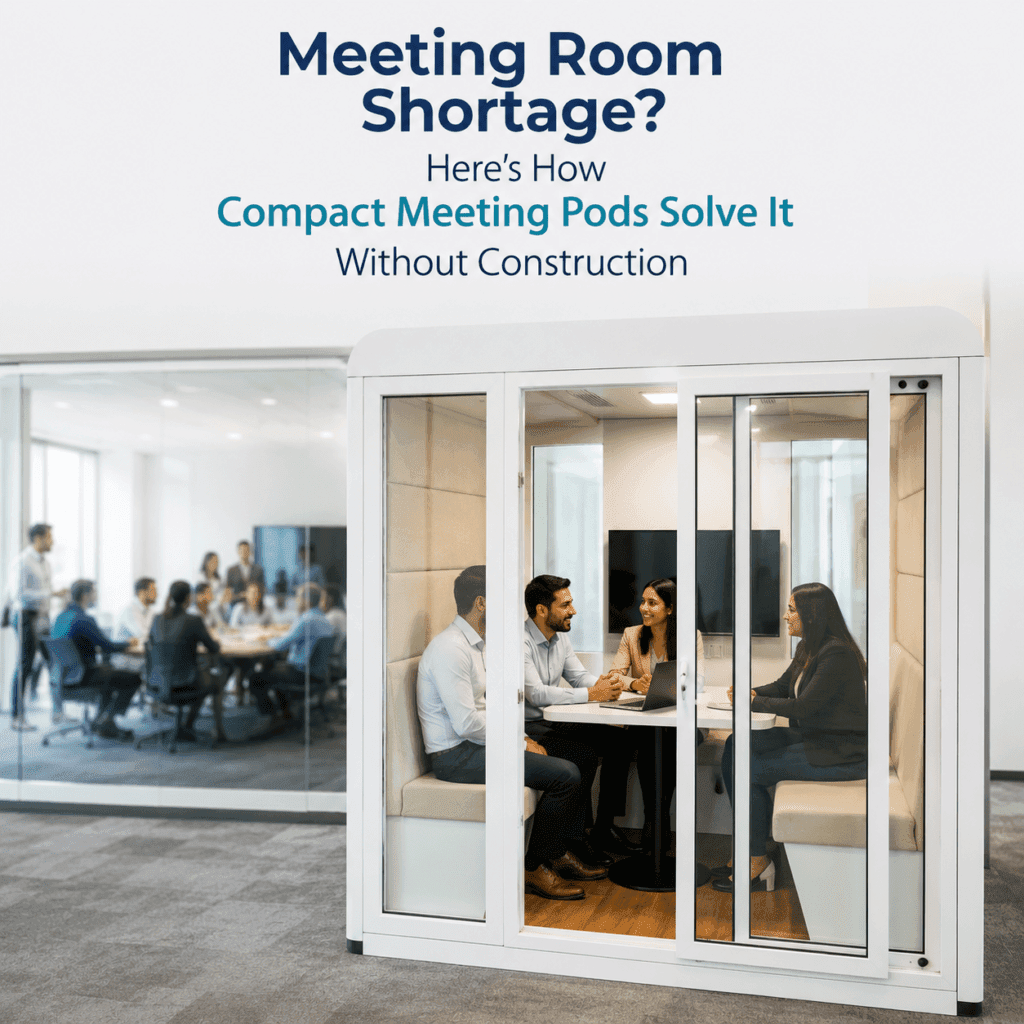
Acoustic Meeting Pod Benefits for Startups in India Indian startups face a unique office challenge. You need to look and operate professionally from day one, but you are working with limited capital, uncertain headcount projections, and often a co-working or short-lease office setup. Building out traditional meeting rooms makes zero financial sense. Acoustic meeting pods are the solution the Indian startup ecosystem has been waiting for. Here is why. The Problem With Traditional Office Space for Indian Startups Startups in India overwhelmingly operate from co-working spaces, managed offices, or short-term leases in their early years. These environments offer flexibility but they come with a shared, open, noisy environment where finding genuine privacy for a client call, an investor meeting, or a sensitive HR conversation is nearly impossible. The phone booths in most co-working spaces are booked solid. The glass meeting rooms are visible to everyone. Conversations spill. Confidentiality is compromised. At the same time, startups cannot afford to build. Fit-out costs of ₹4 to ₹12 lakh for a meeting room in a space you might vacate in 12 months makes no financial sense. Even if the landlord allows construction, the deposit and fitout investment is capital that should be going toward product and growth. What Is an Acoustic Meeting Pod? An acoustic meeting pod is a freestanding, self-contained meeting enclosure that you place within any office or workspace. It does not require construction, drilling, or structural modification. It arrives flat-packed, assembles in a few hours, and delivers professional-grade acoustic privacy from the moment the door closes. Inside, a quality pod has comfortable seating, integrated lighting, power points, and a ventilation system. It looks and feels like a real meeting room but it goes up in hours and can be moved or reconfigured as your team changes. Kraft-Obench Meeting Pods are used by startups across Bangalore, Delhi, Mumbai, and Hyderabad who need private meeting infrastructure without the cost and permanence of construction. Benefit 1: Flexible, Scalable Private Meeting Space A startup’s space needs change constantly. At ten people you need one private meeting space. At thirty people you need three. At sixty you need a mix of small call booths and larger meeting pods. With constructed rooms, scaling up means construction delays and capital expenditure every time. With pods, you order additional units as needed. They arrive in days, not months. Your private meeting capacity scales with your headcount without any additional architectural work. If your team downsizes as happens frequently in startups navigating market realities pods can be reconfigured, sold, or relocated rather than left as costly built-in assets in an office you no longer need. Benefit 2: Fraction of the Cost of a Conference Room A four-person acoustic meeting pod from Kraft-Obench costs a fraction of what it takes to build an equivalent meeting room. With pods, there are no civil works, no electrical spur installation, no HVAC modifications, and no interior design fees. The pod arrives with everything included. For a seed-stage startup managing runway carefully, the capital efficiency of pods versus construction is significant. The money saved on meeting room construction is capital that stays available for hiring, product development, or marketing. Benefit 3: Faster Setup – No Construction Required Speed matters enormously in a startup. When you sign a new office lease, you want to be operational immediately not waiting six weeks for contractors to finish building meeting rooms. A Kraft-Obench meeting pod is assembled and operational within a few hours of delivery. Your team can be taking client meetings inside it on the same day it arrives. This is not a small advantage in high-growth phases, six weeks of lost operational time has a genuine cost. When you move offices, the pods move with you. Disassemble, transport, reassemble. Your private meeting infrastructure travels with your team. Benefit 4: Boosts Collaboration and Confidential Discussions Open-plan startup offices are energetic and social which is valuable but they make candid, confidential conversation nearly impossible. Salary discussions, performance conversations, investor calls, legal matters, and strategic planning all require genuine privacy. When teams lack private space, these conversations either get postponed, happen inappropriately in the open, or require leaving the office entirely going to a café or finding a hotel lobby. All of these options are inefficient and unprofessional. An acoustic meeting pod inside your own office means these conversations happen immediately, confidentially, and comfortably. Teams make better decisions faster when they have space to think and speak freely. Which Indian Startups Are Already Using Meeting Pods? Acoustic meeting pods are now present in offices across India’s startup ecosystem from early-stage seed-funded companies to Series B and beyond. They appear in co-working residencies in Koramangala and HSR Layout in Bangalore, in managed offices in Cyber City Gurgaon, and in the startup hubs of Powai and BKC in Mumbai. The adoption pattern is consistent: a founding team discovers pods as an alternative to construction, experiences the productivity and privacy benefit, and typically orders additional units as headcount grows. The portability advantage becomes particularly clear the first time a startup moves offices and takes its pods with it. Scale your meeting space without construction costs. Get a Quote – Kraft-Obench Meeting Pods.

Acoustic Meeting Pod Benefits for Startups India Read More »

office pod

Office Pod Installation Guide for Small Apartments India

How to Install an Office Pod in a Small Indian Apartment: Step-by-Step Guide India’s urban apartments are not known for generous proportions. A 2BHK in Mumbai or Gurgaon often means 850 square feet shared between two or three people. Yet thousands of WFH professionals in exactly these conditions are successfully installing acoustic office pods because modern pods are designed to fit. This guide covers exactly how to make it work. Can You Really Fit an Office Pod in a Small Apartment? Yes with the right pod and the right planning. The most compact pods, like the Kraft-Obench Nano Pod, have a footprint of approximately 120 x 120cm roughly the size of a large wardrobe. If your room can fit a double bed, it can almost certainly fit a compact pod with room to spare. The key is not just the floor space the pod occupies it is the total space including the clearance you need to comfortably enter and exit, open the door fully, and run cables. Plan for at least 60 to 80cm clearance in front of the door and 30cm on the remaining sides. What small apartment dwellers often discover is that placing a pod in a room actually makes it feel more organised because the pod takes over the role of the study corner, and the rest of the room opens up. Choosing the Right Spot: Corners, Balconies, and Room Nooks Corner placement is the most space-efficient location for a pod in a small apartment. Two walls already provide boundaries, which means you only need clearance in front and to one side. Corners also tend to be further from the main traffic flow of a room. Balconies are increasingly popular in Indian cities for pod placement, particularly in newer construction where balconies are enclosed and tiled. A weatherproof enclosure around the pod, or a pod with adequate thermal properties, can work well in a covered balcony. Confirm dimensions and that the balcony floor can handle the pod’s weight. Study nooks alcoves, deep cupboard spaces, or wide corridor ends are excellent if you have them. Measure carefully and confirm ceiling height in these areas, which is sometimes lower than in the main room. Avoid placing the pod directly in front of a window that you need for natural light and ventilation for the rest of the room. Floor Preparation and Weight Limits to Check First Before assembling your pod, confirm your floor can handle the weight. A compact pod with a person inside weighs approximately 150 to 250 kg depending on the model and build materials. Most concrete slab flooring in Indian construction handles this without issue, but older buildings and wooden-floored homes need confirmation. If you live in a housing society, check whether your apartment lease or society rules have any restrictions on installing freestanding structures. Most pods do not require drilling or wall fixings, so they typically fall outside any regulatory concern but confirming in advance avoids disputes later. Clean and level the floor area where the pod will sit. If there is any unevenness, address it with a thin rubber levelling mat before assembly, as a level base ensures the pod door seals properly. Step-by-Step Assembly for Most Pod Models The following applies broadly to panel-based acoustic pods like those from Kraft-Obench. Specific instructions vary by model always follow the provided manual. Step 1 : Unpack and inventory. Lay all panels and components out on the floor and verify everything against the packing list before beginning assembly. This takes fifteen minutes and saves hours of frustration later. Step 2 : Assemble the base frame. Connect the floor panel sections and the base frame. Ensure all connections are flush and locked before proceeding. Step 3 : Raise the wall panels. Starting with the two rear walls, raise and lock each wall panel to the base frame. Work with a second person for this step the panels are manageable but awkward alone. Step 4 : Install the door frame and door. The door frame slots into the front wall assembly. Take care with the door seal, ensure it compresses evenly all around the frame when closed. Step 5 : Install the ceiling panel. This is usually the heaviest single step. Two people are required. Lift, align, and lock the ceiling into the top of the wall assembly. Step 6 : Connect ventilation. Route the ventilation ducting and install the fan unit per the manual. Test that air flows through before sealing cable entry points. Step 7 : Run cables and power. Route power cables through the designated cable entry. Do not run cables under the door seal,  this breaks the acoustic integrity. Step 8 : Install interior fittings. Mount the desk surface or shelf, connect interior lighting, and check all acoustic lining is properly adhered to wall surfaces. Total time for two people: three to six hours. Ventilation and Cable Management in Tight Spaces In a small apartment, the ventilation outlet of your pod needs somewhere to go. If the pod is in an enclosed room, ensure the room itself has adequate ventilation an open window or a running air conditioner that exchanges air. The pod’s ventilation circulates air but does not create air from nothing. For cable management, run a single extension lead from the nearest wall socket into the pod through the cable entry point. Inside the pod, use a compact multi-socket power strip to run your laptop charger, monitor, audio interface, and any other equipment. Label cables clearly. Inside a pod, reaching behind a desk to find a specific cable is genuinely difficult. If you use Wi-Fi, test signal strength inside the pod before finalising its position. Acoustic pods with dense metallic components can reduce Wi-Fi signal. If signal is weak, a small Wi-Fi extender or powerline adapter solves this completely. Space-Saving Furniture Pairing Ideas The right furniture choices make a small apartment with a pod feel spacious rather than cramped. Use a wall-mounted fold-down desk in the rest of the room rather

Office Pod Installation Guide for Small Apartments India Read More »

Best Acoustic Pods

Best Acoustic Pods for Podcasters India Reviews

Best Acoustic Pods for Podcasters in India: 2026 Reviews Indian podcasting is exploding. With over 57 million podcast listeners and growing, India is one of the fastest-growing podcast markets in the world. But here is what nobody tells new podcasters: your biggest enemy is not your microphone, your editing software, or your content. It is your room. Acoustic pods have become the go-to solution for serious podcasters who want professional sound without building a dedicated studio. This review breaks down what to look for and which options make the most sense for Indian creators. Why Podcasters Need an Acoustic Pod (Not Just a Mic Filter) Many new podcasters think buying a better microphone or a reflection filter will solve their audio problems. It helps but only partially. The real issue is room acoustics. When sound bounces off bare walls, floors, and ceilings, it creates reflections and reverb that land on your recording milliseconds after your direct voice. This is what makes a recording sound amateur and echo-y, and no microphone or filter fully compensates for it. A reflection filter behind your microphone reduces rear reflections. But it does nothing for the sides, the floor, or background noise entering through the walls. An acoustic pod solves all of these simultaneously creating a controlled acoustic environment that makes even a budget microphone sound significantly better. For podcasters doing interviews, the difference is even more dramatic. Guests in a pod sound like they are in a studio, not a kitchen. H2: What to Look for in a Podcast Recording Pod Before reviewing specific pods, here are the criteria that matter most for podcasting: Noise Isolation (STC rating): Look for an STC rating of at least 30 for meaningful noise reduction. Higher is better. This determines how much external noise traffic, family, construction is blocked before reaching your microphone. Internal Acoustics: The inside surfaces should be lined with acoustic foam or fabric-wrapped panels. Hard interior surfaces create reflections. The goal is a dead, controlled acoustic environment inside. Ventilation: You will be inside this pod for one to three hours recording. Proper ventilation is non-negotiable. Look for built-in fans with low noise ratings so they do not appear on your recording. Cable Management: Microphones, audio interfaces, laptops, headphones podcasters have cables. A pod should have clean cable entry points and internal routing. Size: A solo podcaster needs a one-person pod comfortably. If you regularly have guests in-person, a two-person pod is worth the investment. Top 5 Acoustic Pods for Podcasters in India Reviewed Kraft-Obench Vocal Pod The Kraft-Obench Vocal Pod is purpose-built for recording making it the most relevant option for Indian podcasters and voice artists. It features high-density acoustic lining, a ventilation system with a low acoustic footprint, and cable management designed for professional audio setups. Assembly is straightforward and does not require tools. For Indian creators who need a dedicated recording environment at home, this is the benchmark product in the local market. Kraft-Obench Nano Pod The Nano Pod is a more compact option ideal for solo podcasters working in smaller apartments. It does not have the same recording-specific features as the Vocal Pod, but its noise isolation is strong enough for solo recording in most urban Indian environments. A great entry point if budget is a consideration. Kraft-Obench Work Pod The Work Pod is a larger enclosed workspace that gives you more room for equipment — two monitors, a mixing interface, external hard drives. If you run a high-production podcast with complex setups, the additional space is valuable. DIY Closet Conversion Technically not a pod, but worth mentioning: a wardrobe filled with clothes provides natural absorption. If you are just starting and cannot invest in a pod yet, this can work for basic solo recording. Limitations include no ventilation, poor cable management, and inconsistent acoustic results. Imported Portable Booths Several imported brands are available in India through grey market channels. These tend to be expensive with long delivery times, limited after-sales support, and no local servicing. For reliability and value in the Indian market, a domestic manufacturer like Kraft-Obench is the safer choice. Budget Pods vs Premium Booths: Is the Price Difference Worth It? A common question among Indian podcasters is whether the cheapest option usually a DIY setup or a basic reflection filter is good enough, or whether investing in a proper pod pays off. The answer depends on your goals. If you are podcasting as a hobby and releasing episodes occasionally, a basic setup with acoustic panels and a reflection filter is adequate. But if you monetise your podcast through sponsorships, use it for business development, or have professional guests, audio quality directly affects your credibility and revenue. Listeners have been trained by high-quality audio. They notice and they disengage when audio is poor, even if they cannot articulate exactly why. A proper acoustic pod from Kraft-Obench is a one-time investment that pays back with every episode you record in it. Setup Tips for Getting Studio-Quality Sound in Your Pod Once your pod is assembled, these steps maximise your recording quality: Place your microphone on a shock mount arm, not a desk stand. This isolates it from desk vibrations. Position the microphone at mouth height, slightly off-axis (angled about 20 degrees away from your lips) to reduce plosives. Run a short test recording before each session and listen back on headphones for any background hum from the ventilation. Adjust fan speed if needed. Use a pop filter six to eight centimetres from the microphone capsule. If your pod has a hard floor surface, place a small rug or foam mat under your chair to reduce low-end reflections. Accessories That Improve Your Podcast Pod Setup Microphone arm: A Rode PSA1 or equivalent gives you flexible positioning without desk clutter. Audio interface: A Focusrite Scarlett Solo or Audient iD4 gives you clean, professional preamps. Headphones: Closed-back headphones are essential inside a pod open-back headphones bleed sound into your microphone. Acoustic wedge foam: Adding a few extra panels to the interior sides

Best Acoustic Pods for Podcasters India Reviews Read More »

Office Pod vs Traditional Meeting Room

Office Pod vs Traditional Meeting Room – Cost Comparison India

Office Pod vs Traditional Meeting Room: Full Cost Comparison for India Your office is growing. You need more private meeting space. The obvious option feels like booking a contractor and building out a new meeting room. But before you do that, consider what Indian businesses are increasingly discovering: a modern acoustic meeting pod delivers the same function at a fraction of the cost, in a fraction of the time, with far more flexibility. This comparison breaks down the real numbers so you can make a fully informed decision. The Real Cost of Building a Meeting Room in India A standard four-person meeting room in India with basic acoustic treatment, glass partition, lighting, and air conditioning typically costs between ₹4,00,000 and ₹12,00,000 depending on the city, finish level, and building requirements. Here is where the costs come from: Civil and partition work – Drywall or glass partitions with a door, including labour: ₹1,50,000 to ₹4,00,000. Acoustic treatment – Ceiling baffles, acoustic panels, and flooring upgrades: ₹80,000 to ₹2,00,000. Electrical and HVAC – Dedicated air conditioning unit, lighting, and power points: ₹1,00,000 to ₹2,50,000. Interiors – Table, chairs, display screen, whiteboard, and cabling: ₹80,000 to ₹2,50,000. Timeline – Three to eight weeks of construction disruption, contractor management, and approvals from the building society or landlord. And critically – once it is built, it is permanent. If your team grows, shrinks, or moves, the room is stuck where it is. What Does an Acoustic Office Pod Cost in India? An acoustic meeting pod from a quality Indian manufacturer like Kraft-Obench costs significantly less than construction and includes everything you need out of the box. A four-person acoustic meeting pod including built-in soundproofing, ventilation, lighting, and power is available in the range of ₹2,00,000 to ₹5,00,000 depending on size, finish, and specification. Single-person phone booth pods start from around ₹80,000 to ₹1,50,000. These prices include delivery and assembly. No civil work, no contractor, no permits. The pod arrives, is assembled by a trained team in a few hours, and is ready to use the same day. Setup Time: Pods Install in Hours, Rooms Take Weeks This is one of the most overlooked costs of building a traditional meeting room: time. During construction, the surrounding office is disrupted by noise, dust, and workers. Employees lose access to nearby areas. Conference calls get interrupted. Morale dips. The construction itself typically takes three to six weeks, plus another one to two weeks for snagging and finishing. An acoustic pod from Kraft-Obench is assembled in three to six hours by two people. Your team arrives in the morning, the pod is assembled before lunch, and meetings are happening inside it by afternoon. There is no disruption to the rest of the office and no impact on ongoing work. Maintenance and Long-Term Running Costs Compared Traditional meeting rooms require ongoing maintenance: repainting walls, repairing acoustic panels, servicing the dedicated AC unit, and periodic furniture replacement. In older buildings, water seepage and electrical issues add further cost. Annual maintenance budgets for a meeting room typically run ₹30,000 to ₹80,000 per year. Acoustic pods have minimal maintenance requirements. The ventilation system requires periodic cleaning a task that takes minutes. Panels and surfaces are designed to be durable and cleanable. There are no structural elements that degrade over time. Most quality pods carry multi-year warranties on their core components. Over a five-year period, the total cost of ownership of an acoustic pod is substantially lower than a built room of equivalent function. Flexibility: Moving a Pod vs Demolishing a Room The flexibility advantage of pods is profound, especially in India’s dynamic business environment where office leases change, teams expand and contract, and co-working spaces are increasingly common. If your company moves office, a pod moves with you. It disassembles in a few hours, loads onto a truck, and reassembles in the new space. Your investment is completely portable. A traditional meeting room, by contrast, stays in your old office. The fit-out cost is a sunk cost the moment you sign a new lease. Many Indian companies are discovering this painfully as hybrid work policies lead to office consolidations and moves. ROI Analysis: Which Option Pays Off Faster? Let us run a simple scenario. Your team of 20 people needs two private meeting spaces. You are comparing building two meeting rooms vs buying two acoustic pods. Meeting rooms: ₹10,00,000 total investment, six weeks disruption, five-year maintenance of ₹3,00,000. Total five-year cost: ₹13,00,000. Zero residual value if you move. Acoustic pods: ₹6,00,000 total investment, zero disruption, five-year maintenance of ₹50,000. Total five-year cost: ₹6,50,000. Full residual value you take them with you. The pods save ₹6,50,000 over five years and give you full asset portability. The ROI case is decisive. Our Verdict: When to Choose a Pod vs a Room Choose a traditional meeting room when you own the building, the space is permanent, you require very large capacity (eight or more people regularly), and you have the budget and timeline for construction. Choose an acoustic pod when you are a tenant, your office may move or change, you need space quickly, your team is mid-sized or growing, or you want to preserve budget flexibility. For the vast majority of Indian businesses  startups, SMEs, co-working residents, and growing teams an acoustic pod is the clearly superior choice. Compare models and get a quote today. See Kraft-Obench Meeting Pods India’s leading acoustic meeting pod range.

Office Pod vs Traditional Meeting Room – Cost Comparison India Read More »

office pods employee mental health

7 Proven Benefits of Office Pods for Employee Mental Health

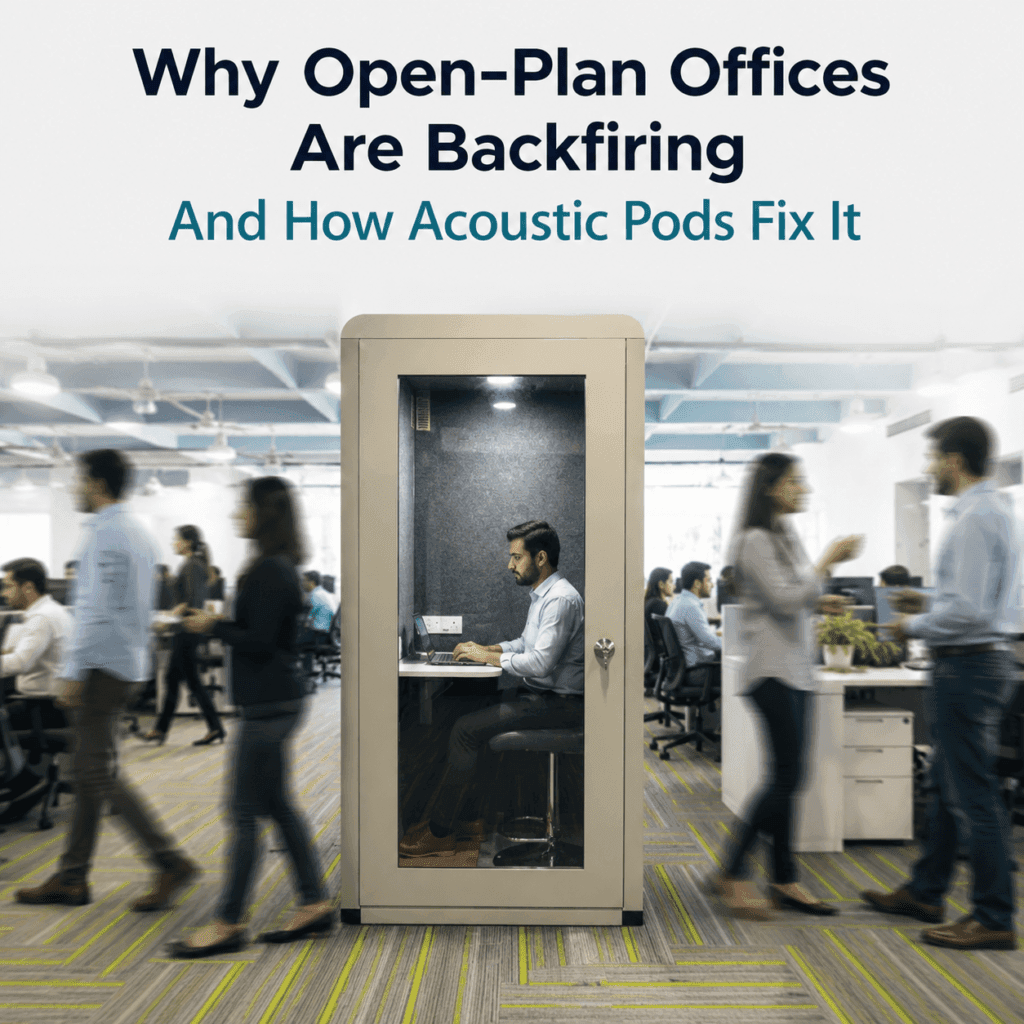
7 Proven Benefits of Office Pods for Employee Mental Health Open-plan offices were supposed to spark collaboration and creativity. Instead, for millions of employees across India, they have become a daily source of stress, distraction, and mental fatigue. The science is clear. Constant noise, lack of privacy, and inability to focus are among the top drivers of workplace anxiety and burnout. Acoustic office pods directly address all three. This is why HR leaders and workplace designers across India are increasingly specifying pods not just as productivity tools, but as mental health infrastructure. Here are seven proven ways acoustic office pods support employee mental wellbeing. The Mental Health Crisis in Open-Plan Indian Offices India’s corporate workforce is under significant mental health pressure. A 2023 survey by Deloitte found that over 80% of Indian employees reported symptoms of burnout, with workplace environment cited as a key contributing factor. Open offices which now dominate Indian IT parks, startups, and shared coworking spaces are a major culprit. The problem is not that people are in the same room. The problem is uncontrolled noise, constant visual stimulation, and zero acoustic privacy. When employees cannot control their environment, their stress response activates repeatedly throughout the day, leading to exhaustion, reduced concentration, and over time, serious mental health impacts. Acoustic pods give employees a controllable, predictable, calm environment something open offices fundamentally cannot provide. How Noise Pollution Affects Stress and Cognitive Load Workplace noise is not just annoying it is physiologically harmful. When the brain hears unpredictable noise, it continues to monitor it even when you consciously try to ignore it. This process, called involuntary attention, consumes cognitive resources that should be going toward your actual work. Studies from the Acoustical Society of America show that office noise can reduce cognitive performance by up to 66% for complex tasks. For Indian offices, where ambient noise levels are often already high, this effect is compounded. Acoustic pods create a low-noise environment that allows the brain to fully engage with deep work reducing cognitive load, lowering cortisol levels, and supporting sustained concentration. Privacy and Psychological Safety: Why They Matter Psychological safety the feeling that you can speak, make mistakes, and be yourself without fear of judgment is one of the strongest predictors of employee performance and mental health. Lack of privacy destroys it. When employees know their phone calls are overheard, their emotional reactions visible, and their personal struggles on display, they become guarded. This constant self-monitoring is exhausting and reduces authentic engagement. Acoustic pods restore privacy. Whether for a sensitive HR conversation, a difficult client call, or simply the need to think out loud, pods give employees a space where they can operate without an audience. The Kraft-Obench Meeting Pod is designed specifically for this kind of confidential, private interaction in workplace settings. Office Pods as a Tool for Deep Work and Focus Psychologist Mihaly Csikszentmihalyi’s research on flow the state of complete absorption in a challenging task shows that flow states require freedom from interruption. In an open office, achieving flow is nearly impossible. Conversations, phone calls, and movement constantly pull attention away. Acoustic pods provide the environmental conditions for flow: low noise, visual separation, and a sense of closure from the surrounding environment. Employees who have access to pods regularly report being able to complete in two hours what would otherwise take a full day in the open office. For companies, this is not just a wellbeing issue it is a productivity and output issue with direct financial consequences. Reducing Meeting Fatigue with Dedicated Pod Spaces Meeting fatigue the exhaustion that comes from back-to-back video and in-person meetings has become one of the defining workplace health issues of the post-pandemic era. Much of this fatigue comes not from the meetings themselves but from the environment in which they happen. Taking calls from a noisy open office requires constant effort to speak over background noise, to listen through interference, and to maintain focus despite distractions. This is cognitively expensive. A dedicated meeting pod eliminates that overhead. Employees can have cleaner, shorter, more focused meetings and finish their day with significantly more energy remaining. The Kraft-Obench Nano Pod is ideal for single-person call pods placed throughout a large office floor. What HR Leaders in India Are Saying About Acoustic Pods HR directors at several Indian technology, consulting, and financial services firms have begun specifying acoustic pods as part of their employee wellness programs not as a perk, but as a core part of the workplace design brief. The shift in thinking is significant. Previously, wellness budgets went toward gym memberships, meditation apps, and counselling services. Now leading HR teams recognise that the physical office environment specifically its acoustic environment is a primary determinant of daily mental wellbeing. Pods are increasingly appearing in employee satisfaction surveys as one of the highest-rated workplace improvements, particularly among employees who do high-concentration or high-communication work. How to Make the Business Case for Office Pods If you are an HR manager or office designer trying to justify the investment in acoustic pods, here is the framework: Calculate the cost of distraction. If an employee earns ₹60,000 per month and loses two hours per day to noise-related distraction, that is approximately ₹15,000 of lost productive time per month per employee. Calculate the cost of turnover. Losing a mid-level employee to burnout costs a company six to nine months of that employee’s salary in recruitment, onboarding, and lost productivity. If pods reduce burnout risk even modestly, the ROI is clear. Compare pod cost to construction. A professional acoustic pod costs a fraction of building a new meeting room or private office. It requires no construction, no permits, and can be moved or reconfigured as the office evolves. Support your team’s mental health and performance. View Kraft-Obench Acoustic Pods used by leading Indian companies.

7 Proven Benefits of Office Pods for Employee Mental Health Read More »