September 23, 2026

30 Days to a More Productive Workspace With an Acoustic Meeting Pod

30 Days to a More Productive Workspace With an Acoustic Meeting Pod

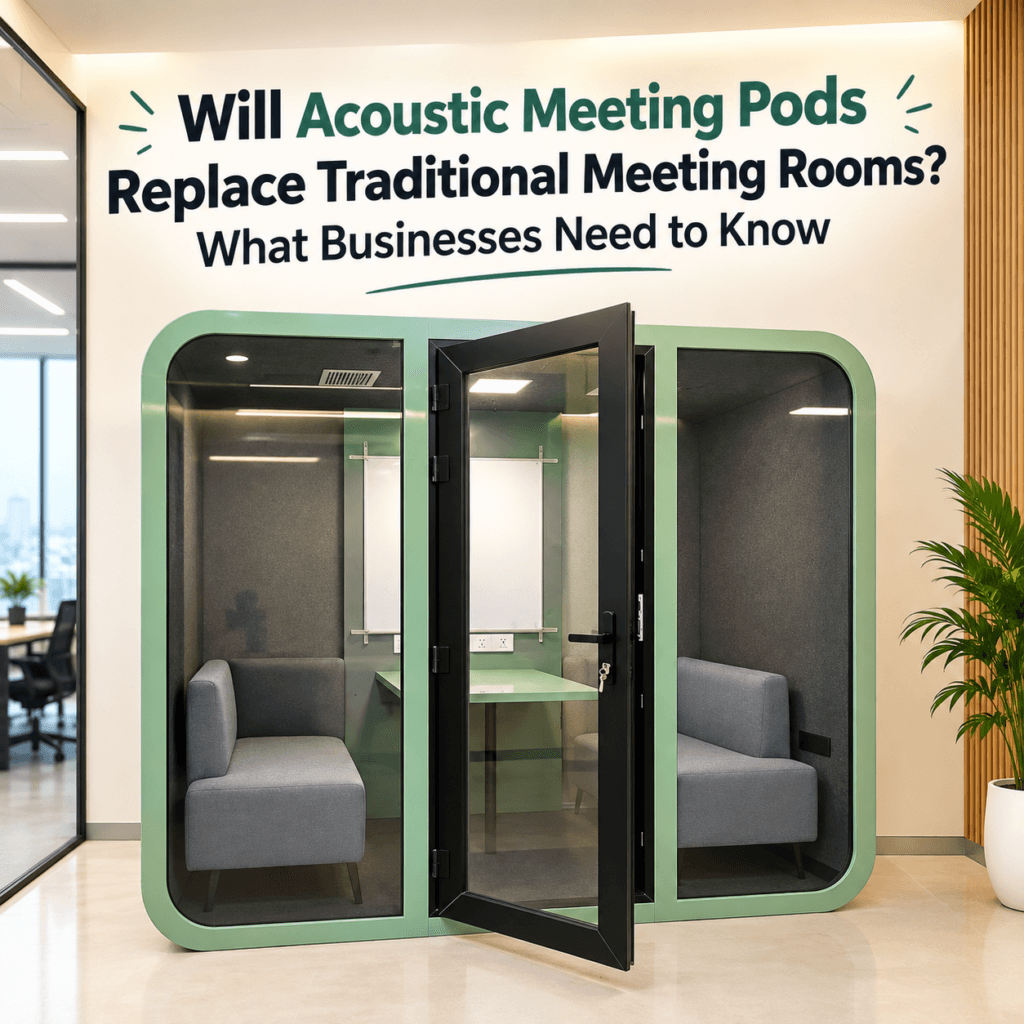
Most productivity advice focuses on habits — wake up earlier, block your calendar, use the Pomodoro method. Useful, but incomplete, because it ignores the environment those habits have to survive in. Installing an acoustic meeting pod changes the environment itself. Here’s a realistic 30-day breakdown of what changes, week by week, once your pod is in place.Why Environment Matters More Than Habits AloneHabit-based productivity advice assumes a stable environment — the same desk, the same background noise level, the same interruptions every day. In reality, most workplaces are noisy, unpredictable, and full of small frictions that quietly derail even the best-intentioned habits. A pod doesn’t ask you to be more disciplined; it removes an entire category of distraction before discipline is even needed. That’s why the changes below tend to show up on a fairly predictable timeline, regardless of the team or industry.Week 1 (Days 1–7): Adjustment and AwarenessThe first week is mostly about noticing what used to go unnoticed. Once you’re inside a meeting pod, the absence of background noise makes you suddenly aware of how much mental energy open-office chatter, hallway conversations, and HVAC hum were quietly consuming. Teams using a portable meeting pod for the first time often report shorter, more focused discussions almost immediately not because the meetings changed, but because the distractions disappeared. By Day 7, most teams have stopped commenting on “how quiet it is” and started simply using the space as normal infrastructure.It’s common during this first week for usage to be somewhat novelty-driven people book the pod partly out of curiosity. That’s fine, and even useful, since it gets more of the team familiar with the space early, which accelerates adoption in the weeks that follow.Week 2 (Days 8–14): Behaviour Starts to ShiftThis is where real change begins. Meetings that used to run long because of interruptions someone stepping out to take a call, a side conversation breaking focus start running closer to their scheduled time. An enclosed meeting booth designed for up to four people forces a kind of discipline: fewer people means fewer tangents, and better acoustics mean less talking over each other. Employees also start booking the pod proactively for sensitive conversations performance reviews, client negotiations, or HR matters rather than searching for an empty conference room.By the end of this week, booking patterns typically start to solidify. Certain time slots become predictably busy, and it becomes clearer whether one pod is enough or whether demand is already outpacing supply useful information for planning any future expansion.Week 3 (Days 15–21): Measurable Time SavingsBy the third week, patterns become measurable: meetings starting on time more consistently, fewer rescheduled meetings due to room unavailability, shorter meeting durations overall, and fewer follow-up meetings needed to “re-cover” what was missed due to noise or interruption. If your organisation also uses a compact phone booth for 1:1 calls alongside the meeting pod, this is usually when the two start working together quick calls go to the phone booth, small-group discussions go to the pod, and larger meetings stay in the main conference room.This is also typically when teams start tracking the numbers formally rather than relying on general impressions, which sets up the final week’s evaluation.Week 4 (Days 22–30): The Pod Becomes Invisible InfrastructureBy the final week, the pod stops being a novelty and becomes something people simply expect to be available the same way they expect a working printer or stable Wi-Fi. This is the real marker of success: when a work pod or meeting pod is no longer discussed, it’s because it’s doing its job quietly in the background. Facilities teams typically use this point to evaluate whether additional pods are needed often adding a second portable meeting pod or a phone booth based on actual usage data from the first month.What Makes the 30-Day Shift PossibleKraft-Obench pods use rockwool insulation and soundproof glazing capable of absorbing up to 85% of ambient sound the technical foundation that makes behavioural change possible. Integrated lighting, ventilation, and ergonomic seating in every workspace pod mean people are actually willing to spend extended time inside, rather than avoiding it after the first use. And because options like the portable meeting pod don’t require permanent construction, businesses can test, relocate, or scale their pod setup without long-term commitment.The acoustic performance matters more than most people expect going in. A pod that only partially blocks noise will still leave the low-level awareness of the outside environment intact, which undermines the entire psychological shift this 30-day process depends on. That’s why absorption percentage not just appearance is worth checking closely before you start the trial at all.A Simple 30-Day Tracking TemplateTrack weekly: average meeting length (before vs. after), number of meetings rescheduled due to room unavailability, employee feedback on call/meeting audio quality, and the number of “sensitive conversation” bookings (HR, reviews, client calls).Keeping this tracking lightweight matters a simple shared spreadsheet updated once a week is enough. The goal isn’t rigorous data science, it’s having enough evidence by Day 30 to make a confident decision about expanding, relocating, or adjusting how the pod is used.Expanding Beyond MeetingsOnce the meeting pod proves its value, many businesses extend the same logic to individual work. A portable office pod or Nano Pod applies the same acoustic principles to solo, focused work, while a vocal recording pod covers content and media teams recording voiceovers or training material. Many teams find that once the pattern is proven with one meeting pod, the case for expanding into other pod types becomes an easy internal conversation, backed by a month of real usage data rather than a hypothetical pitch.Final ThoughtsThirty days isn’t long enough to change company culture but it is long enough to prove whether an acoustic meeting pod earns its place in your office. If the last month of noisy, interrupted meetings has cost you more time than you’d like to admit, explore our meeting pod range in the shop, browse real setups in the gallery, or contact us to plan your own…

30 Days to a More Productive Workspace With an Acoustic Meeting Pod Read More »
10 Things to Check Before Buying a Soundproof Office Pod in India

10 Things to Check Before Buying a Soundproof Office Pod in India

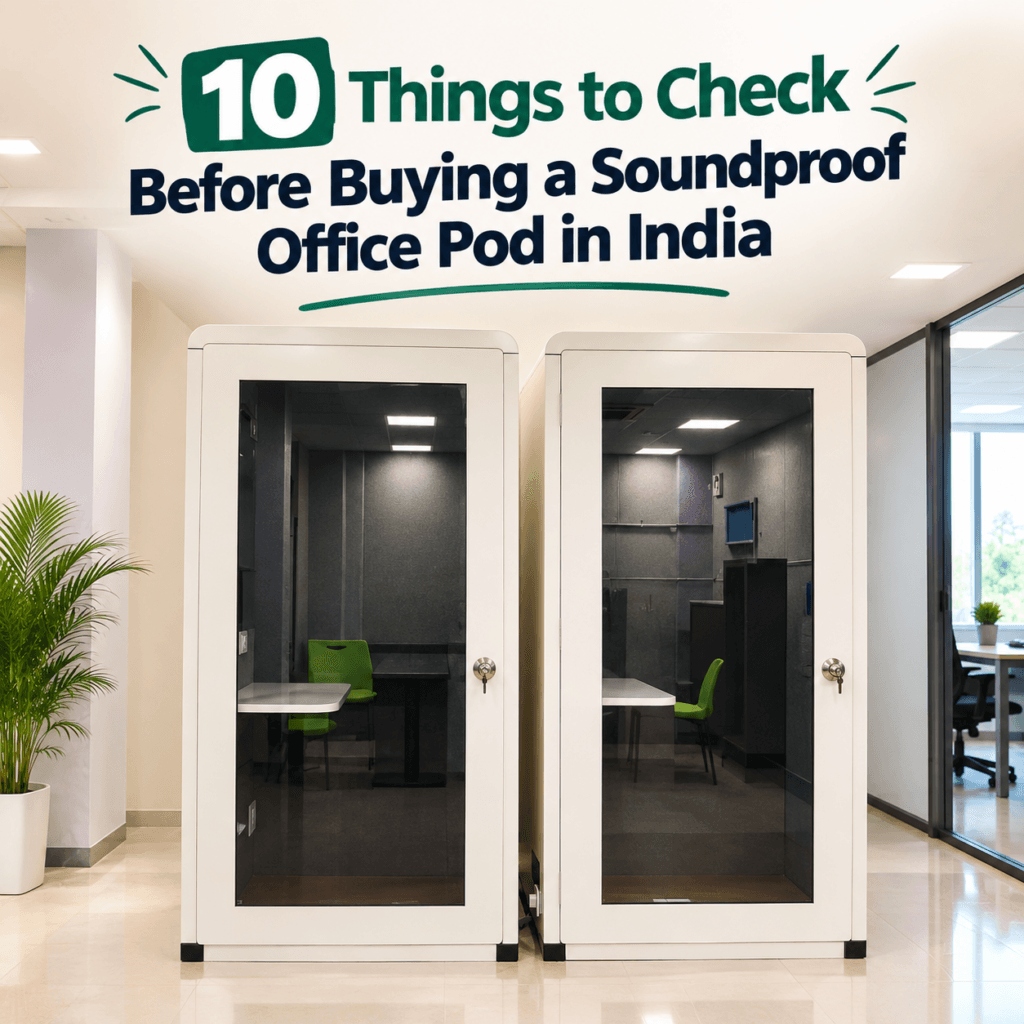
Buying a soundproof office pod is a bigger decision than most furniture purchases it’s closer to buying a small room. With more Indian brands entering the work pod category, it’s easy to get overwhelmed by specs, prices, and marketing claims. Here are the 10 things worth checking carefully before you commit.Why This Purchase Deserves Extra DiligenceUnlike a desk or a chair, a pod is a multi-part structure with electrical components, glazing, insulation, and ventilation systems that all need to work together reliably for years. A mistake here isn’t a minor inconvenience. it can mean an uncomfortable, poorly performing space that gets used less and less until it becomes an expensive storage room. Spending an extra hour comparing specifications before ordering can save months of frustration afterward.1. Actual acoustic performance, not just “soundproof” claims. Every brand says “soundproof,” but ask for the real sound absorption percentage. A quality soundproof office pod should absorb around 80–85% of ambient noise using materials like rockwool insulation. If a seller can’t quote a number, that’s a red flag. Vague marketing language like “ultra-quiet” or “studio-grade” without a supporting figure usually means the manufacturer either doesn’t have the data or doesn’t want to share it.2. Material quality: rockwool and DGU glass. The best-performing vocal booth and office pods use rockwool sound insulation combined with soundproof DGU (double-glazed unit) glass. Cheaper alternatives use basic foam panels that degrade faster and perform worse over time. Foam panels also tend to absorb odours and degrade with humidity, a real concern in much of India’s climate whereas rockwool holds its acoustic performance far longer.3. Ventilation and air conditioning. A pod without proper airflow becomes uncomfortable within 20–30 minutes. Check whether the unit includes a functioning A.C. or ventilation system not just a sealed box with a fan. This matters even more for a work from home pod used for full working days, since anyone spending six or more hours a day inside will notice poor airflow almost immediately, no matter how good the acoustics are.4. Size vs. available space. Most portable office pods fit within 15 sq ft, but measure your actual space, including door clearance and ceiling height, before ordering. A Nano Pod suits tighter apartments, while larger meeting pods need more floor space. It’s worth physically measuring the delivery path too stairwells, lift dimensions, and doorway widths have all caused installation headaches for buyers who only measured the final room.5. Number of occupants needed. Are you buying for solo focus work, calls, or team meetings? A compact phone booth is built for one person, while an enclosed meeting booth supports up to four. Buying the wrong capacity is one of the most common regrets we hear about either a solo user ends up with an oversized, underused pod, or a team crams into something built for one person.6. Delivery and installation support. Pods are heavy, multi-part structures. Confirm whether the price includes home delivery and professional installation, or whether you’ll need to arrange this separately. Check the FAQ page for standard timelines before ordering. Self-assembly is rarely advisable given the weight and precision required for glazing and panel alignment.7. Customisation options. If you need a specific colour, branding, or interior configuration, ask upfront whether customisation is available. Some buyers who purchased a workspace pod were able to get panel finishes and interior layouts adjusted to match their office branding. For corporate buyers especially, matching a pod’s exterior to brand colours or office design language can be the difference between it looking like an integrated fixture versus an obvious add-on.8. Warranty and after-sales support. Ask specifically about warranty coverage on electrical components (lighting, A.C., LAN ports) versus structural elements (panels, glass, frame). After-sales support matters more for pods than most furniture, since repairs often require specialised parts. A generic furniture warranty that doesn’t distinguish between these categories is a sign the seller may not be equipped to service the product long-term.9. Pricing transparency. Pod prices in India typically start around ₹69,999–₹99,999 for base models, with configuration, customisation, and delivery location affecting the final cost. Get an itemised quote rather than a single bundled number, and compare it against similar listings in the shop. An itemised quote also makes it far easier to see exactly what you’re paying extra for delivery, installation, customisation rather than guessing at what’s included.10. Real customer reviews and installations. Marketing photos rarely tell the full story. Look for real installation photos in a gallery, and read reviews from actual buyers — voice artists, remote workers, and businesses — rather than relying on product page copy alone. Reviews from buyers with a similar use case to yours (a voice artist, a remote employee, a facilities manager) will tell you far more than a generic five-star rating.A Quick Buyer’s Checklist by Use CaseSolo focused work at home: Office Pods for Home or a Nano PodPrivate calls in an open office: Compact Phone Booth PodTeam discussions: Enclosed Meeting Booth or Portable Meeting PodVoice recording or podcasting: Modular Vocal Recording Booth or Dubbing Artist Studio PodGeneral office privacy: Office Booths and PodsCategories Worth Browsing Before You DecideRather than settling on the first product page you land on, compare across categories: Work Pod, Phone Booth, Meeting Pod, and Vocal Booth. Each is engineered slightly differently for its primary use case, and browsing all four often clarifies which configuration actually matches your daily routine.Common Mistakes First-Time Buyers MakeBeyond the ten checkpoints above, a few patterns show up repeatedly among first-time buyers: choosing based on price alone without checking acoustic specs, underestimating how much daily use time the pod will get (and therefore skimping on ventilation), and failing to plan for the delivery path into the building. Each of these is avoidable with the checklist above, but they’re worth calling out specifically because they’re the mistakes that turn up most often in after-sales conversations. FAQs 1. What should I check before buying a soundproof office pod in India?Check acoustic performance, insulation materials, ventilation, pod size, occupant capacity, installation support, customisation options,…

10 Things to Check Before Buying a Soundproof Office Pod in India Read More »

Will Acoustic Meeting Pods Replace Traditional Meeting Rooms? What Businesses Need to Know

Will Acoustic Meeting Pods Replace Traditional Meeting Rooms? What Businesses Need to Know

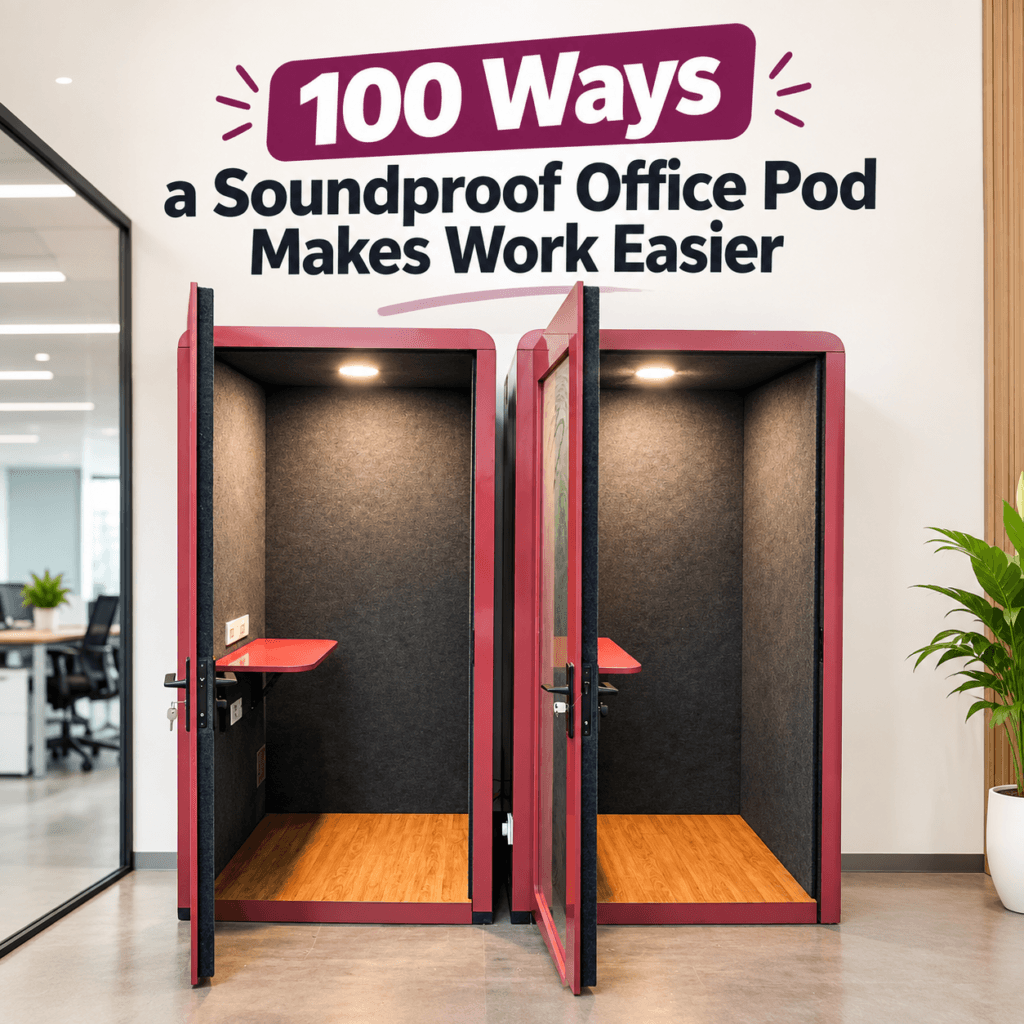
Every facilities manager has faced the same problem: too many meetings, not enough meeting rooms. As offices shrink and hybrid work grows, businesses are increasingly turning to the acoustic meeting pod as a faster, cheaper alternative to building new conference rooms. But does that mean traditional meeting rooms are on their way out? Here’s an honest look at where pods win, where rooms still make sense, and how to decide for your own office.Why This Question Keeps Coming UpOffice space planning has changed dramatically over the last few years. Headcounts fluctuate quarter to quarter, hybrid schedules mean occupancy is unpredictable day to day, and the cost of unused square footage has become impossible to ignore. Traditional meeting rooms were designed for a world where everyone came into the office five days a week and meeting demand was relatively stable. That world doesn’t exist for most companies anymore, which is exactly why pods have moved from a novelty to a serious line item in office planning budgets.The Case for Acoustic Meeting PodsSpeed of Deployment. A meeting pod can be installed in days, not months. Unlike a conventional meeting room, there’s no need for construction permits, drywall, or electrical rewiring in most cases. A portable meeting pod can even be relocated if your office layout changes. For facilities teams under pressure to solve a meeting room shortage quickly, this speed alone often settles the decision, a construction project measured in months simply can’t compete with a pod that’s operational the same week it arrives.Lower Cost Per Square Foot. Building a soundproofed conference room from scratch involves acoustic treatment, HVAC extension, and dedicated wiring costs that add up quickly. An enclosed meeting booth arrives pre-engineered with acoustic panels, ventilation, and power outlets already integrated, often at a fraction of the cost. When you factor in architect fees, permits, and the opportunity cost of space sitting unusable during construction, the gap widens even further in the pod’s favour.Flexibility for Hybrid Teams. Hybrid offices rarely need the same number of meeting rooms every day. A work pod setup lets facilities teams add capacity incrementally one pod this quarter, two more next quarter rather than over-building a fixed number of rooms upfront. This incremental approach matters enormously for budget planning, since it converts what used to be a large, irreversible capital decision into a series of smaller, reversible ones.Better Acoustic Performance in Open Offices. Ironically, many traditional meeting rooms in open-plan offices weren’t designed with real acoustic isolation in mind just glass walls and a door. A properly built acoustic meeting pod using rockwool insulation and soundproof glazing often outperforms a converted glass-walled room. Anyone who has sat in a glass-walled “quiet room” and still heard every word of the conversation happening outside it knows exactly how common this problem is.Where Traditional Meeting Rooms Still WinCapacity for Large Groups. Most pods, including our enclosed meeting booth, are designed for up to four people. For all-hands meetings, board sessions, or large client presentations, a traditional room remains necessary. No amount of pod flexibility solves the physical constraint of needing to seat fifteen or twenty people in one space.Permanent AV Infrastructure. Rooms with built-in large-screen displays, dedicated conferencing hardware, and fixed seating still make sense for spaces used the same way every day. If a room hosts the same recurring leadership sync every week with the same AV setup, there’s little reason to disrupt that with a smaller, more flexible format.Long-Term Fixed Departments. If a department has a stable headcount and predictable meeting patterns, a permanent room can sometimes be more cost-effective over a 5–10 year horizon than multiple pods. Pods shine in unpredictability; fixed, high-utilisation spaces don’t have that variable to solve for.The Realistic Answer: A Hybrid ModelMost businesses we work with don’t fully replace meeting rooms. they supplement them. A typical modern floor plan now includes 1–2 large traditional meeting rooms for big groups, several meeting pods for 2–4 person discussions, multiple phone booths for one-person calls, and a few flexible work pods for solo focus work. Businesses moving toward this model typically start with a portable meeting pod, test usage patterns for a month, then scale.This staged approach also reduces risk. Rather than guessing at the right room-to-pod ratio for an entire office redesign, companies get real usage data from a single pod before committing budget to a larger rollout, a far more defensible approach when justifying spend to finance or leadership.What to Consider Before SwitchingMeasure actual usage patterns. Track how many meetings are 1:1, small-group, or large-group. If 70% of your meetings involve two to four people, pods will likely deliver better ROI than an equivalent number of traditional rooms. Most calendar and room-booking software can generate this data without any additional tooling, it’s simply a matter of pulling the report and looking at it honestly.Consider acoustic ratings, not just appearance. Not all “soundproof” pods perform equally. Ask about sound absorption percentages Kraft-Obench pods, for instance, absorb up to 85% of ambient noise, a meaningful benchmark to compare against. A pod that looks sleek in marketing photos but underperforms acoustically will undermine the entire point of the purchase.Plan for power and ventilation. Even portable options like the portable meeting pod need reliable power access and airflow. Confirm this during office planning, not after installation. A pod installed without adequate ventilation becomes uncomfortable within half an hour, which quietly kills adoption no matter how good the acoustics are.Think about employee experience. Pods can feel more private and less intimidating than a glass-walled room in the middle of an open office useful for sensitive one-on-ones or HR conversations. This is a softer benefit than cost or speed, but it consistently shows up in employee feedback once pods are in daily use.Where Vocal and Phone Booths Fit InMeeting pods aren’t the only category worth considering. If your team also needs private space for solo calls, a compact phone booth solves a different problem than a meeting pod. And for content or media teams, a vocal recording…

Will Acoustic Meeting Pods Replace Traditional Meeting Rooms? What Businesses Need to Know Read More »

100 Ways a Soundproof Office Pod Makes Work Easier

100 Ways a Soundproof Office Pod Makes Work Easier

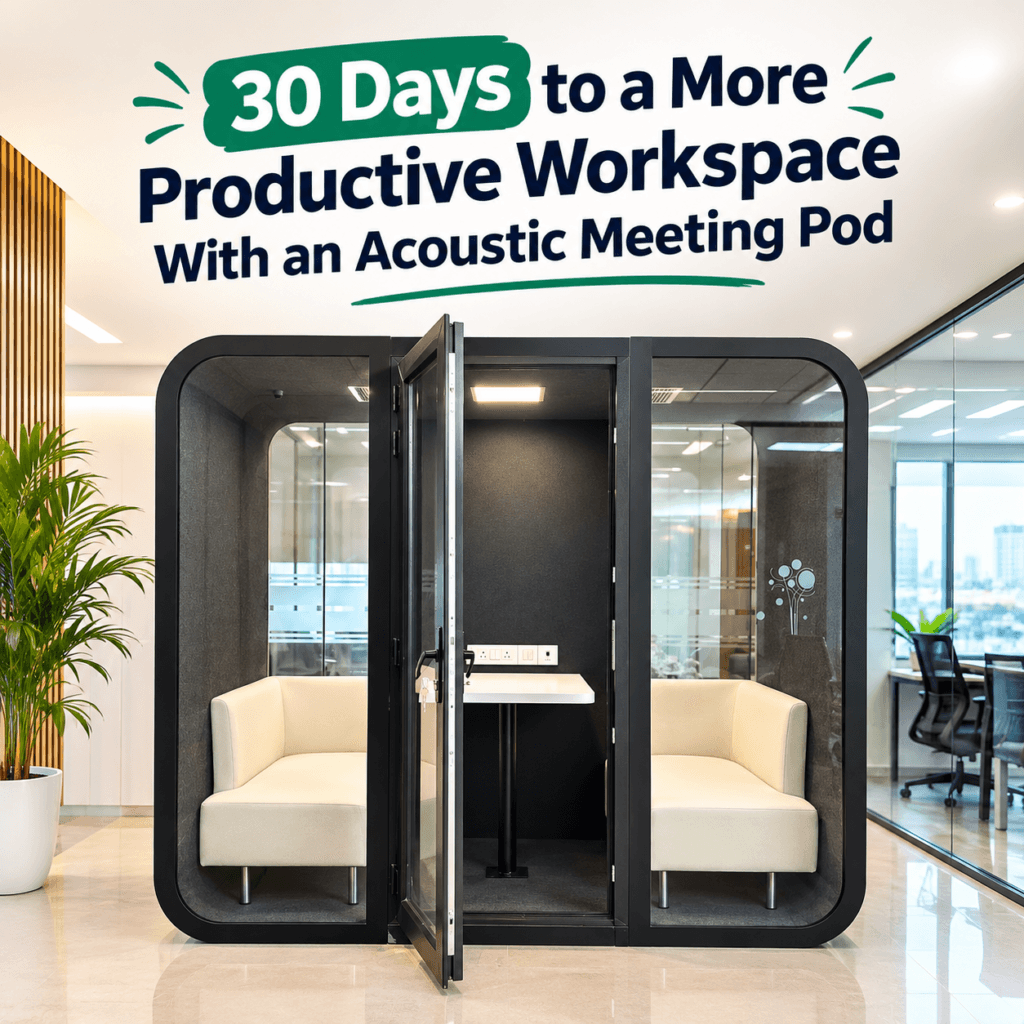
A soundproof office pod sounds like a single-purpose product until you actually own one then you realise it quietly rewires almost every part of your workday. What starts as “a quiet place to take calls” ends up handling client meetings, focused deep work, podcast recording, therapy sessions, and even the occasional power nap. We put together 100 real ways professionals use their work pod, grouped into five categories, based on patterns we see across home offices, coworking spaces, and corporate installs.The list below isn’t theoretical. It’s drawn from actual usage logs, customer interviews, and installation feedback across hundreds of pods from a single Nano Pod in a one-bedroom apartment to multi-pod corporate rollouts. What you’ll notice as you read through it is that no two owners use their pod the same way. A freelance voice artist and a finance director might buy the exact same model and end up using it for completely different reasons within the first month.Why One Product Ends Up Doing So MuchMost furniture is single-purpose. A desk is for working, a chair is for sitting, a filing cabinet is for storing documents. A soundproof office pod breaks that pattern because it isn’t really “furniture” in the traditional sense — it’s a controlled environment. Once you have a space that reliably blocks out noise, gives you privacy, and includes power, lighting, and ventilation, you start bringing every task that benefits from those three things into the pod. That’s why the list below spans everything from HR conversations to vocal warm-ups.Focus & Deep Work (1–20)Blocking out kitchen and household noise during work from home hoursCreating a dedicated “focus zone” separate from your bedroom or living roomReducing traffic and construction noise from outsideSignalling to family members that you’re “at work,” not availableImproving concentration during writing or coding sessionsReducing eye strain with adjustable smart lightingGiving your brain a consistent cue that it’s time to workCutting down on multitasking triggered by visual clutterCreating an ergonomic setup with a proper chair and foldable tableReducing fatigue from noise-induced stress over long daysMaking early-morning or late-night work sessions less disruptive to familyAllowing uninterrupted studying for exams or certificationsSupporting freelancers who bill by focused hoursGiving students a quiet space for online classesReducing the urge to check phones triggered by ambient noiseImproving memory retention during reading-heavy tasksEnabling “flow state” work sessions without external triggersCreating a psychological boundary for work-life balanceReducing decision fatigue by having one dedicated workspaceMaking the portable office pod a permanent productivity ritualDeep work is where most owners first notice the return on investment. Remote workers consistently report that the biggest productivity killer isn’t a single loud interruption — it’s the constant, low-level awareness of household noise: a dishwasher running, someone on a call in the next room, a delivery at the door. A pod removes that background hum entirely, which lets your brain settle into sustained concentration faster and stay there longer. Many owners also describe a psychological effect that goes beyond acoustics — stepping into the pod becomes a ritual that tells the brain “it’s time to work” the same way putting on running shoes signals “it’s time to exercise.”Calls & Meetings (21–40)Taking client calls without background noise apologiesHosting video interviews with a clean, professional backdropRunning one-on-one performance reviews privatelyMaking sales calls with better vocal clarityJoining town halls without shushing the householdRecording internal training calls with a compact phone boothTaking HR or legal calls that require confidentialityReducing “can you repeat that?” moments on ZoomHosting podcast-style interviews for internal commsRunning vendor negotiation calls privatelyMaking international calls without time-zone household disruptionHosting webinars from a controlled acoustic spaceUsing a portable meeting pod in coworking spaces for client meetingsConducting exit interviews discreetlyTaking emergency calls without disturbing the open officeRunning quick stand-ups in an acoustic meeting podHosting board-level video calls with visual privacyRecording voice memos for meeting minutesPractising presentations aloud before the real thingDoing mock interviews for job seekersThis is the category most businesses associate with pods first, and for good reason — video calls have become the default meeting format, and audio quality is now judged as closely as content. A clean, echo-free background says more about professionalism than most people realise. Sales teams in particular report that call clarity directly affects how prospects perceive credibility, especially on calls where trust needs to be built quickly. For confidential conversations — HR matters, legal calls, performance reviews — a pod offers something an open office glass room can’t: true acoustic isolation, not just visual privacy.Privacy & Confidentiality (41–55)Reviewing sensitive financial documents away from prying eyesDiscussing salary or compensation matters privatelyHandling legal contracts without interruptionProtecting client data during screen-sharesTaking therapy or counselling sessions onlineManaging HR grievance conversationsReviewing performance data without office visibilityConducting internal audits confidentiallyHandling recruitment calls discreetlyWorking on unreleased product plans securelyTaking personal medical consultations during work hoursReviewing legal case files in a meeting podDiscussing M&A or investment matters privatelyProtecting IP discussions from open-plan eavesdroppingRunning compliance training sessionsConfidentiality is often the least anticipated benefit and the one that ends up mattering most once a pod is installed. Open-plan offices were designed for collaboration, not privacy, which creates constant friction whenever a conversation needs to be genuinely confidential. Legal, HR, and compliance teams in particular gravitate toward booking pods for exactly this reason — not because they need soundproofing for noise, but because sensitive conversations require a space where nothing leaks past the walls, literally or figuratively. Even individual employees find themselves booking a pod for a personal medical call or salary conversation they’d never want overheard in an open office.Content Creation & Recording (56–75)Recording podcasts inside a vocal recording podProducing voiceovers for ads and explainer videosRecording audiobooks with studio-level clarityDoing ADR and dubbing work in a dubbing artist studio podRecording YouTube voiceovers without room echoPractising singing or vocal warm-ups privatelyHosting live-streamed webinars with clean audioRecording internal e-learning modulesProducing corporate training narrationRecording language-learning contentDoing character voice work for games or animationProducing radio-style ad readsRecording customer testimonial voiceoversEditing audio with reference-quality monitoringPractising public speaking or TEDx-style talksRecording standup comedy sets for reviewProducing meditation or wellness audio contentHosting Twitch…

100 Ways a Soundproof Office Pod Makes Work Easier Read More »

7 Days to Better Focus: How a Soundproof Office Pod Transforms Your Workday

7 Days to Better Focus: How a Soundproof Office Pod Transforms Your Workday

If you’ve ever tried to finish a report while your neighbour’s dog barks non-stop, or joined a client call just as someone starts vacuuming next door, you already know the real enemy of productivity isn’t laziness, it’s noise. Between remote work becoming the norm and open offices packing more people into less space, uninterrupted focus has quietly become a luxury. A soundproof office pod changes that equation, and the shift can happen faster than most people expect. Here’s what a week with one actually looks like.Day 1: You Notice the Silence FirstThe moment you step into a work pod, the first thing that hits you isn’t the desk or the lighting, it’s the quiet. Kraft-Obench’s pods use high-density acoustic panels that absorb up to 85% of ambient sound, which means the mixer grinder in the kitchen, the courier at the door, or your colleague’s phone call two desks away simply stop registering. On Day 1, most people just sit with that silence for a minute before they even open their laptop. It’s the psychological reset that every soundproof office pod is built to deliver.Day 2: Deep Work Starts to Feel NaturalBy the second day, the novelty wears off and something more useful takes its place: sustained attention. Without background chatter pulling at your focus every few minutes, tasks that usually take you an hour start taking forty minutes. This is especially noticeable if you use your pod for work from home setups, where distractions like family members, deliveries, and household noise are constant. A portable office pod placed in a spare corner gives you a dedicated boundary between “home” and “work” something a laptop on the dining table never can.Day 3: Calls Finally Sound ProfessionalSomewhere around Day 3, you’ll notice your video calls look and sound different. No more apologising for background noise or asking someone to repeat themselves. An office phone booth is designed specifically for this a compact, one-person space with enough acoustic insulation to keep your voice clear and outside noise out. If you’re in a shared office or coworking space, this alone can change how clients and colleagues perceive your professionalism.Day 4: You Start Protecting the SpaceBy mid-week, something interesting happens: you start guarding your pod time. You block out slots on your calendar, you stop checking Slack the second you sit down, and you treat the pod as a real workplace rather than a novelty. This is the point where a work from home pod stops being furniture and starts being infrastructure a part of how you actually get things done.Day 5: Meetings Get Shorter and SharperIf your pod is being used for team huddles rather than solo work, Day 5 is usually when meetings start running faster. An acoustic meeting pod removes the usual friction of booking a conference room, dealing with echo, or competing with open-office noise. Teams tend to get to the point quicker when the environment itself isn’t working against them. For coworking spaces or hybrid offices, a portable meeting pod offers the same benefit without needing a permanent room.Day 6: You Notice Fewer “Micro-Interruptions”Research consistently shows that after an interruption, it takes several minutes to fully regain focus. By Day 6, you’ll likely notice you’ve had far fewer of these micro-interruptions no one tapping your shoulder, no doorbell mid-sentence, no ambient office chatter breaking your train of thought. This compounding effect is one of the most underrated reasons professionals invest in a soundproof office pod in the first place. It isn’t just about blocking noise once; it’s about removing dozens of small disruptions across an entire week.Day 7: The Numbers Start Making SenseBy the end of the week, the productivity data that companies like Kraft-Obench frequently cite starts to feel personal rather than abstract. A large share of remote workers report being more productive at home, and telecommuting alone is estimated to cut emissions equivalent to removing 600,000 cars from the road proof that the shift toward pods and remote-friendly infrastructure isn’t just about comfort, it’s structural. On Day 7, most users realise the pod hasn’t just changed their workday, it’s changed how they think about their workspace altogether.Why This Matters Beyond One WeekThe “7-day test” isn’t a gimmick it mirrors how habits actually form. A work pod doesn’t just block noise; it creates a consistent environment your brain learns to associate with focus. Over time, simply stepping into the pod becomes a trigger for deep work, the same way a gym bag signals “workout mode.” This is true whether you’re using a vocal booth for recording, a phone booth for calls, or a meeting pod for team discussions the underlying mechanism is the same: remove noise, and attention naturally follows.Choosing the Right Pod for Your Focus GoalsNot every work pod is designed for the same purpose, so it helps to match the pod to your actual workflow:If you’re recording voiceovers, podcasts, or content, a vocal recording pod or a dubbing artist studio pod offers studio-grade isolation.If your main need is private calls in a busy office, an office phone booth is the more practical (and affordable) choice.If you’re setting up a permanent home workspace, an office pod for home gives you a dedicated room-within-a-room.For flexible or shared spaces, a portable meeting pod or a compact nano pod can be moved as needs change.You can browse the full range in the shop, and if you’re unsure which configuration fits your space, the FAQ page covers common questions around sizing, sound insulation ratings, and delivery timelines. Frequently Asked Questions1. How does a soundproof office pod improve focus?A soundproof office pod helps reduce surrounding noise and everyday distractions, creating a quieter, dedicated environment for focused work.2. Is a soundproof office pod suitable for working from home?Yes. A work pod can create a dedicated workspace within your home, helping separate work from household activities, conversations, and other distractions.3. Which pod is best for private calls and meetings?For individual calls, an office phone booth is ideal. For small team discussions, an acoustic meeting…

7 Days to Better Focus: How a Soundproof Office Pod Transforms Your Workday Read More »

Kraft-Obench · Vocal Booth Rentals
Soundproof Vocal Booths for Rent

Noise-free calls, focused work & a professional recording booth for work from home.

Flat 10% OFF on Rentals⏱ Limited-time offer
  • Professional recording booth
  • Ideal for WFH, meetings & recordings
  • Easy installation & flexible rentals

Available only in Delhi NCR, Mumbai, Chennai, Bengaluru & Hyderabad

Soundproof vocal booth available for rent