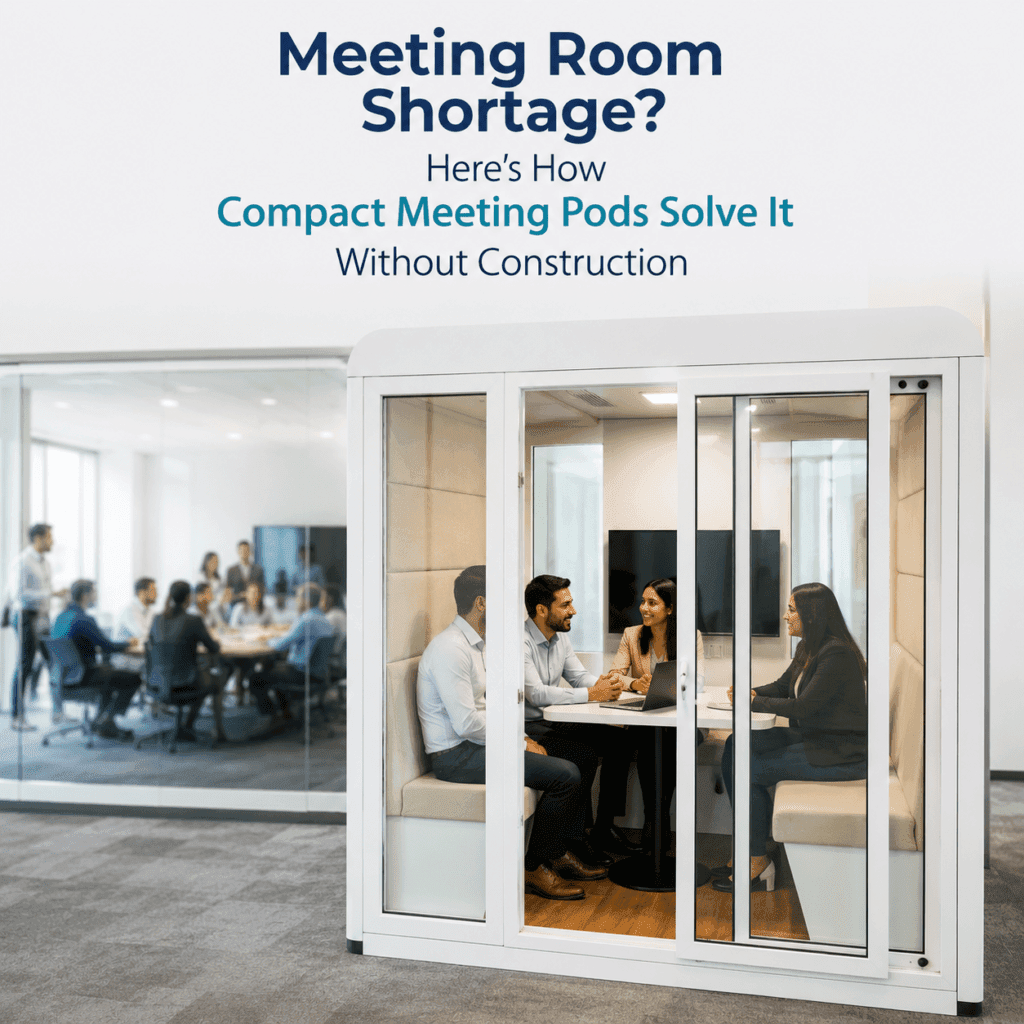
Meeting Room Shortage? Here’s How Compact Meeting Pods Solve It Without Construction
Walk into almost any growing office in India today and you’ll notice the same pattern: too many people, not enough rooms. Calendars are booked out days in advance for a single conference room. Teams huddle around a laptop at someone’s desk because nothing else is free. Client calls get pushed back by twenty minutes simply because there’s nowhere quiet to take them. HR conversations happen in hushed tones near the pantry because every enclosed space on the floor is already occupied. The meeting room shortage isn’t a hypothetical problem, it’s one of the most common complaints in offices that have grown faster than their floor plan, and it tends to get worse quietly, over months, until it suddenly feels urgent.
The instinctive response is to build more rooms. But construction is slow, expensive, and permanent in a way that doesn’t suit how quickly modern teams change shape. A room built today for a team of twelve may be the wrong size entirely once that team splits into two, merges with another, or shifts to a hybrid schedule. This is where compact meeting pods offer a genuinely different solution one that doesn’t involve a single wall being knocked down, and one that can be resized or relocated as the team’s needs change.
Why Offices Keep Running Out of Meeting Space
Meeting room shortages rarely happen because a company planned poorly. They happen because offices change faster than physical space can keep up.
1. Headcount Grows Faster Than Square Footage
A team of fifteen might have been comfortably served by two meeting rooms. At forty people, those same two rooms are hopelessly inadequate but by the time that becomes obvious, moving to a bigger office or building new rooms is a multi-month project, not a quick fix.
2. Hybrid Work Changed What a “Meeting” Looks Like
A few years ago, meetings mostly meant a group of people sitting around a table in the same room. Today, most meetings involve at least one remote participant, which means every meeting room also needs to double as a video-call space with decent acoustics, lighting, and a camera angle that doesn’t look like a hostage video. Many older conference rooms simply weren’t built with this in mind.
3. Small Meetings Are Competing for Big Rooms
A quick 15-minute sync between two people often ends up booked into a room designed for ten, simply because it’s the only private space available. This is an inefficient use of space that makes the shortage feel worse than it actually is the office may have enough total meeting capacity, just not the right size and shape of it.
4. Construction Isn’t a Realistic Short-Term Fix
Adding a new meeting room the traditional way means architectural planning, contractors, permissions, weeks of dust and noise, and a room that once built can’t easily be resized, relocated, or removed if the company’s needs change again in a year. For most businesses, this is simply too slow and too rigid to solve an immediate, growing problem.
The Case for Compact Meeting Pods
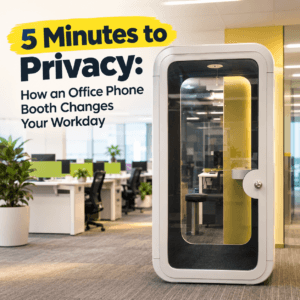
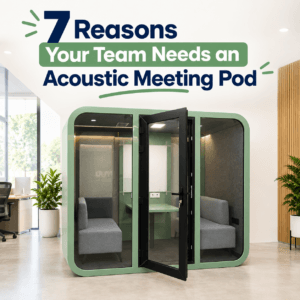
This is exactly the gap that modular meeting pods are designed to fill. Instead of a construction project, a meeting pod is a self-contained, prefabricated unit that can be placed directly onto an existing floor no walls, no permits, no months of disruption.
A few things make this approach genuinely practical rather than just a trendy alternative:
They arrive ready to use. A meeting pod comes with acoustic panelling, lighting, ventilation, and power built in. There’s no separate phase of “furnishing” the room after construction it’s functional from day one.
Installation is measured in hours, not weeks. Following a structured installation process including a site survey for floor space, ceiling height, and cable routing most pods are fully operational within the same working day, without shutting down the surrounding office.
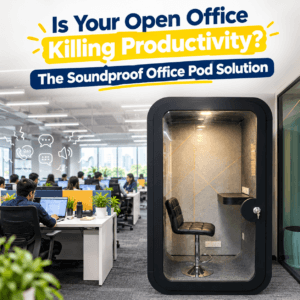
They’re genuinely soundproof. Traditional meeting rooms, especially ones with glass walls or thin partitions, often leak sound both ways. A properly engineered acoustics booth is built specifically to block sound transfer, which matters enormously for confidential discussions, HR conversations, or client negotiations.
They can move when the company does. Unlike a built room, a pod can be relocated, resized, or removed if the office layout changes, the lease changes, or the team simply outgrows its current configuration. This flexibility is difficult to overstate it means a meeting room decision made today doesn’t have to be a five-year commitment.
Matching Pod Size to Actual Meeting Needs
One of the more overlooked reasons offices run short on meeting space is a mismatch between room size and typical meeting size. Most meetings involve two to four people, yet many offices only have large conference rooms available. Compact meeting pods solve this by letting companies size their space to match reality:
- For quick one-on-ones or solo confidential calls, a phone booth-style unit is often more practical than booking an entire conference room.
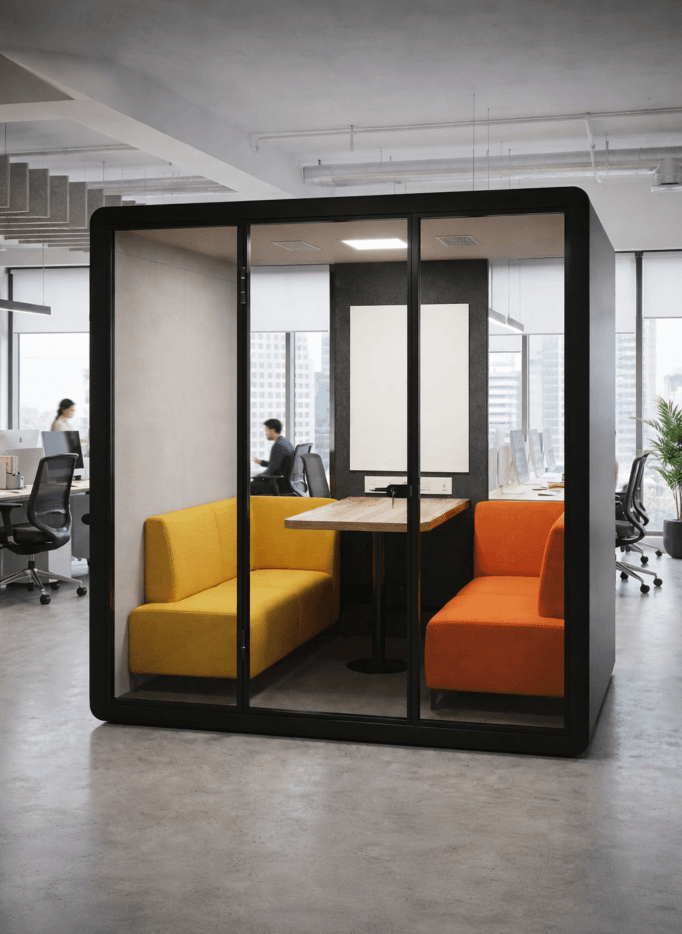
- For two to four person discussions, a properly sized meeting pod provides enough room for a real conversation without wasting space that could serve another team.
- For office-wide flexibility, a mix of workspace pods across different sizes lets a company distribute private space across the floor rather than concentrating it all in two or three large rooms.
- For businesses testing this approach for the first time, a compact soundproof phone booth or a nano pod is often a low-risk way to add private space in a corner that would otherwise sit unused.
Reviewing the full product-category listing for phone booths or browsing the complete shop catalogue makes it easier to see the range of sizes available before deciding what mix best fits a specific floor plan.
Beyond Meetings: Solving Adjacent Problems Too
Once a company starts thinking about compact, modular spaces instead of fixed rooms, it becomes clear that the same approach solves several related problems at once.
Confidential one-on-ones. Performance conversations, HR discussions, and sensitive negotiations benefit from a dedicated office booth rather than a glass-walled room where body language, if not words, is visible to the rest of the floor.
Overflow for hybrid meetings. As more meetings include remote participants, having several smaller pods equipped for clean audio and video is often more useful than one large room where a single remote caller struggles to be heard clearly.
Recording and content needs. Teams creating internal training videos, podcasts, or marketing content benefit from a properly isolated acoustics booth rather than trying to record in a busy, echo-prone meeting room.
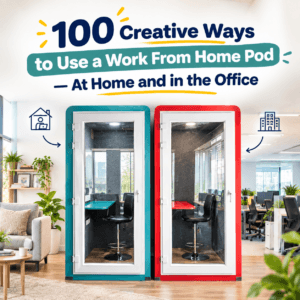
Home-based team members. For distributed teams, the same underlying idea extends to individual homes a compact work pod for home or an office booth for home gives remote employees a private space for the same kinds of calls and meetings that pods solve inside the office.
Real Offices, Real Constraints
This isn’t a theoretical fix limited to large corporate campuses. Companies across different cities have used the same modular approach to solve very ordinary, very real space constraints — from businesses adding soundproof pods in Thane to those installing private booths in Kochi, Indore, and other cities where a full renovation simply wasn’t practical or affordable. A quick look at Kraft-Obench’s locations page shows how widely this approach has already been adopted across different Indian markets.
For offices unsure of where to start, it often helps to browse the gallery to see real installations in context, or check the FAQ page for common questions about sizing, customisation, and rental versus purchase options.
Rent, Buy, or Trial First
Not every company wants to commit to buying meeting pods outright before knowing how well they’ll actually be used. This is one of the reasons rental options exist alongside outright purchase a business dealing with a genuine meeting room shortage can bring in a pod or two, measure how quickly they get booked, and then decide whether to expand. This lower-risk approach tends to work well for companies that are still figuring out their post-pandemic office strategy, or for those in a growth phase where headcount, and therefore space needs, could look very different in twelve months.
What This Means for Facilities and Office Managers
For anyone responsible for managing office space, the meeting room shortage conversation usually comes up in one of two ways: either as a recurring complaint from employees, or as a line item when planning an office move or expansion. Compact meeting pods offer a way to address the problem in both scenarios without triggering a full renovation cycle.
The practical benefits tend to compound:
- Faster resolution pods can be installed in hours rather than the weeks or months construction requires.
- Lower cost per usable meeting space compared to permanent construction, especially when factoring in the ability to relocate or resize later.
- Better acoustic performance than many existing meeting rooms, particularly older ones with glass walls or thin partitions.
- Flexibility to test before committing, thanks to rental options.
For companies wanting to explore this further, reaching out through the contact page or reading more about the company’s approach on the about us page are reasonable next steps before finalising a plan.
Weighing the Real Cost
It’s worth putting actual numbers, even approximate ones, next to this decision. A traditional built meeting room involves architectural drawings, contractor quotes, material costs, labour, and inevitable delays easily stretching into weeks or months once permissions and scheduling are factored in. And once it’s built, that room is fixed. If the team outgrows it, shrinks, or the company relocates, the investment doesn’t move with it.
A modular pod, by comparison, is a one-time cost with a fast turnaround, and critically, it’s an asset that can be resold, relocated, or repurposed. A pod bought for a meeting room today can become a phone booth in a different corner of the office next year, or move entirely to a new office if the company relocates. This kind of flexibility rarely gets factored into a simple cost-per-square-foot comparison, but it matters enormously for companies that expect to keep changing shape which, in practice, is most growing companies.
Final Thought
Meeting room shortages are rarely solved by simply wanting more space they’re solved by rethinking what “meeting space” actually needs to look like. A large, permanent conference room isn’t always the right answer for a fifteen-minute sync between two people. Compact, modular meeting pods offer a faster, more flexible, and often more acoustically effective alternative one that can be installed on a Friday and be fully booked by Monday, without a single contractor ever setting foot in the office.
For growing companies that have outpaced their own floor plan, that kind of speed and flexibility isn’t just convenient it’s often the difference between a team that feels constantly cramped and one that has the private space it actually needs to work well.