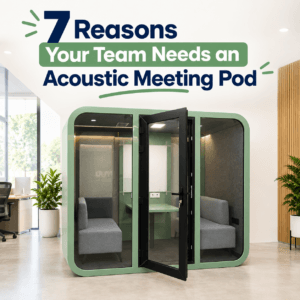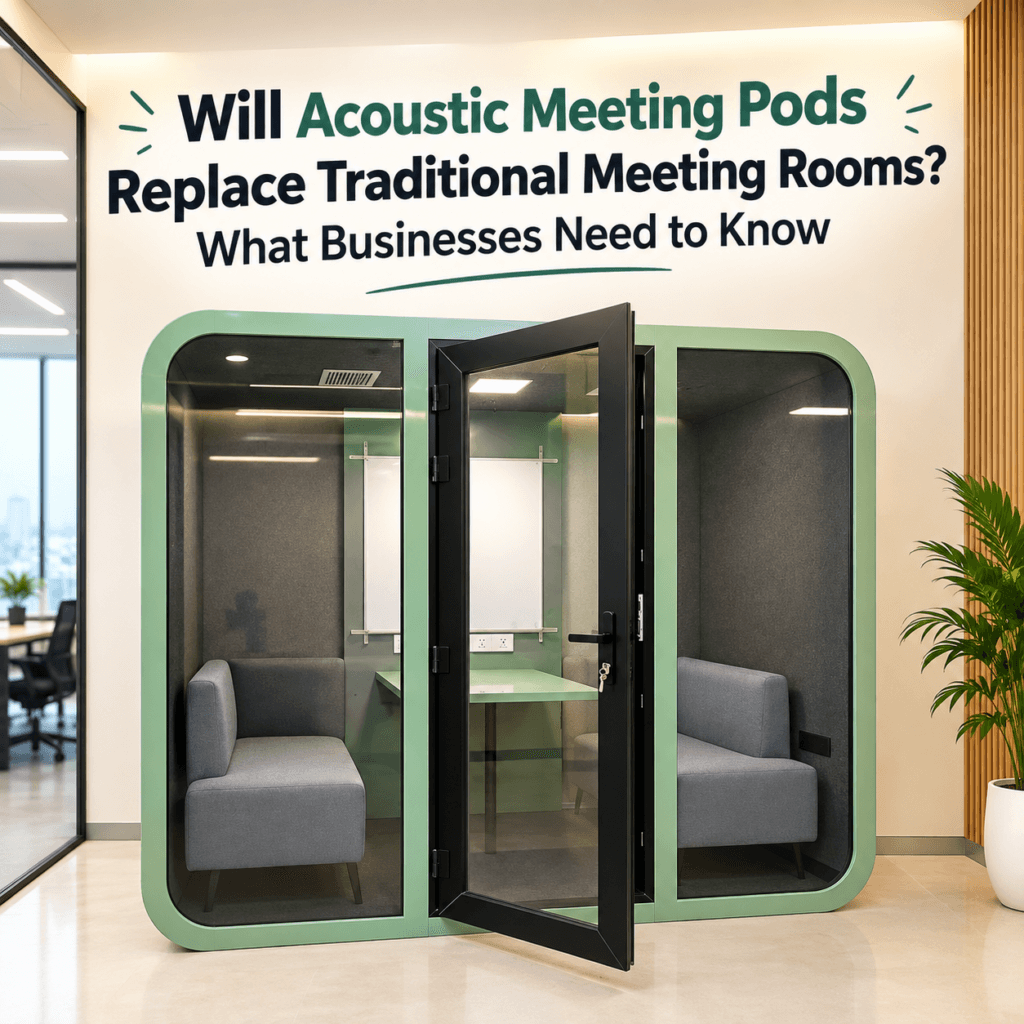
Will Acoustic Meeting Pods Replace Traditional Meeting Rooms? What Businesses Need to Know
Every facilities manager has faced the same problem: too many meetings, not enough meeting rooms. As offices shrink and hybrid work grows, businesses are increasingly turning to the acoustic meeting pod as a faster, cheaper alternative to building new conference rooms. But does that mean traditional meeting rooms are on their way out? Here’s an honest look at where pods win, where rooms still make sense, and how to decide for your own office.
Why This Question Keeps Coming Up
Office space planning has changed dramatically over the last few years. Headcounts fluctuate quarter to quarter, hybrid schedules mean occupancy is unpredictable day to day, and the cost of unused square footage has become impossible to ignore. Traditional meeting rooms were designed for a world where everyone came into the office five days a week and meeting demand was relatively stable. That world doesn’t exist for most companies anymore, which is exactly why pods have moved from a novelty to a serious line item in office planning budgets.
The Case for Acoustic Meeting Pods
Speed of Deployment. A meeting pod can be installed in days, not months. Unlike a conventional meeting room, there’s no need for construction permits, drywall, or electrical rewiring in most cases. A portable meeting pod can even be relocated if your office layout changes. For facilities teams under pressure to solve a meeting room shortage quickly, this speed alone often settles the decision, a construction project measured in months simply can’t compete with a pod that’s operational the same week it arrives.
Lower Cost Per Square Foot. Building a soundproofed conference room from scratch involves acoustic treatment, HVAC extension, and dedicated wiring costs that add up quickly. An enclosed meeting booth arrives pre-engineered with acoustic panels, ventilation, and power outlets already integrated, often at a fraction of the cost. When you factor in architect fees, permits, and the opportunity cost of space sitting unusable during construction, the gap widens even further in the pod’s favour.
Flexibility for Hybrid Teams. Hybrid offices rarely need the same number of meeting rooms every day. A work pod setup lets facilities teams add capacity incrementally one pod this quarter, two more next quarter rather than over-building a fixed number of rooms upfront. This incremental approach matters enormously for budget planning, since it converts what used to be a large, irreversible capital decision into a series of smaller, reversible ones.
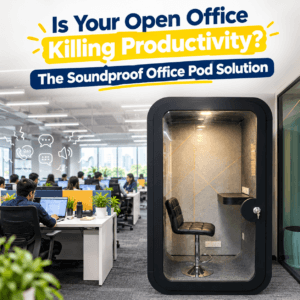
Better Acoustic Performance in Open Offices. Ironically, many traditional meeting rooms in open-plan offices weren’t designed with real acoustic isolation in mind just glass walls and a door. A properly built acoustic meeting pod using rockwool insulation and soundproof glazing often outperforms a converted glass-walled room. Anyone who has sat in a glass-walled “quiet room” and still heard every word of the conversation happening outside it knows exactly how common this problem is.
Where Traditional Meeting Rooms Still Win
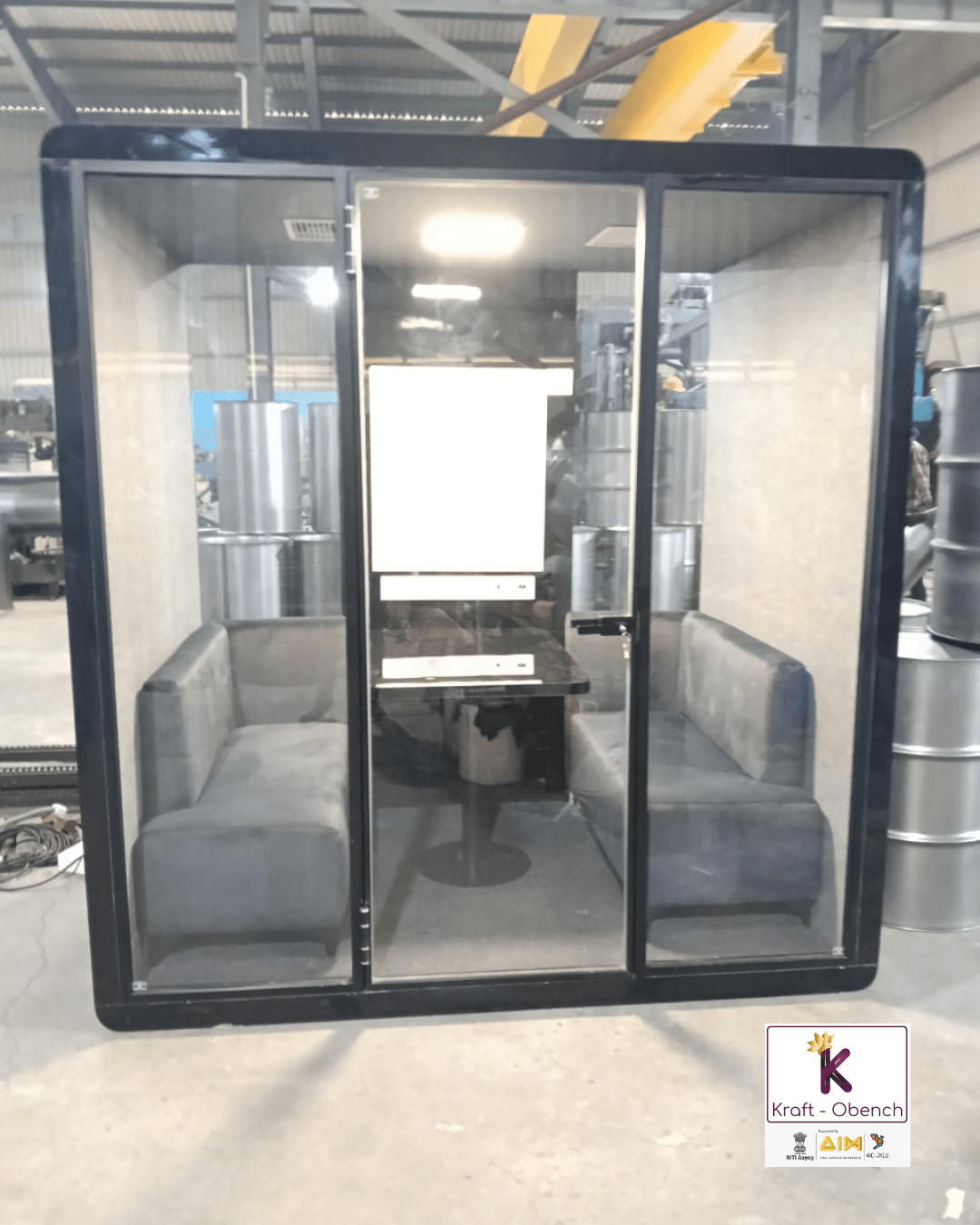
Capacity for Large Groups. Most pods, including our enclosed meeting booth, are designed for up to four people. For all-hands meetings, board sessions, or large client presentations, a traditional room remains necessary. No amount of pod flexibility solves the physical constraint of needing to seat fifteen or twenty people in one space.
Permanent AV Infrastructure. Rooms with built-in large-screen displays, dedicated conferencing hardware, and fixed seating still make sense for spaces used the same way every day. If a room hosts the same recurring leadership sync every week with the same AV setup, there’s little reason to disrupt that with a smaller, more flexible format.
Long-Term Fixed Departments. If a department has a stable headcount and predictable meeting patterns, a permanent room can sometimes be more cost-effective over a 5–10 year horizon than multiple pods. Pods shine in unpredictability; fixed, high-utilisation spaces don’t have that variable to solve for.
The Realistic Answer: A Hybrid Model
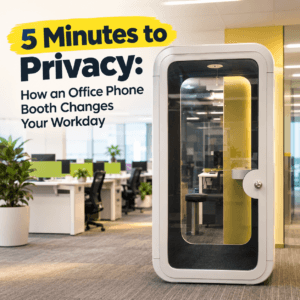
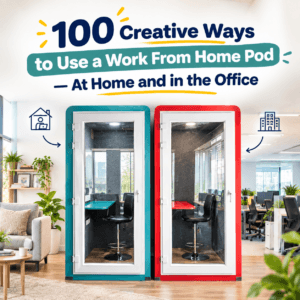
Most businesses we work with don’t fully replace meeting rooms. they supplement them. A typical modern floor plan now includes 1–2 large traditional meeting rooms for big groups, several meeting pods for 2–4 person discussions, multiple phone booths for one-person calls, and a few flexible work pods for solo focus work. Businesses moving toward this model typically start with a portable meeting pod, test usage patterns for a month, then scale.
This staged approach also reduces risk. Rather than guessing at the right room-to-pod ratio for an entire office redesign, companies get real usage data from a single pod before committing budget to a larger rollout, a far more defensible approach when justifying spend to finance or leadership.
What to Consider Before Switching
Measure actual usage patterns. Track how many meetings are 1:1, small-group, or large-group. If 70% of your meetings involve two to four people, pods will likely deliver better ROI than an equivalent number of traditional rooms. Most calendar and room-booking software can generate this data without any additional tooling, it’s simply a matter of pulling the report and looking at it honestly.
Consider acoustic ratings, not just appearance. Not all “soundproof” pods perform equally. Ask about sound absorption percentages Kraft-Obench pods, for instance, absorb up to 85% of ambient noise, a meaningful benchmark to compare against. A pod that looks sleek in marketing photos but underperforms acoustically will undermine the entire point of the purchase.
Plan for power and ventilation. Even portable options like the portable meeting pod need reliable power access and airflow. Confirm this during office planning, not after installation. A pod installed without adequate ventilation becomes uncomfortable within half an hour, which quietly kills adoption no matter how good the acoustics are.
Think about employee experience. Pods can feel more private and less intimidating than a glass-walled room in the middle of an open office useful for sensitive one-on-ones or HR conversations. This is a softer benefit than cost or speed, but it consistently shows up in employee feedback once pods are in daily use.
Where Vocal and Phone Booths Fit In
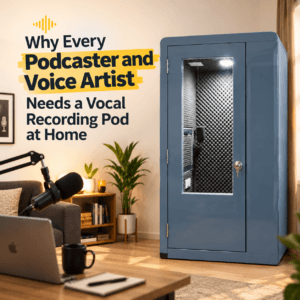
Meeting pods aren’t the only category worth considering. If your team also needs private space for solo calls, a compact phone booth solves a different problem than a meeting pod. And for content or media teams, a vocal recording pod or dubbing artist studio pod covers use cases meeting rooms were never built for. Browsing the full vocal booth and work pod categories alongside meeting pods often reveals gaps in an office’s current setup most companies discover they need a mix of formats, not just more of one.
How to Build Your Own Rollout Plan
For companies starting from scratch, a simple sequence tends to work well: audit current meeting patterns for 2–4 weeks, identify the single biggest bottleneck (usually small-group meeting space), install one or two pods to address it directly, gather feedback and usage data for a month, then expand based on what the data shows rather than assumptions made at the planning stage. This keeps the rollout grounded in actual demand instead of guesswork.
Final Verdict
Acoustic meeting pods won’t fully replace traditional meeting rooms but they are replacing the need to build more of them. For most growing businesses, the smarter move is a blended approach: keep a few large rooms for big gatherings, and fill the rest of the floor plan with flexible, quickly-installed pods.
Explore our full range of meeting pods in the shop, see real office installs in our gallery, read setup guidance in the FAQ, or contact us for a space-planning consultation. Learn more about our approach on the about us page, or browse more workplace insights on the blog.