30 Days to a More Productive Workspace With an Acoustic Meeting Pod
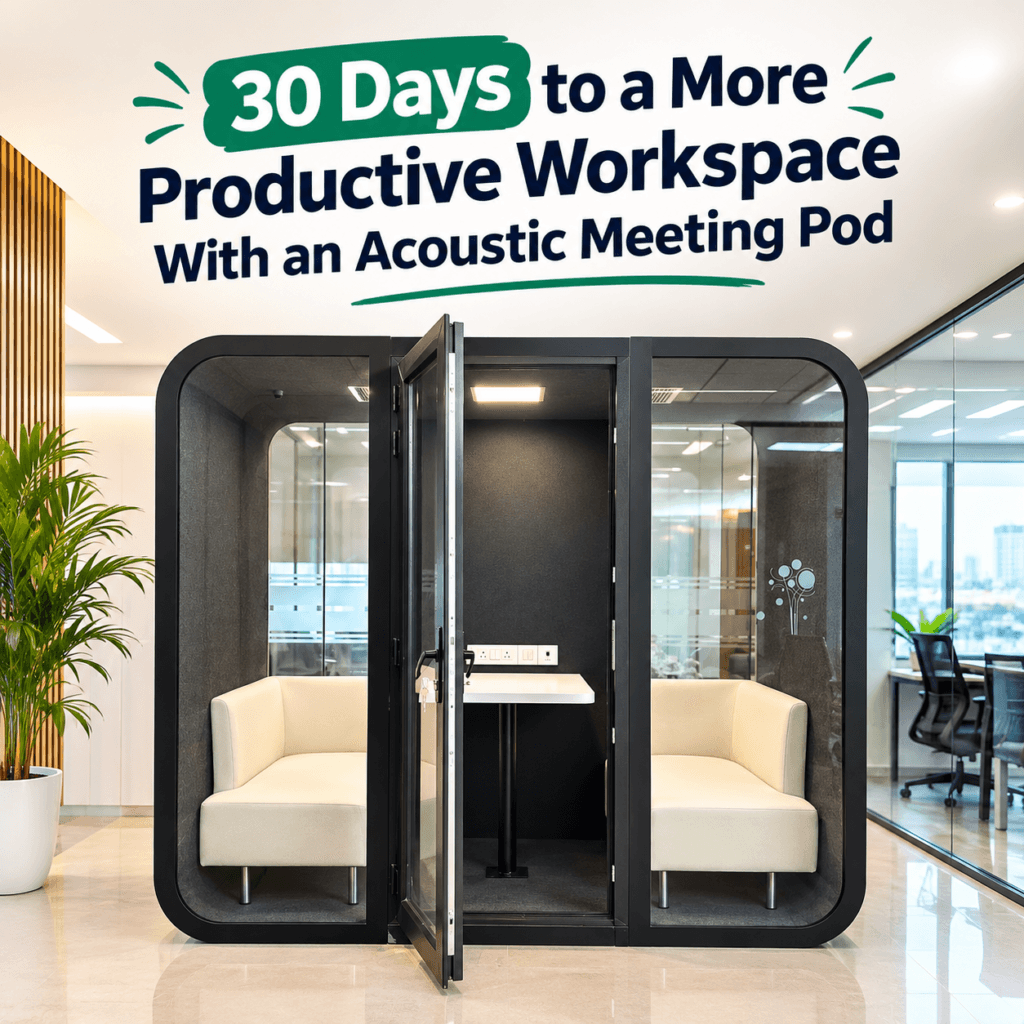
30 Days to a More Productive Workspace With an Acoustic Meeting Pod Most productivity advice focuses on habits — wake up earlier, block your calendar, use the Pomodoro method. Useful, but incomplete, because it ignores the environment those habits have to survive in. Installing an acoustic meeting pod changes the environment itself. Here’s a realistic 30-day breakdown of what changes, week by week, once your pod is in place. Why Environment Matters More Than Habits Alone Habit-based productivity advice assumes a stable environment — the same desk, the same background noise level, the same interruptions every day. In reality, most workplaces are noisy, unpredictable, and full of small frictions that quietly derail even the best-intentioned habits. A pod doesn’t ask you to be more disciplined; it removes an entire category of distraction before discipline is even needed. That’s why the changes below tend to show up on a fairly predictable timeline, regardless of the team or industry. Week 1 (Days 1–7): Adjustment and Awareness The first week is mostly about noticing what used to go unnoticed. Once you’re inside a meeting pod, the absence of background noise makes you suddenly aware of how much mental energy open-office chatter, hallway conversations, and HVAC hum were quietly consuming. Teams using a portable meeting pod for the first time often report shorter, more focused discussions almost immediately not because the meetings changed, but because the distractions disappeared. By Day 7, most teams have stopped commenting on “how quiet it is” and started simply using the space as normal infrastructure. It’s common during this first week for usage to be somewhat novelty-driven people book the pod partly out of curiosity. That’s fine, and even useful, since it gets more of the team familiar with the space early, which accelerates adoption in the weeks that follow. Week 2 (Days 8–14): Behaviour Starts to Shift This is where real change begins. Meetings that used to run long because of interruptions someone stepping out to take a call, a side conversation breaking focus start running closer to their scheduled time. An enclosed meeting booth designed for up to four people forces a kind of discipline: fewer people means fewer tangents, and better acoustics mean less talking over each other. Employees also start booking the pod proactively for sensitive conversations performance reviews, client negotiations, or HR matters rather than searching for an empty conference room. By the end of this week, booking patterns typically start to solidify. Certain time slots become predictably busy, and it becomes clearer whether one pod is enough or whether demand is already outpacing supply useful information for planning any future expansion. Week 3 (Days 15–21): Measurable Time Savings By the third week, patterns become measurable: meetings starting on time more consistently, fewer rescheduled meetings due to room unavailability, shorter meeting durations overall, and fewer follow-up meetings needed to “re-cover” what was missed due to noise or interruption. If your organisation also uses a compact phone booth for 1:1 calls alongside the meeting pod, this is usually when the two start working together quick calls go to the phone booth, small-group discussions go to the pod, and larger meetings stay in the main conference room. This is also typically when teams start tracking the numbers formally rather than relying on general impressions, which sets up the final week’s evaluation. Week 4 (Days 22–30): The Pod Becomes Invisible Infrastructure By the final week, the pod stops being a novelty and becomes something people simply expect to be available the same way they expect a working printer or stable Wi-Fi. This is the real marker of success: when a work pod or meeting pod is no longer discussed, it’s because it’s doing its job quietly in the background. Facilities teams typically use this point to evaluate whether additional pods are needed often adding a second portable meeting pod or a phone booth based on actual usage data from the first month. What Makes the 30-Day Shift Possible Kraft-Obench pods use rockwool insulation and soundproof glazing capable of absorbing up to 85% of ambient sound the technical foundation that makes behavioural change possible. Integrated lighting, ventilation, and ergonomic seating in every workspace pod mean people are actually willing to spend extended time inside, rather than avoiding it after the first use. And because options like the portable meeting pod don’t require permanent construction, businesses can test, relocate, or scale their pod setup without long-term commitment. The acoustic performance matters more than most people expect going in. A pod that only partially blocks noise will still leave the low-level awareness of the outside environment intact, which undermines the entire psychological shift this 30-day process depends on. That’s why absorption percentage not just appearance is worth checking closely before you start the trial at all. A Simple 30-Day Tracking Template Track weekly: average meeting length (before vs. after), number of meetings rescheduled due to room unavailability, employee feedback on call/meeting audio quality, and the number of “sensitive conversation” bookings (HR, reviews, client calls). Keeping this tracking lightweight matters a simple shared spreadsheet updated once a week is enough. The goal isn’t rigorous data science, it’s having enough evidence by Day 30 to make a confident decision about expanding, relocating, or adjusting how the pod is used. Expanding Beyond Meetings Once the meeting pod proves its value, many businesses extend the same logic to individual work. A portable office pod or Nano Pod applies the same acoustic principles to solo, focused work, while a vocal recording pod covers content and media teams recording voiceovers or training material. Many teams find that once the pattern is proven with one meeting pod, the case for expanding into other pod types becomes an easy internal conversation, backed by a month of real usage data rather than a hypothetical pitch. Final Thoughts Thirty days isn’t long enough to change company culture but it is long enough to prove whether an acoustic meeting pod earns its place in your office. If the last month
30 Days to a More Productive Workspace With an Acoustic Meeting Pod Read More »