Why Soundproofing Matters for Vocal Recording
India is home to one of the world’s most dynamic music and content creation ecosystems. From Mumbai’s Bollywood studios to Bangalore’s independent music scene, from Chennai’s classical recording tradition to Delhi’s rapidly growing podcasting community, the demand for high-quality vocal recording environments has never been higher. Yet India is also one of the noisiest countries in the world to record in.
Street traffic, construction activity, neighbourhood noise, and the general acoustic density of Indian urban environments make recording quality vocals at home or in a small studio an acoustic engineering challenge, not just a microphone selection question. A poorly treated recording environment adds reverb, flutter echo, comb filtering, and background noise floor problems that no microphone, preamp, or post-production software can fully correct.
Begin with the professional solution at Kraft-Obench particularly the Vocal Pod and use this guide to understand the full range of approaches available at every budget level.

Soundproofing vs Acoustic Treatment: Understanding the Difference
These two terms are frequently confused, but they describe fundamentally different acoustic interventions. Soundproofing refers to blocking external sound from entering your recording space it is about mass, isolation, and structural decoupling. Acoustic treatment refers to controlling how sound behaves inside your recording space it is about absorption, diffusion, and reverberation management.
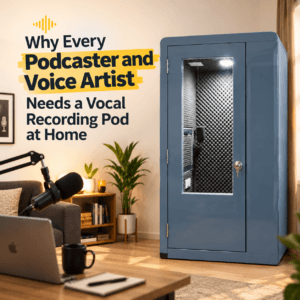
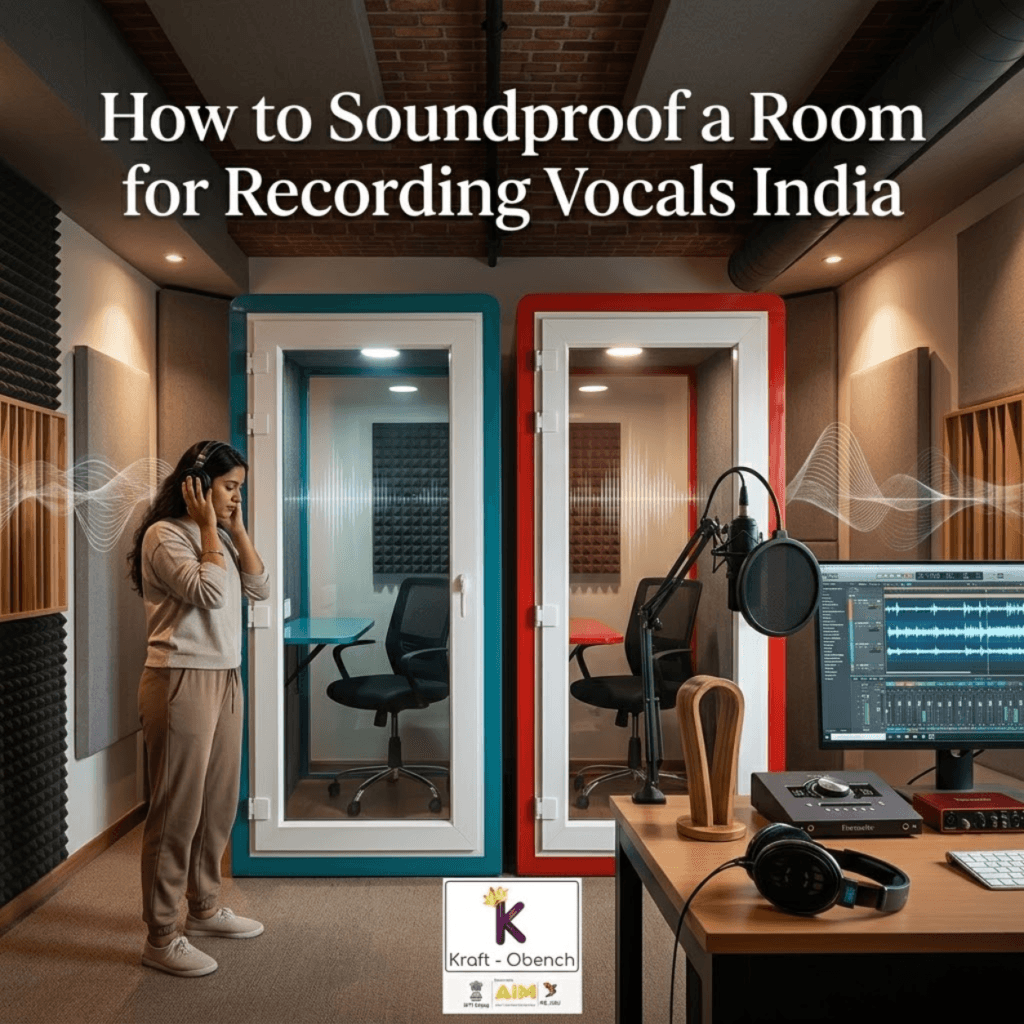
You need both for a functional vocal recording environment. A room can be perfectly soundproofed but acoustically terrible for recording if it has untreated reflective surfaces. Conversely, a beautifully acoustically treated room is useless for professional recording if traffic noise bleeds into every take. The Kraft-Obench Vocal Pod delivers both soundproofing and acoustic treatment in a single pre-assembled unit, which is why it is the most popular vocal recording solution across India.
Step 1: Seal All Air Gaps First
Before investing in any acoustic panels, mass-loaded vinyl, or recording pods, seal every air gap in your recording space. Sound follows air. A 1mm gap around a door frame or window reduces the effective isolation of an entire wall system by up to 50 percent. Acoustic door sweeps the rubber seal at the bottom of the door are the single highest-ROI first step for DIY soundproofing.
Apply acoustic sealant around all electrical boxes in walls. Use weatherstripping on door perimeters. Seal pipe penetrations through walls. This work costs under ₹5,000 for a typical room and delivers 6 to 8 dB of additional isolation before any other investment is made. It is the universally recommended first step before spending on panels, pods, or construction work.
Step 2: Add Mass to Walls
Once air gaps are sealed, adding mass to walls is the most effective next step for DIY soundproofing. Sound transmission through a wall is governed by the mass law heavier walls transmit less sound. Adding a second layer of 12mm gypsum board with Green Glue viscoelastic damping compound between the layers delivers 6 to 10 dB of additional isolation at a cost of ₹150 to ₹300 per square foot.
For singers in Mumbai apartments and Delhi flats with rental restrictions on permanent structural changes, this double-layer gypsum approach applied to the noisiest wall typically the one facing the street provides meaningful isolation improvement without requiring landlord approval for major construction.
Step 3: Decouple the Structure
Structural decoupling is the most technically advanced and acoustically impactful DIY soundproofing step. Sound transmits through solid structures as vibration it bypasses even very heavy walls by travelling through the building’s structural frame. Resilient channels or rubber isolation mounts interrupt this vibration path when used to attach wall panels and ceilings to the building structure.
This step alone can add 10 to 15 dB of low-frequency isolation far more than additional mass alone. For singers who want to bypass all this complexity, the Kraft-Obench Vocal Pod is pre-engineered with full structural decoupling built into every panel assembly, delivering the benefit without requiring any construction knowledge.
Step 4: Treat the Room Acoustically
After addressing sound transmission, address the acoustic character of the space itself. Place broadband acoustic panels at first reflection points the wall directly to the side of the microphone position at ear height, and the wall behind the performer. Use deep corner bass traps (minimum 300mm thick) to control low-frequency energy buildup in room corners.
Target an RT60 of under 0.3 seconds for a vocal recording environment. This is significantly drier than even a professional broadcast studio and requires substantial panel coverage typically 40 to 60 percent of total room surface area. Compare the labour, cost, and quality uncertainty of achieving this DIY with the professionally tuned acoustic interior of Kraft-Obench products at our Nano Pod page.
Step 5: Use a Professional Vocal Booth
For singers, voice-over artists, and podcasters who cannot undertake construction in a rental apartment or who need immediate professional-quality results, a Kraft-Obench Vocal Pod delivers studio-quality isolation and acoustic treatment with zero construction involvement.
The Vocal Pod achieves STC 38 to 42 isolation and NRC 0.90 acoustic panel performance with silent ventilation at below 30 dB(A). It installs in one day and is available across all major Indian cities including Bangalore, Hyderabad, Chennai, and Pune.
How AI Audio Tools Enhance Pod Recordings
India’s recording professionals are increasingly using AI-powered audio tools including AI noise reduction, AI vocal enhancement, and AI mastering platforms as part of their standard production workflow. These tools perform significantly better when given clean source recordings from acoustically controlled environments.
AI noise reduction algorithms, for instance, are designed to separate signal from noise. The cleaner the original recording meaning the lower the noise floor and the fewer room reflections the more accurately AI can process the vocal without introducing artefacts. A Kraft-Obench Vocal Pod recording provides AI audio tools with the ideal clean source material, compounding the acoustic quality of the recording environment with the enhancement capability of AI post-production software.
DIY Cost vs Professional Pod: The Real Comparison
DIY soundproofing a 100 square foot room in India costs ₹85,000 to ₹1,20,000 in materials and takes 3 to 5 weeks of disruptive renovation work with uncertain acoustic outcomes. A Kraft-Obench Vocal Pod costs ₹1,50,000 to ₹2,00,000, installs in one day, delivers guaranteed acoustic performance, and retains significant resale value.
For working musicians and voice-over professionals, the professional pod delivers faster ROI and eliminates the risk of a DIY build that fails to achieve the required acoustic performance. Rental options are available at our Rentals page for project-based recording work where permanent ownership is not required.
Frequently Asked Questions
Q1: What NRC should vocal room panels have? Target NRC 0.85 or above. Kraft-Obench Vocal Pod panels are rated NRC 0.90, which is studio grade.
Q2: Does the Kraft-Obench Vocal Pod work for podcasting as well as singing? Yes. The Vocal Pod is equally effective for podcast recording, voice-over work, audiobook narration, and spoken word content. Many users in Bangalore and Delhi are podcasters and content creators.
Q3: Will a vocal pod completely eliminate the sound of a passing truck? A Kraft-Obench Vocal Pod achieves STC 38 to 42. A truck at 85 dB outside is reduced to approximately 43 to 47 dB inside — sufficient for most professional microphone setups.
Q4: Does the Vocal Pod require ventilation during recording sessions? Yes, and Kraft-Obench Vocal Pods include a silent EC fan ventilation system rated below 30 dB(A) quiet enough for professional vocal recording.
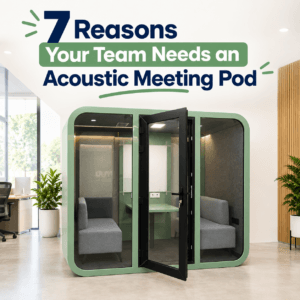
Q5: Can two people use the Vocal Pod simultaneously? The standard Vocal Pod is designed for single-person use. For two-person sessions, the Meeting Pod with enhanced acoustic treatment is recommended.
Q6: Is the Vocal Pod available for short-term rental for music projects? Yes. Short-term Vocal Pod rental is available through our Rentals page with minimum 2-week rental terms.
Q7: What cities in India have Vocal Pod installations I can visit? Kraft-Obench has Vocal Pod installations in Delhi, Mumbai, Bangalore, Hyderabad, Chennai, Pune, and Ahmedabad. Contact us via our Contact page to arrange a demonstration.