Best Acoustic Pods for Podcasters in India: 2026 Reviews
Indian podcasting is exploding. With over 57 million podcast listeners and growing, India is one of the fastest-growing podcast markets in the world. But here is what nobody tells new podcasters: your biggest enemy is not your microphone, your editing software, or your content. It is your room.
Acoustic pods have become the go-to solution for serious podcasters who want professional sound without building a dedicated studio. This review breaks down what to look for and which options make the most sense for Indian creators.
Why Podcasters Need an Acoustic Pod (Not Just a Mic Filter)
Many new podcasters think buying a better microphone or a reflection filter will solve their audio problems. It helps but only partially.
The real issue is room acoustics. When sound bounces off bare walls, floors, and ceilings, it creates reflections and reverb that land on your recording milliseconds after your direct voice. This is what makes a recording sound amateur and echo-y, and no microphone or filter fully compensates for it.
A reflection filter behind your microphone reduces rear reflections. But it does nothing for the sides, the floor, or background noise entering through the walls. An acoustic pod solves all of these simultaneously creating a controlled acoustic environment that makes even a budget microphone sound significantly better.
For podcasters doing interviews, the difference is even more dramatic. Guests in a pod sound like they are in a studio, not a kitchen.
H2: What to Look for in a Podcast Recording Pod
Before reviewing specific pods, here are the criteria that matter most for podcasting:
Noise Isolation (STC rating): Look for an STC rating of at least 30 for meaningful noise reduction. Higher is better. This determines how much external noise traffic, family, construction is blocked before reaching your microphone.
Internal Acoustics: The inside surfaces should be lined with acoustic foam or fabric-wrapped panels. Hard interior surfaces create reflections. The goal is a dead, controlled acoustic environment inside.
Ventilation: You will be inside this pod for one to three hours recording. Proper ventilation is non-negotiable. Look for built-in fans with low noise ratings so they do not appear on your recording.
Cable Management: Microphones, audio interfaces, laptops, headphones podcasters have cables. A pod should have clean cable entry points and internal routing.
Size: A solo podcaster needs a one-person pod comfortably. If you regularly have guests in-person, a two-person pod is worth the investment.
Top 5 Acoustic Pods for Podcasters in India Reviewed
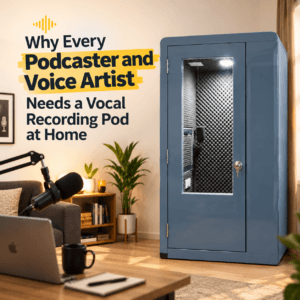
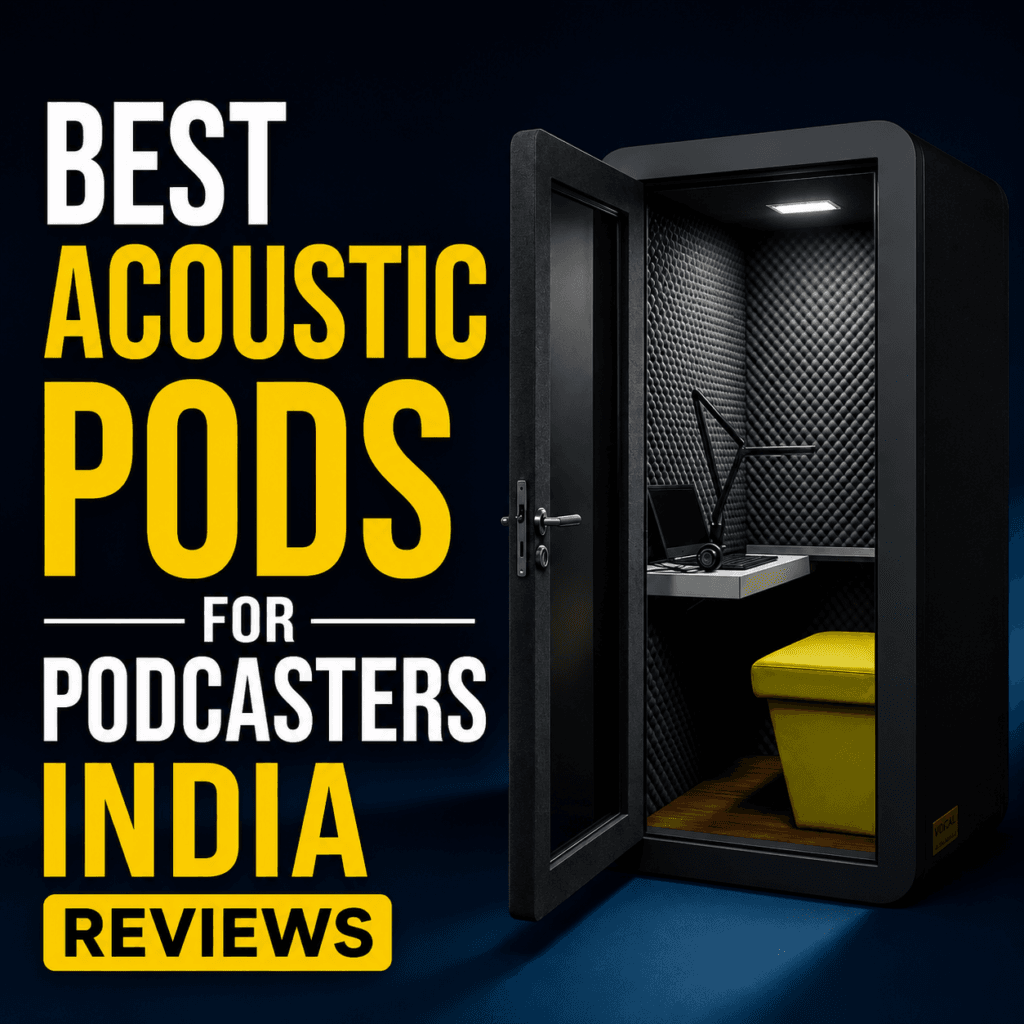
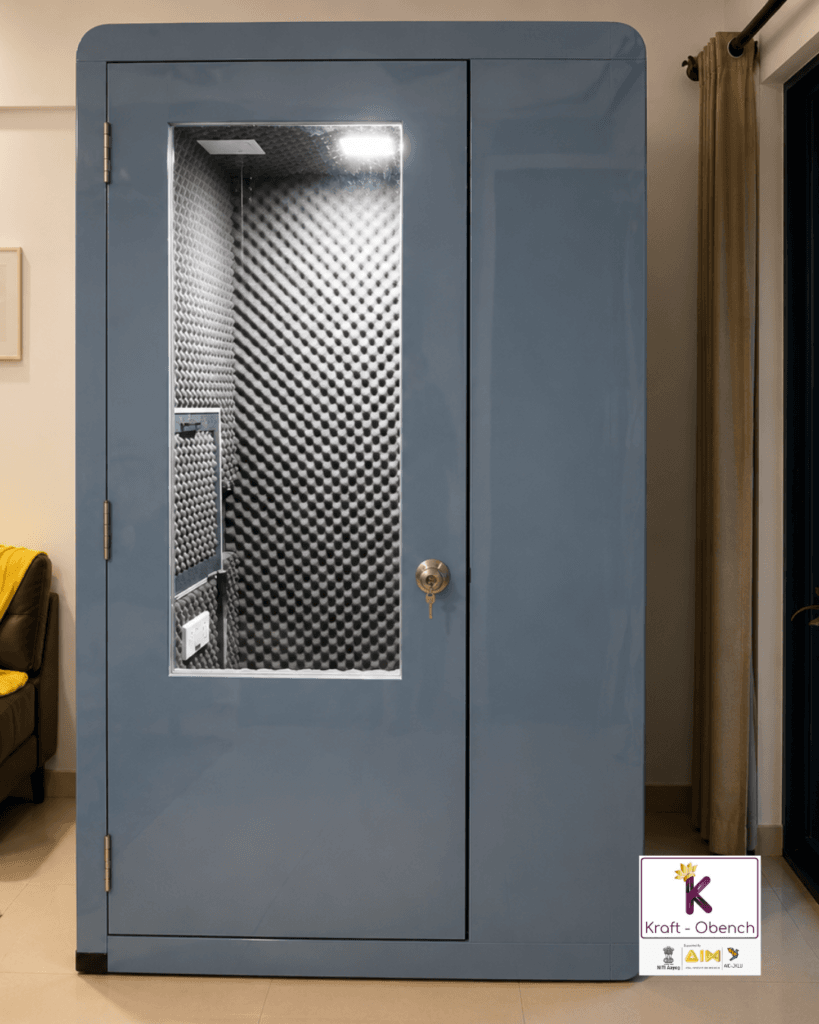
- Kraft-Obench Vocal Pod The Kraft-Obench Vocal Pod is purpose-built for recording making it the most relevant option for Indian podcasters and voice artists. It features high-density acoustic lining, a ventilation system with a low acoustic footprint, and cable management designed for professional audio setups. Assembly is straightforward and does not require tools. For Indian creators who need a dedicated recording environment at home, this is the benchmark product in the local market.
- Kraft-Obench Nano Pod The Nano Pod is a more compact option ideal for solo podcasters working in smaller apartments. It does not have the same recording-specific features as the Vocal Pod, but its noise isolation is strong enough for solo recording in most urban Indian environments. A great entry point if budget is a consideration.
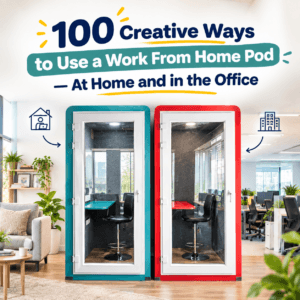
- Kraft-Obench Work Pod The Work Pod is a larger enclosed workspace that gives you more room for equipment — two monitors, a mixing interface, external hard drives. If you run a high-production podcast with complex setups, the additional space is valuable.
- DIY Closet Conversion Technically not a pod, but worth mentioning: a wardrobe filled with clothes provides natural absorption. If you are just starting and cannot invest in a pod yet, this can work for basic solo recording. Limitations include no ventilation, poor cable management, and inconsistent acoustic results.
- Imported Portable Booths Several imported brands are available in India through grey market channels. These tend to be expensive with long delivery times, limited after-sales support, and no local servicing. For reliability and value in the Indian market, a domestic manufacturer like Kraft-Obench is the safer choice.
Budget Pods vs Premium Booths: Is the Price Difference Worth It?
A common question among Indian podcasters is whether the cheapest option usually a DIY setup or a basic reflection filter is good enough, or whether investing in a proper pod pays off.
The answer depends on your goals. If you are podcasting as a hobby and releasing episodes occasionally, a basic setup with acoustic panels and a reflection filter is adequate.
But if you monetise your podcast through sponsorships, use it for business development, or have professional guests, audio quality directly affects your credibility and revenue. Listeners have been trained by high-quality audio. They notice and they disengage when audio is poor, even if they cannot articulate exactly why.
A proper acoustic pod from Kraft-Obench is a one-time investment that pays back with every episode you record in it.
Setup Tips for Getting Studio-Quality Sound in Your Pod
Once your pod is assembled, these steps maximise your recording quality:
Place your microphone on a shock mount arm, not a desk stand. This isolates it from desk vibrations.
Position the microphone at mouth height, slightly off-axis (angled about 20 degrees away from your lips) to reduce plosives.
Run a short test recording before each session and listen back on headphones for any background hum from the ventilation. Adjust fan speed if needed.
Use a pop filter six to eight centimetres from the microphone capsule.
If your pod has a hard floor surface, place a small rug or foam mat under your chair to reduce low-end reflections.
Accessories That Improve Your Podcast Pod Setup
Microphone arm: A Rode PSA1 or equivalent gives you flexible positioning without desk clutter.
Audio interface: A Focusrite Scarlett Solo or Audient iD4 gives you clean, professional preamps.
Headphones: Closed-back headphones are essential inside a pod open-back headphones bleed sound into your microphone.
Acoustic wedge foam: Adding a few extra panels to the interior sides of your pod pushes acoustic performance even further.
LED panel light: A soft, adjustable LED panel makes video recordings look professional. Many podcasters now do video simultaneously.
Final Recommendations for Every Budget
Starting out (under ₹69,999): Reflection filter, dynamic microphone like the Samson Q2U, basic acoustic panels. Not perfect but workable.
Serious hobbyist (₹69,999): Entry-level acoustic pod or Nano Pod, condenser microphone, audio interface.
Professional creator (₹60,000 and above): Kraft-Obench Vocal Pod, professional microphone and interface, dedicated recording light, video camera. This is the setup that sounds like a studio.