May 27, 2026

acoustic meeting pod

Acoustic Meeting Pod Benefits for Startups India

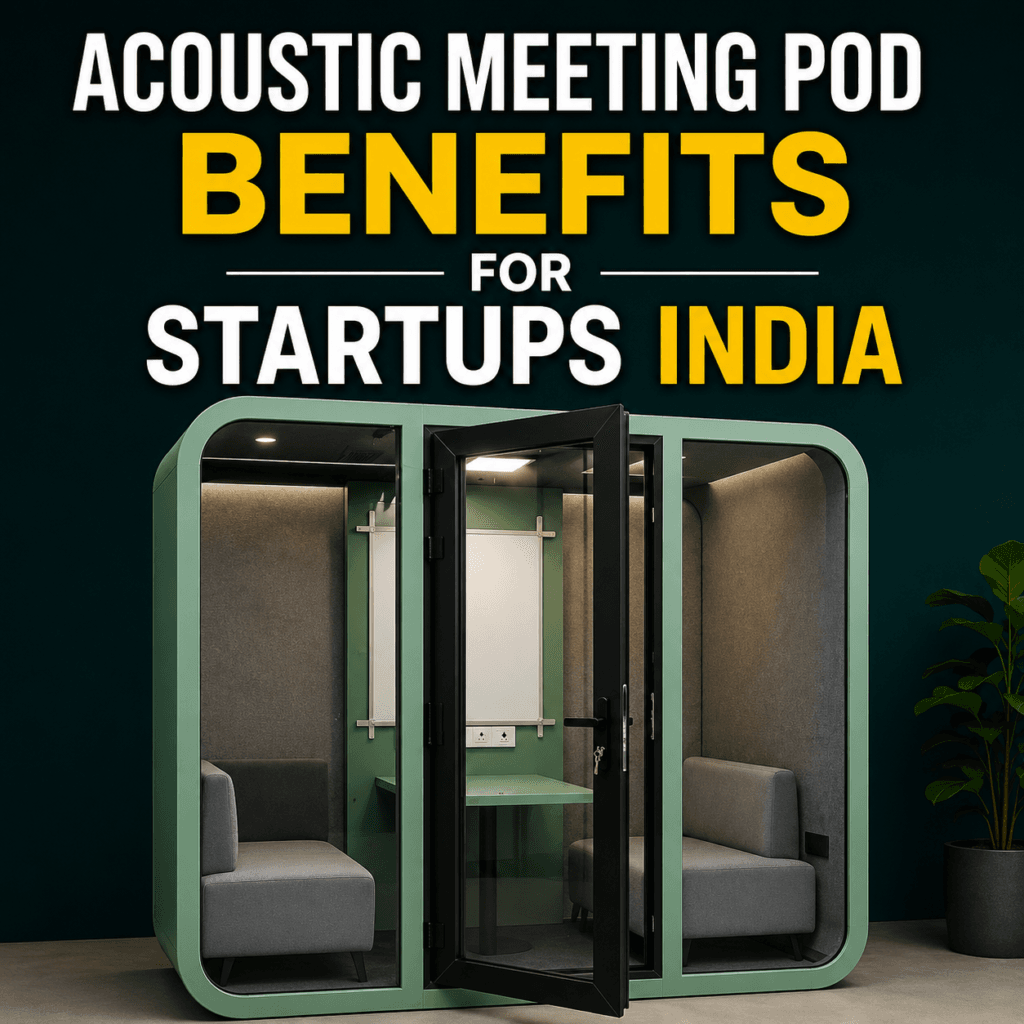
Acoustic Meeting Pod Benefits for Startups in India Indian startups face a unique office challenge. You need to look and operate professionally from day one, but you are working with limited capital, uncertain headcount projections, and often a co-working or short-lease office setup. Building out traditional meeting rooms makes zero financial sense. Acoustic meeting pods are the solution the Indian startup ecosystem has been waiting for. Here is why. The Problem With Traditional Office Space for Indian Startups Startups in India overwhelmingly operate from co-working spaces, managed offices, or short-term leases in their early years. These environments offer flexibility but they come with a shared, open, noisy environment where finding genuine privacy for a client call, an investor meeting, or a sensitive HR conversation is nearly impossible. The phone booths in most co-working spaces are booked solid. The glass meeting rooms are visible to everyone. Conversations spill. Confidentiality is compromised. At the same time, startups cannot afford to build. Fit-out costs of ₹4 to ₹12 lakh for a meeting room in a space you might vacate in 12 months makes no financial sense. Even if the landlord allows construction, the deposit and fitout investment is capital that should be going toward product and growth. What Is an Acoustic Meeting Pod? An acoustic meeting pod is a freestanding, self-contained meeting enclosure that you place within any office or workspace. It does not require construction, drilling, or structural modification. It arrives flat-packed, assembles in a few hours, and delivers professional-grade acoustic privacy from the moment the door closes. Inside, a quality pod has comfortable seating, integrated lighting, power points, and a ventilation system. It looks and feels like a real meeting room but it goes up in hours and can be moved or reconfigured as your team changes. Kraft-Obench Meeting Pods are used by startups across Bangalore, Delhi, Mumbai, and Hyderabad who need private meeting infrastructure without the cost and permanence of construction. Benefit 1: Flexible, Scalable Private Meeting Space A startup’s space needs change constantly. At ten people you need one private meeting space. At thirty people you need three. At sixty you need a mix of small call booths and larger meeting pods. With constructed rooms, scaling up means construction delays and capital expenditure every time. With pods, you order additional units as needed. They arrive in days, not months. Your private meeting capacity scales with your headcount without any additional architectural work. If your team downsizes as happens frequently in startups navigating market realities pods can be reconfigured, sold, or relocated rather than left as costly built-in assets in an office you no longer need. Benefit 2: Fraction of the Cost of a Conference Room A four-person acoustic meeting pod from Kraft-Obench costs a fraction of what it takes to build an equivalent meeting room. With pods, there are no civil works, no electrical spur installation, no HVAC modifications, and no interior design fees. The pod arrives with everything included. For a seed-stage startup managing runway carefully, the capital efficiency of pods versus construction is significant. The money saved on meeting room construction is capital that stays available for hiring, product development, or marketing. Benefit 3: Faster Setup – No Construction Required Speed matters enormously in a startup. When you sign a new office lease, you want to be operational immediately not waiting six weeks for contractors to finish building meeting rooms. A Kraft-Obench meeting pod is assembled and operational within a few hours of delivery. Your team can be taking client meetings inside it on the same day it arrives. This is not a small advantage in high-growth phases, six weeks of lost operational time has a genuine cost. When you move offices, the pods move with you. Disassemble, transport, reassemble. Your private meeting infrastructure travels with your team. Benefit 4: Boosts Collaboration and Confidential Discussions Open-plan startup offices are energetic and social which is valuable but they make candid, confidential conversation nearly impossible. Salary discussions, performance conversations, investor calls, legal matters, and strategic planning all require genuine privacy. When teams lack private space, these conversations either get postponed, happen inappropriately in the open, or require leaving the office entirely going to a café or finding a hotel lobby. All of these options are inefficient and unprofessional. An acoustic meeting pod inside your own office means these conversations happen immediately, confidentially, and comfortably. Teams make better decisions faster when they have space to think and speak freely. Which Indian Startups Are Already Using Meeting Pods? Acoustic meeting pods are now present in offices across India’s startup ecosystem from early-stage seed-funded companies to Series B and beyond. They appear in co-working residencies in Koramangala and HSR Layout in Bangalore, in managed offices in Cyber City Gurgaon, and in the startup hubs of Powai and BKC in Mumbai. The adoption pattern is consistent: a founding team discovers pods as an alternative to construction, experiences the productivity and privacy benefit, and typically orders additional units as headcount grows. The portability advantage becomes particularly clear the first time a startup moves offices and takes its pods with it. Scale your meeting space without construction costs. Get a Quote – Kraft-Obench Meeting Pods.

Acoustic Meeting Pod Benefits for Startups India Read More »
office pod

Office Pod Installation Guide for Small Apartments India

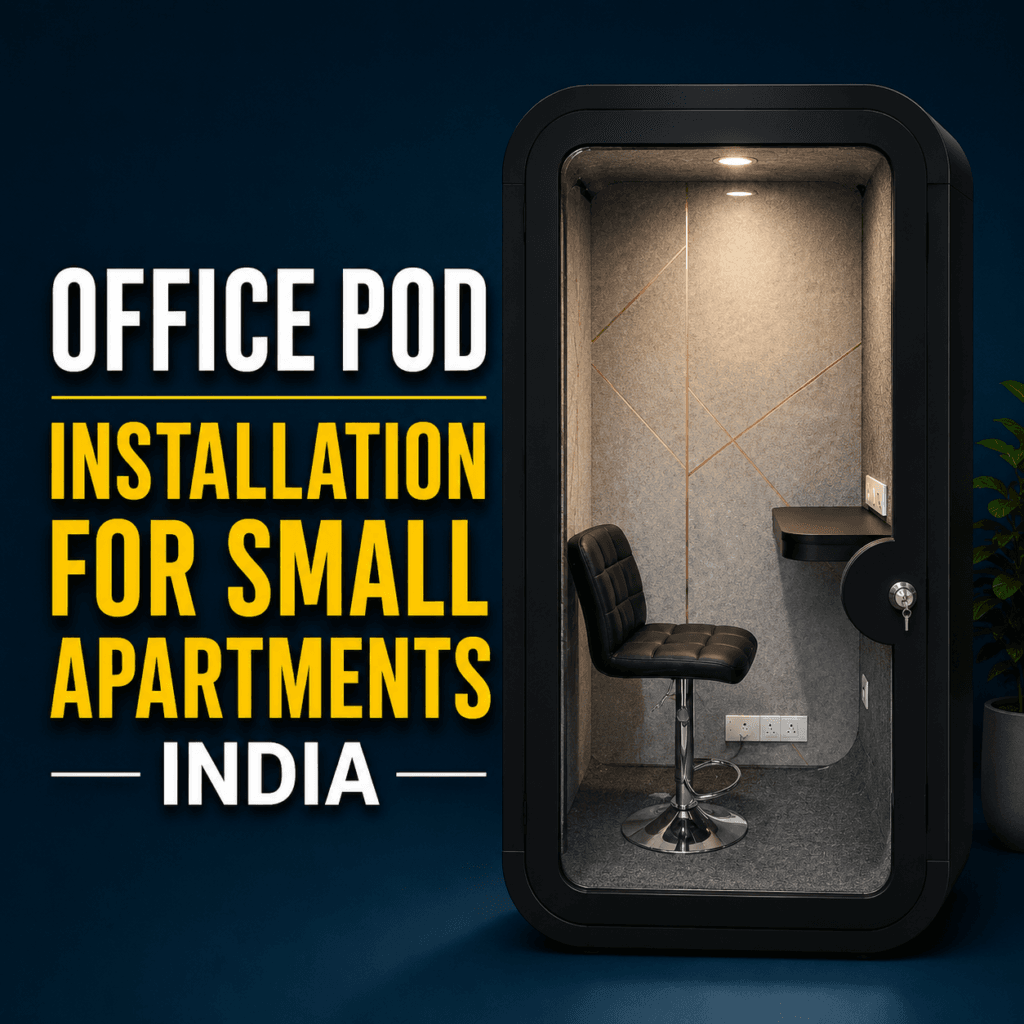
How to Install an Office Pod in a Small Indian Apartment: Step-by-Step Guide India’s urban apartments are not known for generous proportions. A 2BHK in Mumbai or Gurgaon often means 850 square feet shared between two or three people. Yet thousands of WFH professionals in exactly these conditions are successfully installing acoustic office pods because modern pods are designed to fit. This guide covers exactly how to make it work. Can You Really Fit an Office Pod in a Small Apartment? Yes with the right pod and the right planning. The most compact pods, like the Kraft-Obench Nano Pod, have a footprint of approximately 120 x 120cm roughly the size of a large wardrobe. If your room can fit a double bed, it can almost certainly fit a compact pod with room to spare. The key is not just the floor space the pod occupies it is the total space including the clearance you need to comfortably enter and exit, open the door fully, and run cables. Plan for at least 60 to 80cm clearance in front of the door and 30cm on the remaining sides. What small apartment dwellers often discover is that placing a pod in a room actually makes it feel more organised because the pod takes over the role of the study corner, and the rest of the room opens up. Choosing the Right Spot: Corners, Balconies, and Room Nooks Corner placement is the most space-efficient location for a pod in a small apartment. Two walls already provide boundaries, which means you only need clearance in front and to one side. Corners also tend to be further from the main traffic flow of a room. Balconies are increasingly popular in Indian cities for pod placement, particularly in newer construction where balconies are enclosed and tiled. A weatherproof enclosure around the pod, or a pod with adequate thermal properties, can work well in a covered balcony. Confirm dimensions and that the balcony floor can handle the pod’s weight. Study nooks alcoves, deep cupboard spaces, or wide corridor ends are excellent if you have them. Measure carefully and confirm ceiling height in these areas, which is sometimes lower than in the main room. Avoid placing the pod directly in front of a window that you need for natural light and ventilation for the rest of the room. Floor Preparation and Weight Limits to Check First Before assembling your pod, confirm your floor can handle the weight. A compact pod with a person inside weighs approximately 150 to 250 kg depending on the model and build materials. Most concrete slab flooring in Indian construction handles this without issue, but older buildings and wooden-floored homes need confirmation. If you live in a housing society, check whether your apartment lease or society rules have any restrictions on installing freestanding structures. Most pods do not require drilling or wall fixings, so they typically fall outside any regulatory concern but confirming in advance avoids disputes later. Clean and level the floor area where the pod will sit. If there is any unevenness, address it with a thin rubber levelling mat before assembly, as a level base ensures the pod door seals properly. Step-by-Step Assembly for Most Pod Models The following applies broadly to panel-based acoustic pods like those from Kraft-Obench. Specific instructions vary by model always follow the provided manual. Step 1 : Unpack and inventory. Lay all panels and components out on the floor and verify everything against the packing list before beginning assembly. This takes fifteen minutes and saves hours of frustration later. Step 2 : Assemble the base frame. Connect the floor panel sections and the base frame. Ensure all connections are flush and locked before proceeding. Step 3 : Raise the wall panels. Starting with the two rear walls, raise and lock each wall panel to the base frame. Work with a second person for this step the panels are manageable but awkward alone. Step 4 : Install the door frame and door. The door frame slots into the front wall assembly. Take care with the door seal, ensure it compresses evenly all around the frame when closed. Step 5 : Install the ceiling panel. This is usually the heaviest single step. Two people are required. Lift, align, and lock the ceiling into the top of the wall assembly. Step 6 : Connect ventilation. Route the ventilation ducting and install the fan unit per the manual. Test that air flows through before sealing cable entry points. Step 7 : Run cables and power. Route power cables through the designated cable entry. Do not run cables under the door seal,  this breaks the acoustic integrity. Step 8 : Install interior fittings. Mount the desk surface or shelf, connect interior lighting, and check all acoustic lining is properly adhered to wall surfaces. Total time for two people: three to six hours. Ventilation and Cable Management in Tight Spaces In a small apartment, the ventilation outlet of your pod needs somewhere to go. If the pod is in an enclosed room, ensure the room itself has adequate ventilation an open window or a running air conditioner that exchanges air. The pod’s ventilation circulates air but does not create air from nothing. For cable management, run a single extension lead from the nearest wall socket into the pod through the cable entry point. Inside the pod, use a compact multi-socket power strip to run your laptop charger, monitor, audio interface, and any other equipment. Label cables clearly. Inside a pod, reaching behind a desk to find a specific cable is genuinely difficult. If you use Wi-Fi, test signal strength inside the pod before finalising its position. Acoustic pods with dense metallic components can reduce Wi-Fi signal. If signal is weak, a small Wi-Fi extender or powerline adapter solves this completely. Space-Saving Furniture Pairing Ideas The right furniture choices make a small apartment with a pod feel spacious rather than cramped. Use a wall-mounted fold-down desk in the rest of the room rather

Office Pod Installation Guide for Small Apartments India Read More »

Best Acoustic Pods

Best Acoustic Pods for Podcasters India Reviews

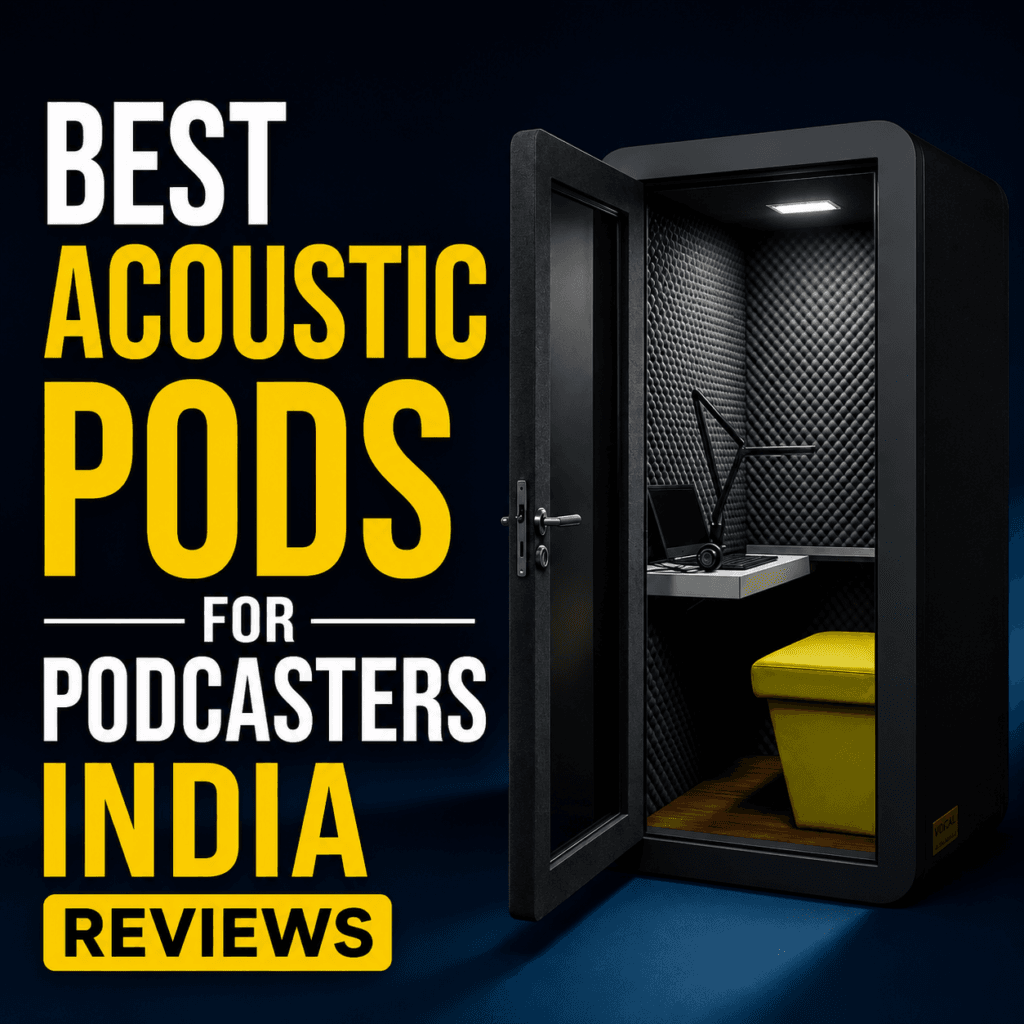
Best Acoustic Pods for Podcasters in India: 2026 Reviews Indian podcasting is exploding. With over 57 million podcast listeners and growing, India is one of the fastest-growing podcast markets in the world. But here is what nobody tells new podcasters: your biggest enemy is not your microphone, your editing software, or your content. It is your room. Acoustic pods have become the go-to solution for serious podcasters who want professional sound without building a dedicated studio. This review breaks down what to look for and which options make the most sense for Indian creators. Why Podcasters Need an Acoustic Pod (Not Just a Mic Filter) Many new podcasters think buying a better microphone or a reflection filter will solve their audio problems. It helps but only partially. The real issue is room acoustics. When sound bounces off bare walls, floors, and ceilings, it creates reflections and reverb that land on your recording milliseconds after your direct voice. This is what makes a recording sound amateur and echo-y, and no microphone or filter fully compensates for it. A reflection filter behind your microphone reduces rear reflections. But it does nothing for the sides, the floor, or background noise entering through the walls. An acoustic pod solves all of these simultaneously creating a controlled acoustic environment that makes even a budget microphone sound significantly better. For podcasters doing interviews, the difference is even more dramatic. Guests in a pod sound like they are in a studio, not a kitchen. H2: What to Look for in a Podcast Recording Pod Before reviewing specific pods, here are the criteria that matter most for podcasting: Noise Isolation (STC rating): Look for an STC rating of at least 30 for meaningful noise reduction. Higher is better. This determines how much external noise traffic, family, construction is blocked before reaching your microphone. Internal Acoustics: The inside surfaces should be lined with acoustic foam or fabric-wrapped panels. Hard interior surfaces create reflections. The goal is a dead, controlled acoustic environment inside. Ventilation: You will be inside this pod for one to three hours recording. Proper ventilation is non-negotiable. Look for built-in fans with low noise ratings so they do not appear on your recording. Cable Management: Microphones, audio interfaces, laptops, headphones podcasters have cables. A pod should have clean cable entry points and internal routing. Size: A solo podcaster needs a one-person pod comfortably. If you regularly have guests in-person, a two-person pod is worth the investment. Top 5 Acoustic Pods for Podcasters in India Reviewed Kraft-Obench Vocal Pod The Kraft-Obench Vocal Pod is purpose-built for recording making it the most relevant option for Indian podcasters and voice artists. It features high-density acoustic lining, a ventilation system with a low acoustic footprint, and cable management designed for professional audio setups. Assembly is straightforward and does not require tools. For Indian creators who need a dedicated recording environment at home, this is the benchmark product in the local market. Kraft-Obench Nano Pod The Nano Pod is a more compact option ideal for solo podcasters working in smaller apartments. It does not have the same recording-specific features as the Vocal Pod, but its noise isolation is strong enough for solo recording in most urban Indian environments. A great entry point if budget is a consideration. Kraft-Obench Work Pod The Work Pod is a larger enclosed workspace that gives you more room for equipment — two monitors, a mixing interface, external hard drives. If you run a high-production podcast with complex setups, the additional space is valuable. DIY Closet Conversion Technically not a pod, but worth mentioning: a wardrobe filled with clothes provides natural absorption. If you are just starting and cannot invest in a pod yet, this can work for basic solo recording. Limitations include no ventilation, poor cable management, and inconsistent acoustic results. Imported Portable Booths Several imported brands are available in India through grey market channels. These tend to be expensive with long delivery times, limited after-sales support, and no local servicing. For reliability and value in the Indian market, a domestic manufacturer like Kraft-Obench is the safer choice. Budget Pods vs Premium Booths: Is the Price Difference Worth It? A common question among Indian podcasters is whether the cheapest option usually a DIY setup or a basic reflection filter is good enough, or whether investing in a proper pod pays off. The answer depends on your goals. If you are podcasting as a hobby and releasing episodes occasionally, a basic setup with acoustic panels and a reflection filter is adequate. But if you monetise your podcast through sponsorships, use it for business development, or have professional guests, audio quality directly affects your credibility and revenue. Listeners have been trained by high-quality audio. They notice and they disengage when audio is poor, even if they cannot articulate exactly why. A proper acoustic pod from Kraft-Obench is a one-time investment that pays back with every episode you record in it. Setup Tips for Getting Studio-Quality Sound in Your Pod Once your pod is assembled, these steps maximise your recording quality: Place your microphone on a shock mount arm, not a desk stand. This isolates it from desk vibrations. Position the microphone at mouth height, slightly off-axis (angled about 20 degrees away from your lips) to reduce plosives. Run a short test recording before each session and listen back on headphones for any background hum from the ventilation. Adjust fan speed if needed. Use a pop filter six to eight centimetres from the microphone capsule. If your pod has a hard floor surface, place a small rug or foam mat under your chair to reduce low-end reflections. Accessories That Improve Your Podcast Pod Setup Microphone arm: A Rode PSA1 or equivalent gives you flexible positioning without desk clutter. Audio interface: A Focusrite Scarlett Solo or Audient iD4 gives you clean, professional preamps. Headphones: Closed-back headphones are essential inside a pod open-back headphones bleed sound into your microphone. Acoustic wedge foam: Adding a few extra panels to the interior sides

Best Acoustic Pods for Podcasters India Reviews Read More »