
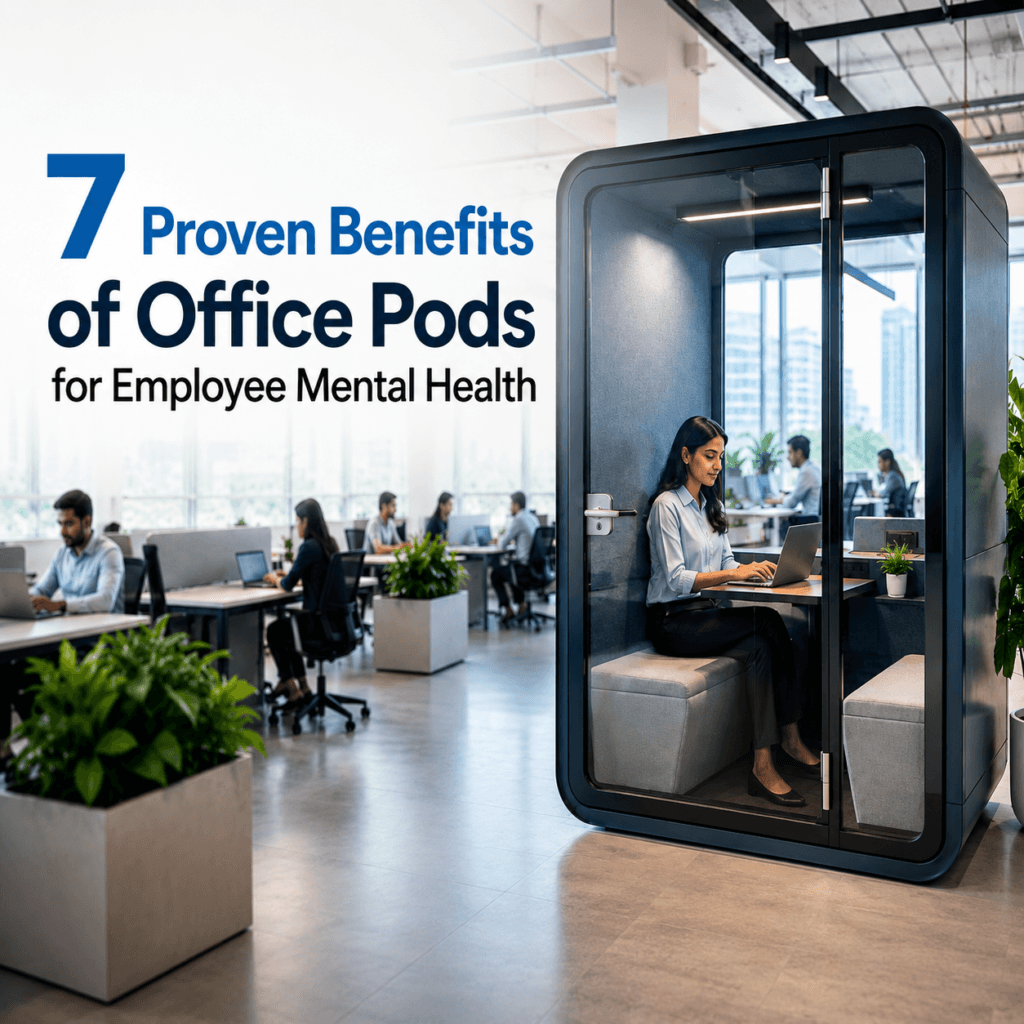
7 Proven Benefits of Office Pods for Employee Mental Health
Open-plan offices were supposed to spark collaboration and creativity. Instead, for millions of employees across India, they have become a daily source of stress, distraction, and mental fatigue.
The science is clear. Constant noise, lack of privacy, and inability to focus are among the top drivers of workplace anxiety and burnout. Acoustic office pods directly address all three. This is why HR leaders and workplace designers across India are increasingly specifying pods not just as productivity tools, but as mental health infrastructure.
Here are seven proven ways acoustic office pods support employee mental wellbeing.
The Mental Health Crisis in Open-Plan Indian Offices
India’s corporate workforce is under significant mental health pressure. A 2023 survey by Deloitte found that over 80% of Indian employees reported symptoms of burnout, with workplace environment cited as a key contributing factor. Open offices which now dominate Indian IT parks, startups, and shared coworking spaces are a major culprit.
The problem is not that people are in the same room. The problem is uncontrolled noise, constant visual stimulation, and zero acoustic privacy. When employees cannot control their environment, their stress response activates repeatedly throughout the day, leading to exhaustion, reduced concentration, and over time, serious mental health impacts.
Acoustic pods give employees a controllable, predictable, calm environment something open offices fundamentally cannot provide.
How Noise Pollution Affects Stress and Cognitive Load
Workplace noise is not just annoying it is physiologically harmful. When the brain hears unpredictable noise, it continues to monitor it even when you consciously try to ignore it. This process, called involuntary attention, consumes cognitive resources that should be going toward your actual work.
Studies from the Acoustical Society of America show that office noise can reduce cognitive performance by up to 66% for complex tasks. For Indian offices, where ambient noise levels are often already high, this effect is compounded.
Acoustic pods create a low-noise environment that allows the brain to fully engage with deep work reducing cognitive load, lowering cortisol levels, and supporting sustained concentration.
Privacy and Psychological Safety: Why They Matter
Psychological safety the feeling that you can speak, make mistakes, and be yourself without fear of judgment is one of the strongest predictors of employee performance and mental health. Lack of privacy destroys it.
When employees know their phone calls are overheard, their emotional reactions visible, and their personal struggles on display, they become guarded. This constant self-monitoring is exhausting and reduces authentic engagement.
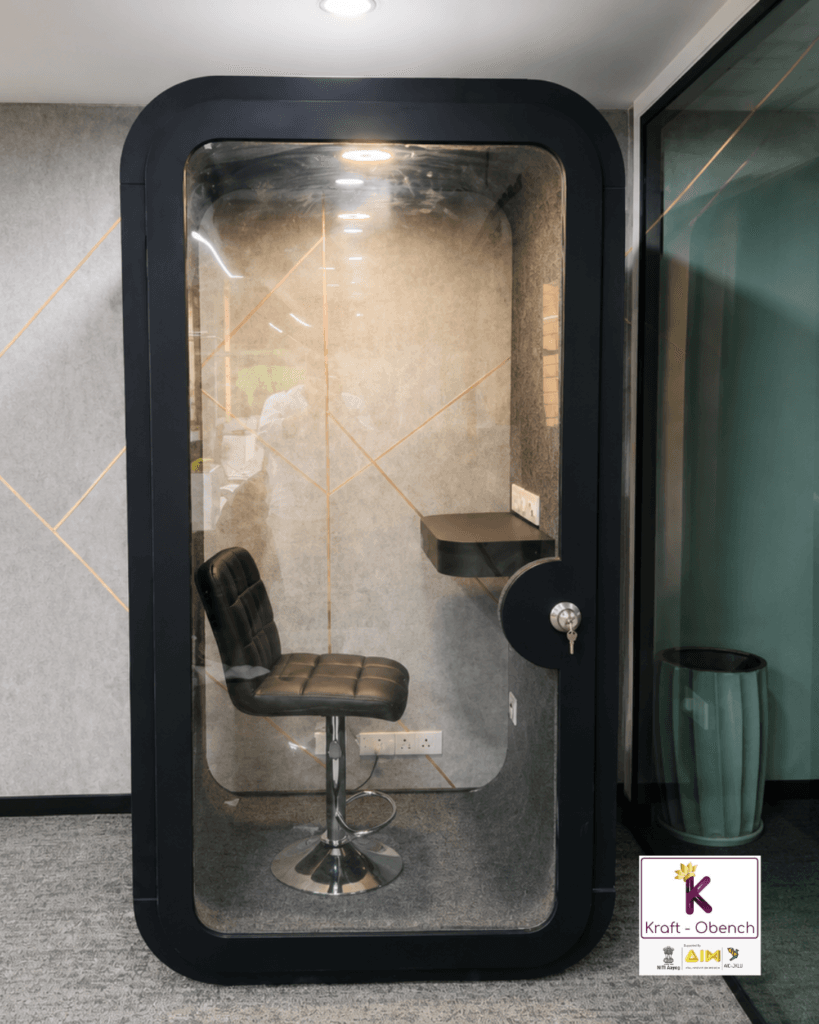
Acoustic pods restore privacy. Whether for a sensitive HR conversation, a difficult client call, or simply the need to think out loud, pods give employees a space where they can operate without an audience. The Kraft-Obench Meeting Pod is designed specifically for this kind of confidential, private interaction in workplace settings.
Office Pods as a Tool for Deep Work and Focus
Psychologist Mihaly Csikszentmihalyi’s research on flow the state of complete absorption in a challenging task shows that flow states require freedom from interruption. In an open office, achieving flow is nearly impossible. Conversations, phone calls, and movement constantly pull attention away.
Acoustic pods provide the environmental conditions for flow: low noise, visual separation, and a sense of closure from the surrounding environment. Employees who have access to pods regularly report being able to complete in two hours what would otherwise take a full day in the open office.
For companies, this is not just a wellbeing issue it is a productivity and output issue with direct financial consequences.
Reducing Meeting Fatigue with Dedicated Pod Spaces
Meeting fatigue the exhaustion that comes from back-to-back video and in-person meetings has become one of the defining workplace health issues of the post-pandemic era. Much of this fatigue comes not from the meetings themselves but from the environment in which they happen.
Taking calls from a noisy open office requires constant effort to speak over background noise, to listen through interference, and to maintain focus despite distractions. This is cognitively expensive.
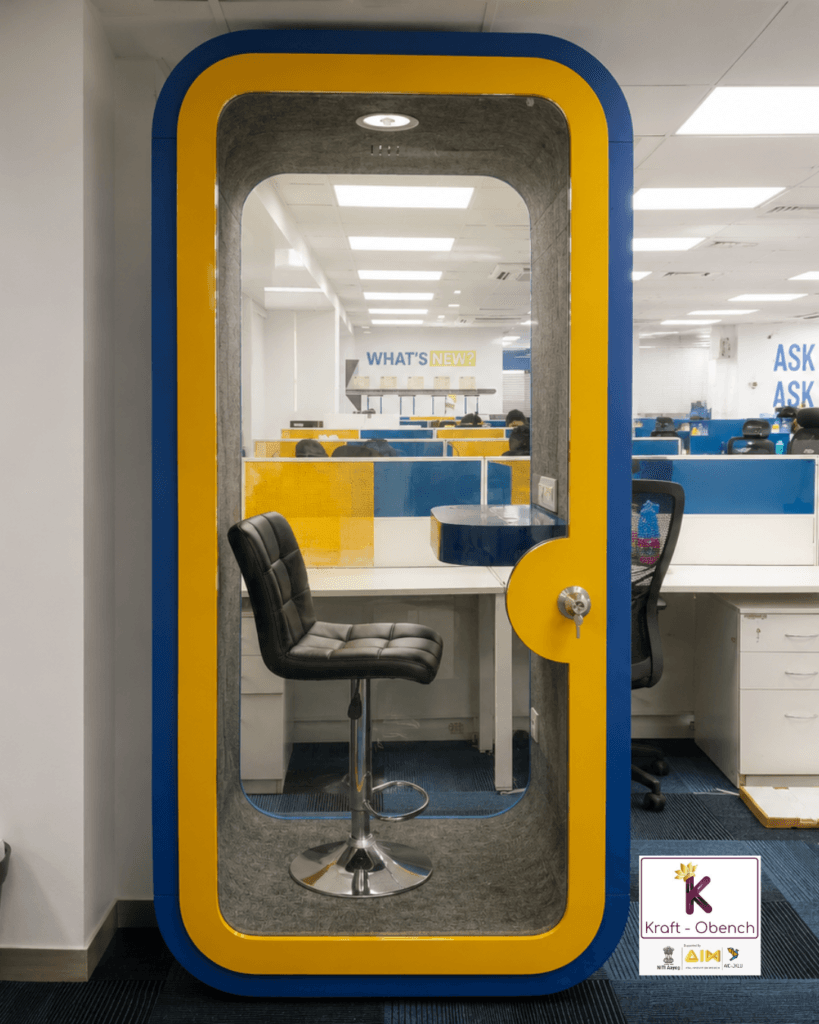
A dedicated meeting pod eliminates that overhead. Employees can have cleaner, shorter, more focused meetings and finish their day with significantly more energy remaining. The Kraft-Obench Nano Pod is ideal for single-person call pods placed throughout a large office floor.
What HR Leaders in India Are Saying About Acoustic Pods
HR directors at several Indian technology, consulting, and financial services firms have begun specifying acoustic pods as part of their employee wellness programs not as a perk, but as a core part of the workplace design brief.
The shift in thinking is significant. Previously, wellness budgets went toward gym memberships, meditation apps, and counselling services. Now leading HR teams recognise that the physical office environment specifically its acoustic environment is a primary determinant of daily mental wellbeing.
Pods are increasingly appearing in employee satisfaction surveys as one of the highest-rated workplace improvements, particularly among employees who do high-concentration or high-communication work.
How to Make the Business Case for Office Pods
If you are an HR manager or office designer trying to justify the investment in acoustic pods, here is the framework:
Calculate the cost of distraction. If an employee earns ₹60,000 per month and loses two hours per day to noise-related distraction, that is approximately ₹15,000 of lost productive time per month per employee.
Calculate the cost of turnover. Losing a mid-level employee to burnout costs a company six to nine months of that employee’s salary in recruitment, onboarding, and lost productivity. If pods reduce burnout risk even modestly, the ROI is clear.
Compare pod cost to construction. A professional acoustic pod costs a fraction of building a new meeting room or private office. It requires no construction, no permits, and can be moved or reconfigured as the office evolves.


