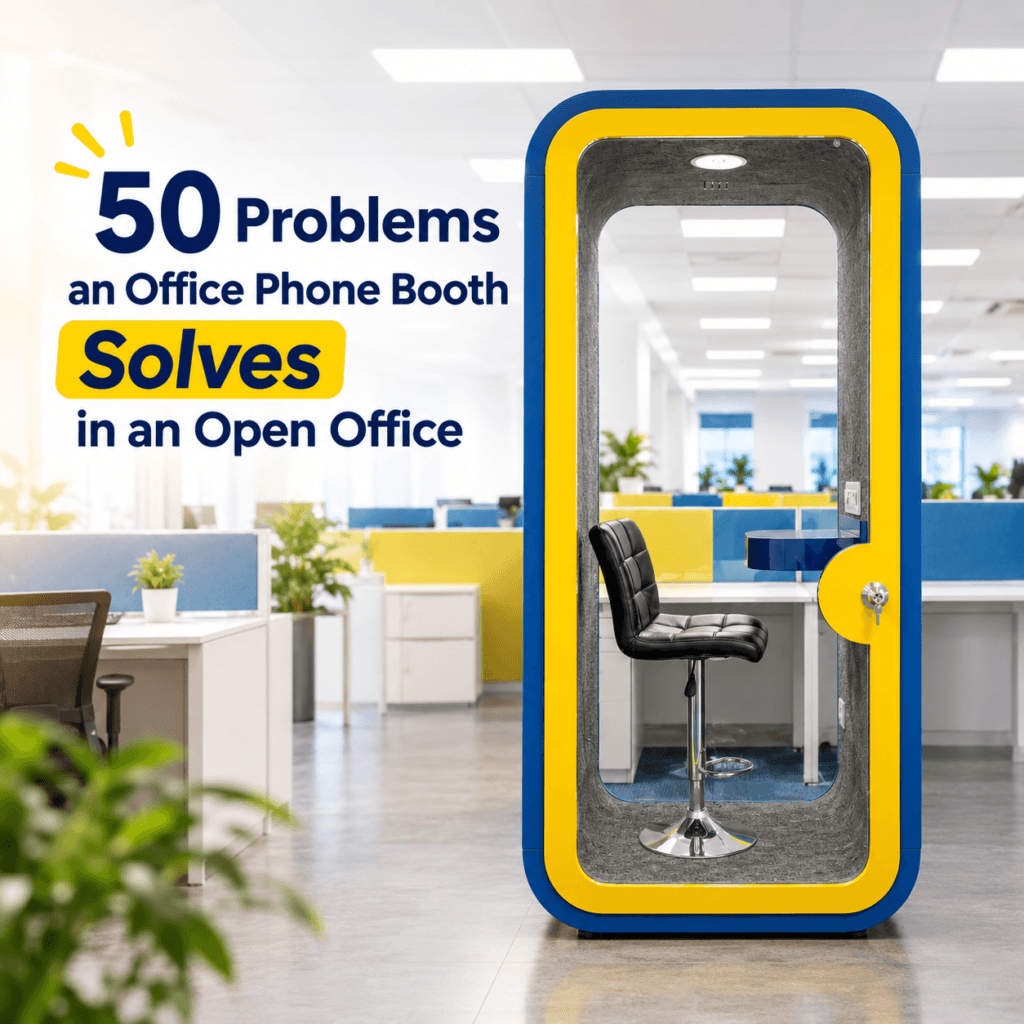
50 Problems an Office Phone Booth Solves in an Open Office
Open-plan offices were supposed to increase collaboration. In practice, they’ve created a new category of daily friction: nowhere private to take a call. Walk through any open floor at 11 a.m. and you’ll see the symptoms. People pacing near windows with a phone pressed to one ear, others whispering into headsets, someone hunting for a free room that doesn’t exist.
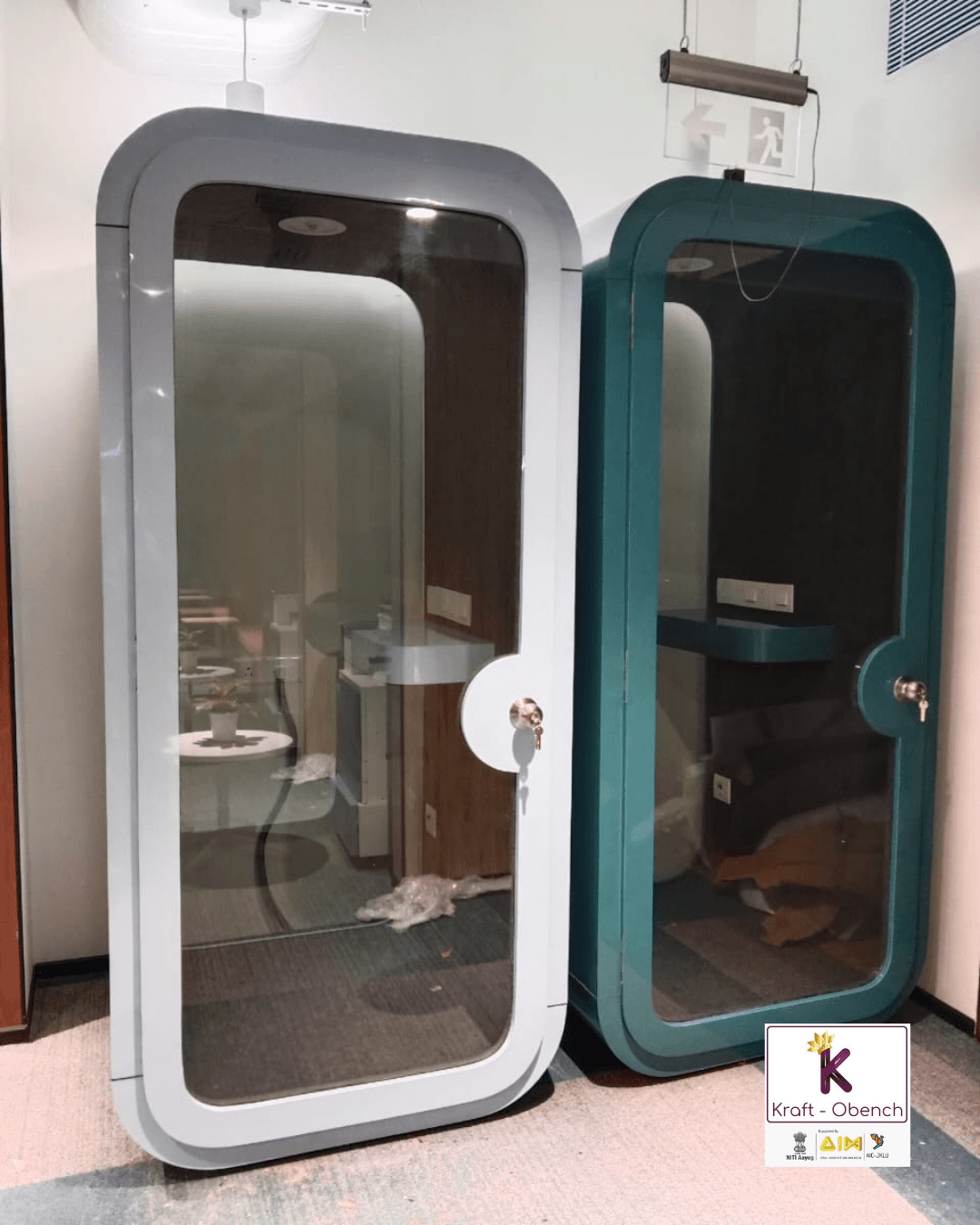
An office phone booth solves this in a way glass meeting rooms and “quiet corners” never quite manage. It’s small, self-contained, available on demand, and built for one job: giving one person a quiet, private place to talk. A compact phone booth pod fits into a corner without rearranging your floor, and a well-built soundproof office phone booth keeps calls clear and confidential. Below are 50 specific problems it addresses, grouped for clarity. Most teams will recognise at least a dozen from their own week.
Noise & Distraction Problems (1-15)
Noise is the most visible cost of an open floor. It affects call quality, concentration, and how tired people feel by mid-afternoon. A phone booth removes most of it the moment the door closes.
- Background chatter bleeding into client calls. The client hears your colleagues as clearly as they hear you.
- Colleagues overhearing personal conversations. A quick call to a doctor or family member becomes a public event.
- HVAC and printer noise disrupting audio quality. Mechanical hum degrades microphone input more than most people realise.
- Open-plan echo making voices hard to understand. Hard surfaces bounce speech around and blur consonants.
- Difficulty concentrating during back-to-back calls. A private call booth gives each call a calm start.
- Coworkers unintentionally listening in on sensitive discussions. Nobody means to eavesdrop, but proximity makes it unavoidable.
- Video call audio picking up unrelated office conversations. Remote participants end up hearing your whole floor.
- Interruptions from people walking past your desk mid-call. A passing wave or whispered question breaks your train of thought.
- Difficulty hearing on calls during busy office hours. Peak-hour volume forces you to raise your voice.
- Noise from nearby meeting pods or huddle areas. Poorly insulated collaboration zones leak sound into the rest of the floor.
- Distracting notification sounds from shared spaces. Other people’s pings and ringtones pull your attention away.
- Overlapping conversations in hot-desking areas. Rotating seating means unpredictable neighbours and unpredictable noise.
- Music or radio from nearby desks. One person’s focus soundtrack is another person’s distraction.
- Construction or renovation noise nearby. Drilling next door doesn’t pause for your scheduled calls.
- Reverberation in high-ceilinged open offices. Industrial-style ceilings look great but make speech muddy. An acoustic phone booth absorbs that echo.
Privacy & Confidentiality Problems (16-28)
Some conversations simply can’t happen on an open floor. Without a private option they get delayed, watered down, or held in awkward places. A soundproof booth turns any corner into a confidential space.
- Discussing compensation or HR matters within earshot of others. Salary and grievance topics need a closed door.
- Handling client-sensitive information in view of competitors visiting the office. Visitors hear what they walk past.
- Taking recruitment calls without candidates overhearing office gossip. Candidates form impressions from background noise too.
- Reviewing legal or compliance matters privately. These discussions carry real risk if overheard.
- Protecting unreleased product information during calls. A leaked roadmap detail can be costly.
- Managing difficult conversations without an audience. Hard feedback lands better when nobody else is listening.
- Taking personal calls (medical, family) without discomfort. People shouldn’t have to choose between privacy and an important call.
- Discussing internal restructuring plans securely. Rumours spread fast when leaders talk in the open.
- Handling vendor negotiations without competitors nearby. Pricing and terms deserve discretion.
- Protecting client data shared verbally during support calls. Account details spoken aloud shouldn’t travel across the floor.
- Conducting performance-related conversations discreetly. Reviews are personal and should feel that way.
- Managing whistleblower or grievance calls confidentially. Trust depends on absolute privacy.
- Avoiding visual exposure of sensitive documents during video calls. Screens and paperwork behind you are visible to everyone on the call.
Professionalism & Client Perception Problems (29-38)
Clients and candidates judge you partly by how you sound and look on a call. A calm office phone booth protects that impression.
- Sounding unprofessional due to background noise on client calls. Noise signals disorganisation, even when you’re well prepared.
- Losing credibility when clients hear office chaos. First impressions form in seconds.
- Struggling to present clearly during investor calls. High-stakes pitches deserve a calm setting.
- Appearing distracted during interviews due to visible movement behind you. Moving colleagues pull the viewer’s eye away from you.
- Poor lighting and background during video meetings. Uneven office lighting rarely flatters anyone.
- Clients repeatedly asking you to repeat yourself. Each repetition chips away at momentum.
- Losing deals due to poor call quality impressions. Audio quality shapes how competent you seem.
- Difficulty building rapport over noisy calls. Warmth is hard to convey through interference.
- Awkward pauses caused by cross-talk in open offices. Overlapping voices disrupt conversation rhythm.
- Reduced confidence when taking high-stakes calls in public view. Knowing people are watching changes how you speak.
Space & Logistics Problems (39-50)
Beyond noise and privacy, there are practical problems: too few rooms, too little flexibility, and too much cost for the alternatives.
- No available meeting rooms for quick 1:1 calls. A ten-minute call shouldn’t need a room booking.
- Wasting time walking to find a quiet spot. Searching for space eats into productive time.
- Booking conflicts for shared conference rooms. Small calls crowd out larger meetings.
- Overcrowded “quiet zones” during peak hours. Quiet areas stop being quiet once everyone uses them.
- Lack of dedicated space for remote employees visiting the office. Visiting staff often have nowhere to take calls.
- Difficulty scaling office space as headcount grows. Adding people rarely adds meeting rooms.
- High cost of building additional soundproofed rooms. Construction is slow, disruptive, and expensive. A pre-built office booth avoids it.
- Underused corners of the office with no clear function. Dead space can become a useful private call area.
- Coworking spaces lacking any private call option — solved with a portable meeting pod. Shared workspaces often offer desks but no privacy.
- Employees resorting to parking lots or stairwells for private calls. Improvised solutions hurt comfort and professionalism.
- No consistent solution across multiple office locations. A standard, repeatable unit gives every site the same experience.
- Needing a flexible, relocatable solution as teams reorganise — solved with a compact phone booth pod. Layouts change, and the booth can move with them.
The Common Thread
Nearly all 50 problems trace back to one root cause: open offices were designed for collaboration, not privacy or acoustic control. A dedicated phone booth doesn’t try to fix the whole floor plan. It solves the specific, recurring need for one person to have a quiet, private space on demand.
That focus is its strength. You don’t need to redesign the office or rebuild walls. You add one small piece of infrastructure and remove a whole category of daily friction. The office phone booth is also easy to install and relocate, which suits growing teams.
Beyond Phone Booths: Related Solutions
A phone booth handles solo calls, but teams often have neighbouring needs. For small group discussions, an Enclosed Meeting Booth gives several people a private space. For flexible, movable setups, a Portable Meeting Pod can go wherever the layout needs it. For focused solo work, consider a Portable Office Pod or Nano Pod. For voice and content recording, a Vocal Recording Pod provides the acoustic control a normal room can’t. Browsing the full Work Pod and Meeting Pod categories alongside phone booths often reveals which combination fits a growing team best. You can also read more on our blog or check the FAQ for sizing and delivery details.
Final Thoughts
If any of these 50 problems sound familiar, it’s not a sign your office is poorly managed. It’s a sign your floor plan is missing one specific piece of infrastructure. Explore our phone booth range in the shop, see how other offices have installed them in our gallery, learn more about us, or contact us to discuss the right fit for your space.