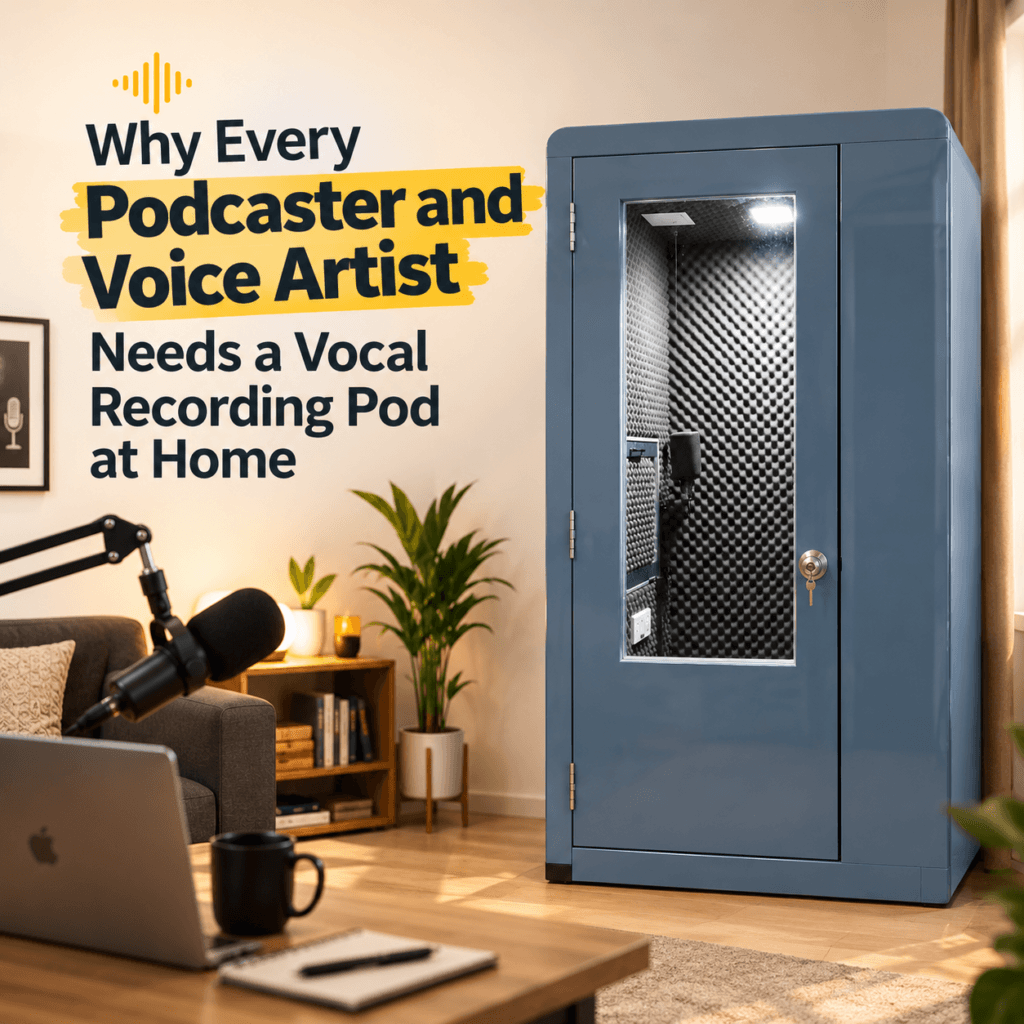
Why Every Podcaster and Voice Artist Needs a Vocal Recording Pod at Home
Why Every Podcaster and Voice Artist Needs a Vocal Recording Pod at Home Slug: /blog/vocal-recording-pod-podcaster-voice-artistMeta Description: Recording at home? A vocal recording pod delivers studio-quality sound isolation for podcasters, voice artists, and content creators. See how. Ask any voice artist or podcaster who records from home about their biggest technical challenge, and the answer is rarely the microphone. It’s the room. Echo, outside traffic, barking dogs, and household noise can ruin an otherwise perfect take. You can buy an excellent microphone and still end up with a recording that sounds thin, boxy, or full of background hum. A dedicated vocal recording pod solves this at the source, and it’s becoming standard equipment for serious home-based audio work. The Problem With Recording in a Regular Room Untreated rooms create two separate issues. First, external noise bleeds in: passing cars, neighbours, appliances, the doorbell, a child playing in the next room. Second, internal echo bounces around hard surfaces like walls, windows, and desks, adding a hollow, reverberant quality to your voice. Many creators try to fix this with blankets, foam panels, or a closet full of clothes. These can help a little, but they rarely address both problems at once, and they tend to be inconsistent from one session to the next. Even expensive microphones can’t fix this in post-production. Software can reduce some noise, but it often leaves audio sounding processed or unnatural. This is why so many podcasters and voice-over artists eventually invest in a dedicated vocal booth rather than continuing to fight their room’s acoustics. What Makes a Vocal Recording Pod Different Acoustic treatment, not just soundproofing. These are related but different jobs. Soundproofing keeps outside noise from getting in. Acoustic treatment controls how sound behaves inside. A proper modular vocal recording booth does both: it blocks outside noise from entering and absorbs internal reflections so your voice sounds clean and dry rather than boxy or echoey. Consistent recording environment. Recording every episode in the same acoustically treated vocal recording pod means your audio quality stays uniform. Listeners notice when a show’s sound shifts from week to week. A consistent space also makes editing faster, because you’re not chasing different noise profiles across files. Studio-grade results without studio rental costs. Renting a studio adds up quickly, and booking around someone else’s calendar limits when you can create. A one-time investment in a home vocal booth pays for itself after a relatively small number of sessions, while offering unlimited availability on your own schedule. Who Actually Needs One Podcasters need consistent, clean audio. A vocal recording pod removes room noise as a variable entirely, so you can focus on content and delivery. Voice-over artists need broadcast-quality audio that meets commercial client standards. Clients often reject files with audible room tone, and a pod helps you deliver clean takes the first time. Dubbing and ADR professionals benefit from a dubbing artist studio pod purpose-built for precision across multiple takes. Matching lip sync and tone demands a very controlled environment. YouTubers and content creators find that viewers notice poor sound quality faster than average video quality. Good audio keeps people watching, and a portable vocal booth makes it easier to achieve. Musicians and singers can practise or record without disturbing housemates or neighbours. The pod keeps your sound in, and outside noise out. Choosing the Right Pod for Your Recording Needs The right unit depends on what you record and how much space you have. Podcasting and general voice work: Modular Vocal Recording Booth Dubbing, ADR, and audiobook narration: Dubbing Artist Studio Pod Compact spaces or occasional recording: Nano Pod, which also supports focused work and calls Small studio setups needing flexibility: browse the full vocal booth category If you’re unsure, think about how often you record and whether you’ll share the space with other uses. A creator recording daily has different needs from someone who records a few times a month. What to Check Before Buying Sound absorption rating. Look for materials like rockwool insulation, which can absorb up to 85% of ambient noise. Interior dimensions. Make sure there’s enough room to stand comfortably while recording, with space for a microphone stand, a script, and your equipment. Ventilation for extended sessions. Long takes get uncomfortable without airflow, and the ventilation shouldn’t introduce fan noise into your recordings. Delivery and installation support. Check the FAQ for timelines and setup details. Real reviews from other voice artists. Browse the gallery for actual home studio installations, and see how people arrange their gear inside. Beyond Recording: Everyday Use A vocal pod earns its place even when you’re not recording. Many customers find their vocal pod doubles as a private space for calls, focused work, or quiet study. The same acoustic benefits make it a capable work pod or phone booth substitute. If you mainly want a home office, an office pod for home may suit you better. That flexibility helps justify the investment, especially in a small home where every square metre needs to earn its keep. Final Thoughts If room noise has been quietly limiting the quality of your recordings, a dedicated vocal recording pod addresses the problem directly rather than trying to fix it after the fact. Explore our full vocal booth range in the shop, read more creator-focused guidance on our blog, learn about us, or contact us to find the right setup for your home studio.
Why Every Podcaster and Voice Artist Needs a Vocal Recording Pod at Home Read More »