July 17, 2026

Acoustic Pods

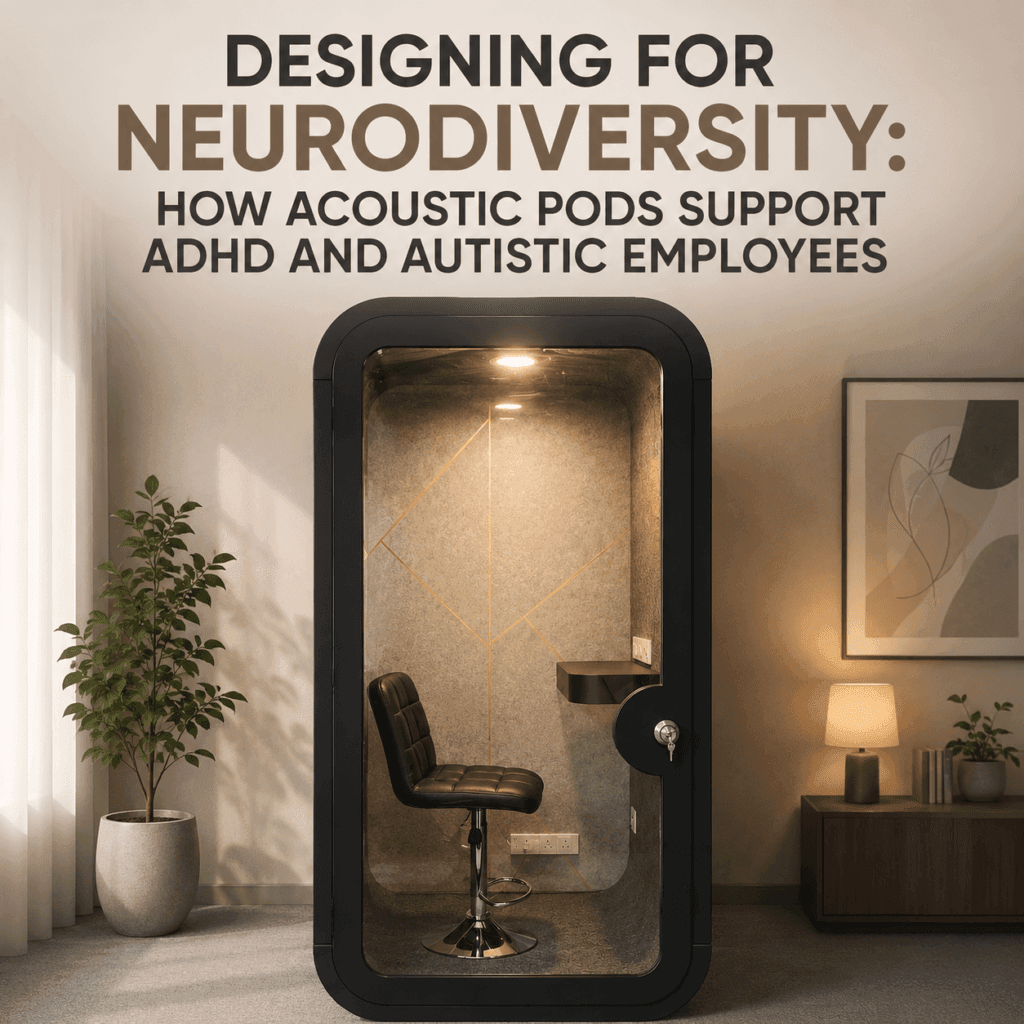
Designing for Neurodiversity: How Acoustic Pods Support ADHD and Autistic Employees

Designing for Neurodiversity: How Acoustic Pods Support ADHD and Autistic Employees Introduction: Embracing Neurodiversity in the Indian Workplace Modern workplaces are becoming more inclusive by recognizing that employees think, learn, and process information differently. This understanding has led to the growing adoption of neurodiverse office design, an approach that creates environments where people with different cognitive styles can perform at their best. Neurodiversity includes natural neurological differences such as Attention-Deficit/Hyperactivity Disorder (ADHD), autism spectrum conditions, dyslexia, dyspraxia, and other variations in how the brain processes information. These differences often bring exceptional strengths—including creativity, analytical thinking, innovation, and attention to detail—but traditional open-plan offices can create barriers that affect focus, comfort, and productivity. One of the most effective ways organizations can support neurodiverse employees is by providing quiet, controlled environments. Acoustic office pods offer practical, flexible solutions that help reduce sensory overload while improving workplace inclusivity — a theme also explored in our post on the benefits of office pods for employee mental health. This article explores how acoustic pods contribute to better workplace experiences for employees with ADHD and autism while helping businesses build more supportive and productive office environments. Understanding Neurodiversity and Workplace Challenges Neurodivergent individuals often possess valuable skills that contribute significantly to innovation and business success. However, conventional office environments frequently present challenges due to constant background conversations, phone calls, bright lighting, visual distractions, frequent interruptions, unpredictable social interactions, and open-plan layouts — the same core issues covered in our guide on how to reduce office noise in open-plan offices. Thoughtful office design can reduce these barriers and enable every employee to perform at their highest potential. ADHD: Focus and Distraction Management Employees with ADHD often excel in creativity, problem-solving, and innovation. However, maintaining sustained attention can become difficult in environments filled with continuous interruptions. Common workplace challenges include background conversations, ringing phones, walking traffic, unexpected interruptions, multiple simultaneous conversations, and visual movement across open offices. These distractions can make deep work significantly more challenging. An ADHD friendly workspace minimizes unnecessary sensory input and provides dedicated spaces where employees can concentrate without interruption — the same distraction-free principle behind our Work Pod line, built for uninterrupted individual focus. Autism: Sensory Overload and Predictability Many autistic individuals experience heightened sensitivity to sensory input. Bright lights, loud sounds, crowded environments, and unpredictable workplace activity may contribute to sensory overload, stress, or fatigue. Challenges may include noise sensitivity, visual overstimulation, strong smells, frequent interruptions, unexpected social interactions, and difficulty concentrating in busy environments. An autism friendly office offers predictable, calm environments where employees have greater control over their surroundings, similar to the enclosed, self-contained privacy provided by a Phone Booth. The Role of Office Design in Supporting Neurodiverse Employees Inclusive office design goes beyond accessibility. It creates workspaces that accommodate different ways of thinking, working, and interacting. Key design principles include: Sensory Control — Employees should have access to environments with adjustable lighting, reduced noise, and minimal distractions. Quiet Work Zones — Dedicated spaces allow employees to focus, recharge, or complete demanding tasks without interruptions, similar to the coworking-friendly setup we cover in focus pods for coworking spaces. Predictability — Clearly defined work areas and consistent environments help reduce workplace stress and uncertainty. Flexibility — Different employees perform best in different environments. Providing multiple workspace options allows individuals to choose settings that best support their work style, an approach also discussed in our guide on how to choose an office pod for home. Acoustic Pods: A Cornerstone of Neurodiverse Office Design Acoustic office pods are among the most practical tools for creating sensory friendly office environments. Their enclosed, sound-insulated design helps employees manage sensory input while providing privacy, comfort, and control. Creating Sensory-Friendly Zones Acoustic pods significantly reduce environmental distractions. Noise Reduction — Premium acoustic insulation minimizes office conversations, phone calls, meeting noise, equipment sounds, and general workplace activity. For employees with ADHD or autism, this quieter environment supports concentration and reduces cognitive fatigue — the same principle behind the sound isolation engineered into our Vocal Pod range. Visual Privacy — Unlike open desks, enclosed office pods reduce visual distractions by limiting movement and activity within the user’s field of vision. This helps employees remain focused during complex or high-concentration tasks. Adjustable Lighting — Many modern office pods feature adjustable lighting systems that allow users to select brightness levels that match their comfort preferences. Reducing glare and harsh lighting can contribute to a more comfortable workspace. Enhancing Focus and Reducing Distraction Acoustic pods provide dedicated environments for deep work, virtual meetings, reading, strategic planning, sensitive conversations, and individual problem-solving. For employees with ADHD, fewer interruptions support sustained concentration and improved task completion — a benefit also documented in our post on acoustic meeting pod benefits for startups, where focused, distraction-free space directly improved team output. The enclosed environment also creates a psychological boundary that signals focused work time. Providing a Sense of Control and Predictability Control over one’s immediate environment plays an important role in employee well-being. Inside an acoustic pod, users can often adjust lighting, ventilation, seating position, privacy, and door closure. This sense of control helps reduce anxiety and allows employees to regulate their sensory environment according to their individual needs. Knowing that a quiet retreat is always available can make the broader workplace feel more manageable and inclusive — a design consideration we also explore in our Meeting Pod for office India guide. Benefits for Businesses: Beyond Inclusivity Supporting neurodiverse employees benefits both individuals and organizations. Increased Productivity — Providing environments that minimize distractions allows employees to maximize their strengths and perform more effectively. Improved Employee Well-being — Reduced sensory stress contributes to greater workplace comfort, lower fatigue, and improved overall employee experience. Better Talent Attraction and Retention — Organizations known for inclusive workplace practices attract a broader range of skilled professionals and strengthen long-term employee retention. Innovation Through Diverse Perspectives — Neurodiverse teams often contribute unique approaches to creativity, analysis, and problem-solving, helping organizations develop innovative solutions. Stronger Employer Brand — Inclusive workplace design demonstrates

Designing for Neurodiversity: How Acoustic Pods Support ADHD and Autistic Employees Read More »
Modular Pods

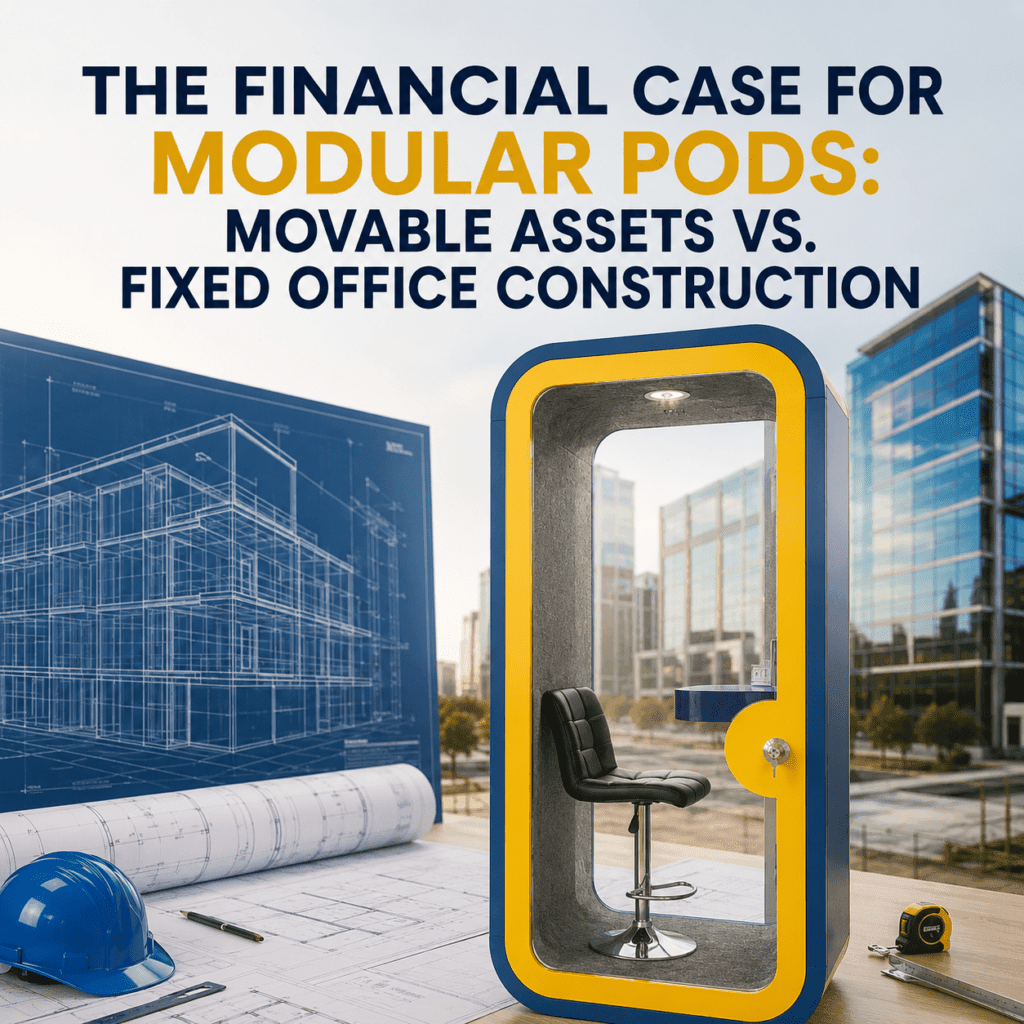
The Financial Case for Modular Pods: Movable Assets vs. Fixed Office Construction

The Financial Case for Modular Pods: Movable Assets vs. Fixed Office Construction Introduction: Rethinking Office Space Investment in India Modern businesses are constantly evaluating investments that generate long-term value while maintaining operational flexibility. When it comes to office infrastructure, companies traditionally invest in permanent construction, expensive renovations, or partition-based layouts. While these approaches create functional spaces, they often involve significant capital expenditure, lengthy project timelines, and limited adaptability. Today, modular office pods are changing this equation. Rather than being viewed simply as workplace furniture, office pods represent a strategic business investment. As movable assets, they offer financial advantages that traditional fixed office construction cannot match, including faster deployment, better flexibility, potential tax benefits, and improved long-term value. This article explores why modular office pods deliver a compelling Office Pod ROI and why more Indian businesses are choosing them over conventional office construction — a comparison we cover in detail in our office pod vs traditional meeting room cost comparison. The Hidden Costs and Inflexibility of Fixed Office Construction Although permanent office construction appears to be a one-time investment, it often carries hidden financial and operational costs that continue throughout its lifecycle. High Upfront Capital Expenditure Traditional office construction requires substantial upfront investment. Businesses must account for expenses such as architectural planning, civil construction, interior design, electrical work, HVAC modifications, labor charges, government approvals, and project management. These projects often require significant capital that could otherwise be invested in business growth, technology, hiring, or market expansion. For startups and growing organizations, this financial commitment can become a major obstacle — a challenge we address directly in office phone booth rental vs purchase for startups. Depreciation and Asset Immovability Permanent office structures are fixed assets that depreciate gradually over long periods. More importantly, they remain permanently attached to the building. If a company relocates offices, expands operations, downsizes, opens new branches, or changes office layouts, much of the investment made in permanent construction cannot be recovered. Businesses frequently incur additional renovation costs simply to adapt to changing requirements — which is exactly why modular office cabins are better for factories in India, where layouts shift often and rebuilding isn’t practical. Disruption and Downtime During Renovation Office renovation projects can significantly disrupt daily operations. Common challenges include construction noise, dust and debris, temporary workspace relocation, reduced employee productivity, delayed project completion, and client inconvenience. Even minor renovation projects may continue for weeks or months, creating indirect financial losses that are often overlooked during budgeting. Modular Office Pods: A Smart Investment as Movable Assets Unlike permanent construction, modular office pods are designed for flexibility, mobility, and long-term value. They function as movable assets, allowing businesses to maximize their workspace investment while maintaining adaptability. Lower Initial Investment and Faster Deployment Compared to conventional construction, modular office pods require considerably less installation time and lower project costs. Since pods are manufactured off-site and delivered ready for installation, businesses benefit from minimal site preparation, rapid installation, reduced labor costs, faster operational readiness, and little to no business disruption. Many office pods can be installed within days instead of weeks, as detailed in our office pod installation guide, allowing organizations to begin realizing value almost immediately. Tax Advantages and Depreciation Benefits One of the biggest financial advantages of modular office pods is their classification as movable assets in many business scenarios. Depending on applicable accounting standards and tax regulations, businesses may benefit from faster depreciation schedules, improved cash flow, better asset management, higher resale value, and reduced long-term capital risk. Unlike permanent construction, modular office pods retain flexibility throughout their lifecycle because they can be relocated, repurposed, or resold. (Businesses should always consult their tax advisors regarding applicable accounting and depreciation rules.) Flexibility and Adaptability for Future Growth Business needs change constantly. Office pods provide unmatched flexibility by allowing organizations to: Relocate Easily — Pods can move between departments, offices, cities, or branches without rebuilding infrastructure. Businesses expanding into new markets can look at our coverage of office pods on rent in Bangalore and meeting pods for offices in Gurgaon as examples of this flexibility in action. Reconfigure Workspaces — Today’s meeting pod can become tomorrow’s focus booth, interview room, telemedicine cabin, or video conferencing space. Scale Gradually — Instead of investing heavily in large office renovations, businesses can simply add more pods as employee numbers grow, following the same incremental logic covered in our guide on how to choose an office pod for home. This modular approach minimizes financial risk while supporting long-term expansion. Calculating the ROI of Office Pods: Beyond the Balance Sheet The true Office Pod ROI extends well beyond installation costs. Their financial impact is reflected through increased productivity, employee satisfaction, operational savings, and workplace efficiency. Increased Productivity and Employee Well-being One of the biggest contributors to office pod ROI is improved employee performance. Acoustic office pods provide distraction-free environments that help employees focus longer, complete work faster, reduce interruptions, conduct confidential meetings, improve video call quality, and enhance decision-making, benefits explored further in our post on acoustic meeting pod benefits for startups. Lower workplace stress also contributes to improved employee well-being and reduced absenteeism, a theme we cover extensively in 7 proven benefits of office pods for employee mental health. Reduced Operational Costs Office pods can lower ongoing business expenses through energy-efficient lighting, intelligent ventilation, reduced HVAC requirements, better space utilization, lower renovation costs, and optimized office layouts many of which are also central to keeping pods running efficiently long-term, as outlined in our office pod maintenance tips. Instead of leasing larger offices, organizations can maximize existing floor space more effectively, an approach that’s proven especially valuable in dense environments like our acoustic office pods in Delhi installations. Enhanced Talent Attraction and Retention Today’s professionals expect workplaces that support both productivity and well-being. Providing modern private workspaces demonstrates an organization’s commitment to employee experience, with benefits including better employer branding, higher employee satisfaction, improved retention rates, enhanced recruitment appeal, and increased workplace flexibility. Reducing employee turnover also produces substantial long-term financial savings

The Financial Case for Modular Pods: Movable Assets vs. Fixed Office Construction Read More »

Acoustic Pods

Smart Office Pods 2026: Integrating IoT and AI for the Ultimate Workspace

Smart Office Pods 2026: Integrating IoT and AI for the Ultimate Workspace Introduction: The Evolution of the Modern Workspace The modern office has evolved far beyond rows of desks and meeting rooms. Today’s workplaces are designed to support collaboration, flexibility, employee well-being, and technology-driven productivity. As hybrid work continues to redefine how businesses operate, organizations across India are increasingly investing in intelligent workspaces that adapt to employee needs while maximizing operational efficiency. At the center of this transformation are Smart Office Pods—innovative acoustic workspaces enhanced with the power of the Internet of Things (IoT) and Artificial Intelligence (AI). No longer just quiet spaces for focused work or meetings, these connected office pods are becoming intelligent micro-environments capable of automating comfort, improving productivity, optimizing energy usage, and seamlessly integrating with digital workflows. This article explores how IoT and AI are revolutionizing office pods and why they represent the future of work in India. The Rise of Smart Offices: Beyond Basic Automation Smart offices are designed to use technology to improve workplace efficiency, employee experience, and building management. While earlier smart offices primarily relied on automated lighting and climate control, today’s intelligent workplaces combine advanced sensors, cloud connectivity, machine learning, and AI-driven automation to create highly responsive environments. Office pods naturally fit into this evolution because they are self-contained workspaces that can independently monitor, learn, and adapt to user behavior. A Work Pod, for example, already offers the enclosed, controllable environment that smart automation depends on. Instead of simply providing privacy, modern connected office pods become personalized work environments that enhance focus, comfort, and productivity. IoT Integration in Office Pods: The Foundation of Intelligence The Internet of Things (IoT) forms the technological backbone of modern smart office pods. Embedded sensors continuously collect real-time environmental and occupancy data, allowing the workspace to automatically respond to changing conditions. Automated Environmental Control Smart sensors monitor multiple environmental parameters inside the pod, including lighting intensity, temperature, humidity, CO₂ levels, air quality, occupancy, and ambient noise. Based on this information, the pod can automatically adjust LED lighting, ventilation systems, air conditioning, fresh air circulation, and power usage. Employees always experience a comfortable working environment without manual adjustments. This intelligent automation also contributes significantly to energy conservation — the same efficiency principles covered in our guide on how a cost comparison between office pods and traditional meeting rooms plays out over the long term. Optimized Space Utilization Understanding workspace utilization is essential for modern offices. IoT-enabled office pods collect anonymous occupancy data that helps facility managers understand peak usage hours, frequently used pod locations, average meeting duration, workspace demand trends, and reservation efficiency. These insights help organizations improve booking systems, optimize office layouts, reduce unused office space, improve employee accessibility, and lower real estate costs. This is especially relevant for coworking operators, as we explored in focus pods for coworking spaces, where space efficiency directly affects member experience. For organizations adopting hybrid work, this data becomes invaluable for workplace planning. Enhanced Security and Safety Connected office pods also improve workplace security. Smart features may include digital access control, mobile app authentication, RFID employee access, occupancy monitoring, smoke detection, air quality alerts, and emergency notifications. These technologies help maintain both employee safety and secure access to confidential workspaces — a natural extension of the acoustic privacy already built into a Phone Booth, now layered with digital access control. AI in Office Pods: Personalization and Predictive Insights While IoT gathers information, AI office integration transforms that data into intelligent actions. Artificial Intelligence continuously analyzes usage patterns, learns employee preferences, and optimizes workspace performance automatically. Personalized User Experience One of the biggest advantages of AI-powered office pods is personalization. Instead of adjusting settings manually every time, AI can automatically configure the workspace based on employee preferences — lighting brightness, ideal room temperature, ventilation preferences, favorite seating configuration, and personalized meeting settings. This same personalization mindset applies to the physical pod itself; our guide to customisable office pods for branding shows how finishes, colors, and identity elements can be tailored well before AI ever adjusts a single setting. Future-ready smart pods may even integrate with employee calendars, digital assistants, voice commands, wearable devices, and productivity platforms. This creates a seamless workspace that adapts instantly to every user. You can preview this kind of tailored setup yourself using our 3D Configurator. Predictive Maintenance and Efficiency AI doesn’t only improve user experience—it also helps businesses reduce maintenance costs. By analyzing sensor data continuously, AI can predict potential equipment failures before they occur, covering air filter replacement reminders, ventilation servicing, lighting maintenance, power consumption monitoring, and HVAC optimization. Instead of reactive maintenance, organizations benefit from proactive servicing that minimizes downtime and reduces operational expenses — complementing the fundamentals covered in our office pod maintenance tips guide. Seamless Integration with Digital Workflows Modern smart office pods integrate directly with workplace software ecosystems, including Microsoft Teams, Google Meet, Zoom, Outlook Calendar, Google Calendar, workspace booking platforms, and facility management software. Employees can enter a reserved pod, and meetings automatically launch with lighting, ventilation, and equipment ready for use. This kind of frictionless setup is especially valuable for teams relying on a Meeting Pod for daily collaboration. AI can also provide anonymous analytics that help businesses continuously improve workspace planning. The Benefits of Smart Office Pods for Indian Businesses Businesses across India are embracing intelligent office infrastructure to remain competitive. Smart office pods offer numerous advantages. Increased Productivity: Distraction-free environments improve concentration, creativity, and decision-making while reducing workplace interruptions — a benefit explored further in acoustic meeting pod benefits for startups, and reinforced by strategies for reducing office noise in open-plan offices. Lower Operational Costs: Automated lighting, HVAC, and occupancy management significantly reduce energy consumption and facility expenses. Better Employee Experience: Comfortable, responsive, and personalized workspaces contribute to employee satisfaction, engagement, and retention — echoing the findings in our post on the benefits of office pods for employee mental health. Future-Ready Infrastructure: As AI and workplace technologies continue evolving, smart pods provide scalable infrastructure that supports future

Smart Office Pods 2026: Integrating IoT and AI for the Ultimate Workspace Read More »

Telemedicine Pods India

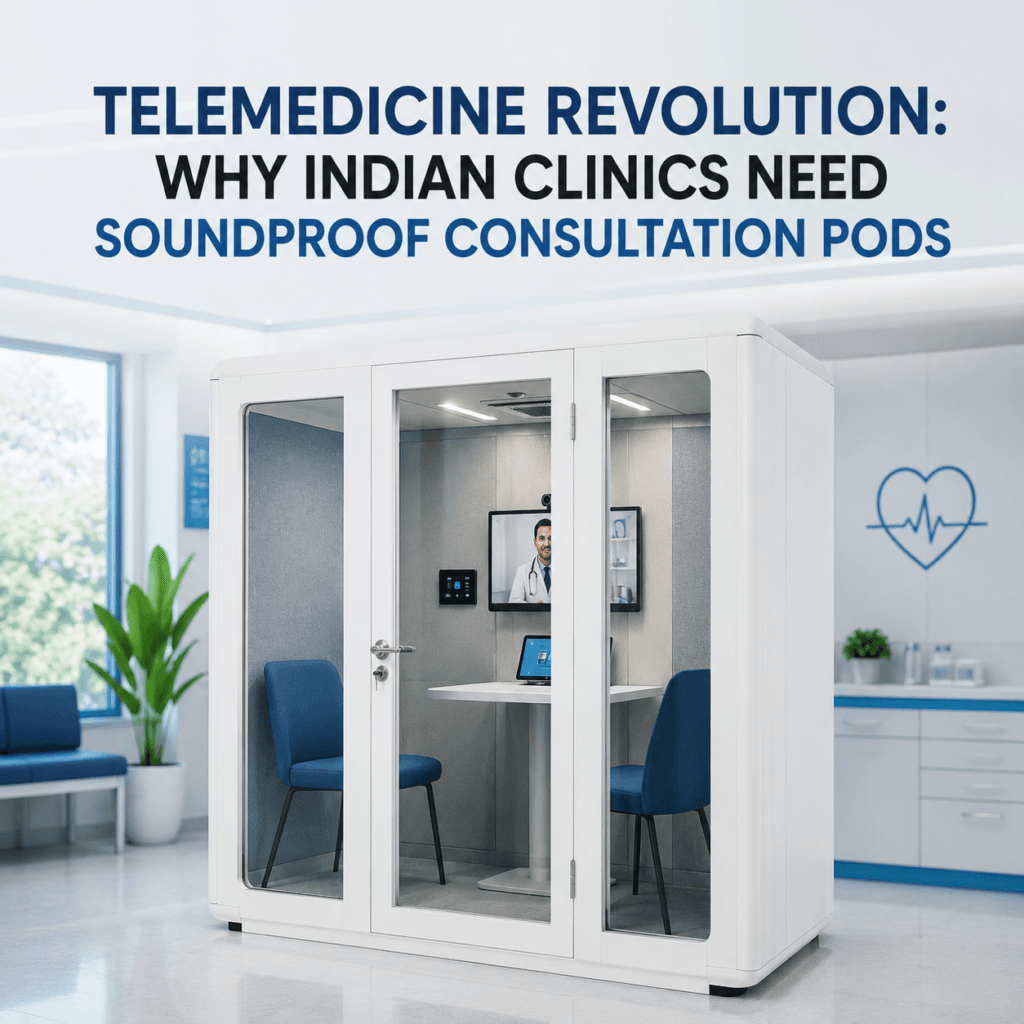
Telemedicine Revolution: Why Indian Clinics Need Soundproof Consultation Pods

The Telemedicine Revolution: Why Indian Clinics Need Soundproof Consultation Pods Introduction: Telemedicine’s Surge in India and the Need for Privacy India’s healthcare industry is rapidly embracing digital transformation, and telemedicine has become one of its most impactful innovations. Supported by improved internet connectivity, smartphone adoption, and government initiatives, remote healthcare has become an essential service for hospitals, clinics, and independent practitioners. The Indian telemedicine market is projected to reach USD 20.02 billion by 2034, highlighting its enormous growth potential. While virtual consultations improve accessibility and convenience, they also introduce new challenges. Healthcare providers must ensure patient confidentiality, eliminate distractions, and maintain a professional consultation environment. Traditional clinic spaces often struggle to meet these requirements, especially during peak hours. This is where Telemedicine Pods India are changing the landscape. Modern soundproof consultation pods provide private, quiet, and secure spaces specifically designed for virtual healthcare, allowing clinics to deliver exceptional patient experiences without expensive infrastructure changes. The Challenges of Telehealth in Traditional Clinic Settings Although telemedicine offers numerous advantages, implementing it inside conventional clinics presents several operational challenges. Ensuring Patient Confidentiality Patient privacy is one of the most critical aspects of healthcare. During virtual consultations, doctors often discuss confidential medical histories, diagnostic reports, prescriptions, and sensitive health concerns. In busy clinics, conversations can easily be overheard by staff or patients waiting nearby. Even standard consultation rooms may not offer adequate acoustic insulation — the same insulation challenge we explore in our guide to acoustic treatment for home studios, where sound leakage is just as critical a concern. This lack of privacy can negatively impact: Mental health consultations Women’s healthcare discussions Pediatric consultations Specialist referrals Chronic disease management Follow-up appointments Dedicated telehealth privacy solutions are therefore essential for maintaining trust between doctors and patients. A Phone Booth-style private enclosure follows this same privacy-first principle, originally designed for confidential calls in open offices. Minimizing Distractions for Doctors and Patients Healthcare professionals require complete concentration during consultations. Unfortunately, traditional clinic environments are often filled with: Reception conversations Phone calls Foot traffic Medical equipment sounds Administrative discussions Waiting room noise These distractions affect communication quality and may result in misunderstood symptoms, reduced consultation quality, longer appointments, patient dissatisfaction, and increased physician fatigue. Our post on how to reduce office noise in open-plan offices covers many of the same acoustic principles that apply directly to busy clinic floors. A quiet environment significantly improves both patient confidence and diagnostic accuracy and studies on the benefits of office pods for employee mental health show the same holds true for the professionals working inside them. Optimizing Space in Busy Clinics Space is one of the biggest constraints for Indian clinics, especially in metropolitan cities like Delhi, Mumbai, Bengaluru, Hyderabad, Chennai, and Pune. Constructing additional consultation rooms is expensive and often impractical. Many healthcare facilities need flexible solutions that fit inside existing clinics, require minimal installation, maximize available floor area, support future expansion, and reduce renovation costs. A detailed cost comparison between office pods and traditional meeting rooms illustrates just how much clinics can save by choosing modular pods over permanent construction. Traditional infrastructure simply cannot provide this flexibility. Soundproof Consultation Pods: The Ideal Solution for Telemedicine Purpose-built acoustic pods for clinics solve the common challenges associated with virtual healthcare. Designed specifically for privacy and productivity, these modular pods create dedicated telemedicine environments without requiring permanent construction. Uncompromised Privacy and Security The biggest advantage of soundproof consultation pods is exceptional acoustic performance. Using premium sound-absorbing materials and insulated walls similar to the construction found in our Vocal Pod range, engineered for studio-grade sound isolation. these pods prevent confidential conversations from leaking outside, block external clinic noise, improve patient comfort, and support secure healthcare communication. Whether doctors are discussing treatment plans, reviewing diagnostic reports, or conducting psychological consultations, privacy remains protected. Enhanced Focus and Professionalism A distraction-free environment directly improves consultation quality. Inside a telemedicine pod, doctors can concentrate entirely on patients, patients feel more comfortable discussing personal concerns, video consultations appear more professional, audio quality improves significantly, and background interruptions disappear. This creates a healthcare experience comparable to traditional face-to-face consultations while leveraging the convenience of remote healthcare. the same distraction-free principle behind our Work Pod range, built for uninterrupted focus in demanding environments. Flexible and Space-Efficient Deployment Unlike permanent construction projects, modular consultation pods can be installed quickly inside existing healthcare facilities. Their flexibility allows clinics to convert unused spaces into consultation rooms, add multiple telemedicine stations, relocate pods when layouts change, expand services without renovation, and improve operational efficiency. This same relocatable, reconfigurable logic is what makes modular office cabins increasingly popular across factories and industrial facilities in India the underlying design philosophy transfers directly to healthcare settings. For clinics experiencing growing patient volumes, this adaptability provides a significant long-term advantage. Key Features to Look for in Telemedicine Pods Choosing the right consultation pod requires evaluating several important features. Superior Acoustic Insulation — High-performance soundproofing materials ensure conversations remain completely private while blocking external disturbances. Integrated Ventilation — Continuous fresh-air circulation keeps the pod comfortable during long consultations while maintaining a healthy indoor environment. Ergonomic Design — Comfortable seating, spacious interiors, proper lighting, and functional workstations improve productivity for doctors and patient comfort. Power and Connectivity — Reliable power outlets, USB charging, internet ports, and cable management support uninterrupted telemedicine sessions. Hygiene and Easy Maintenance — Healthcare environments require easy-to-clean materials that support infection control and regular sanitization. Our office pod maintenance tips guide covers the upkeep practices that keep pods sanitation-ready and long-lasting. Accessibility — Well-designed pods accommodate patients with varying mobility requirements, ensuring inclusivity across healthcare services. Kraft-Obench: Empowering Indian Healthcare with Acoustic Solutions Kraft-Obench is helping healthcare providers modernize clinical environments through innovative acoustic solutions. Our Nano Pods and Meeting Pods can be customized as professional telemedicine consultation spaces — see our customisable office pods for branding guide for how finishes and branding elements can be tailored to a clinic’s identity, offering superior sound insulation, comfortable interiors, efficient ventilation, modern aesthetics, flexible installation, and premium

Telemedicine Revolution: Why Indian Clinics Need Soundproof Consultation Pods Read More »

Acoustic pods

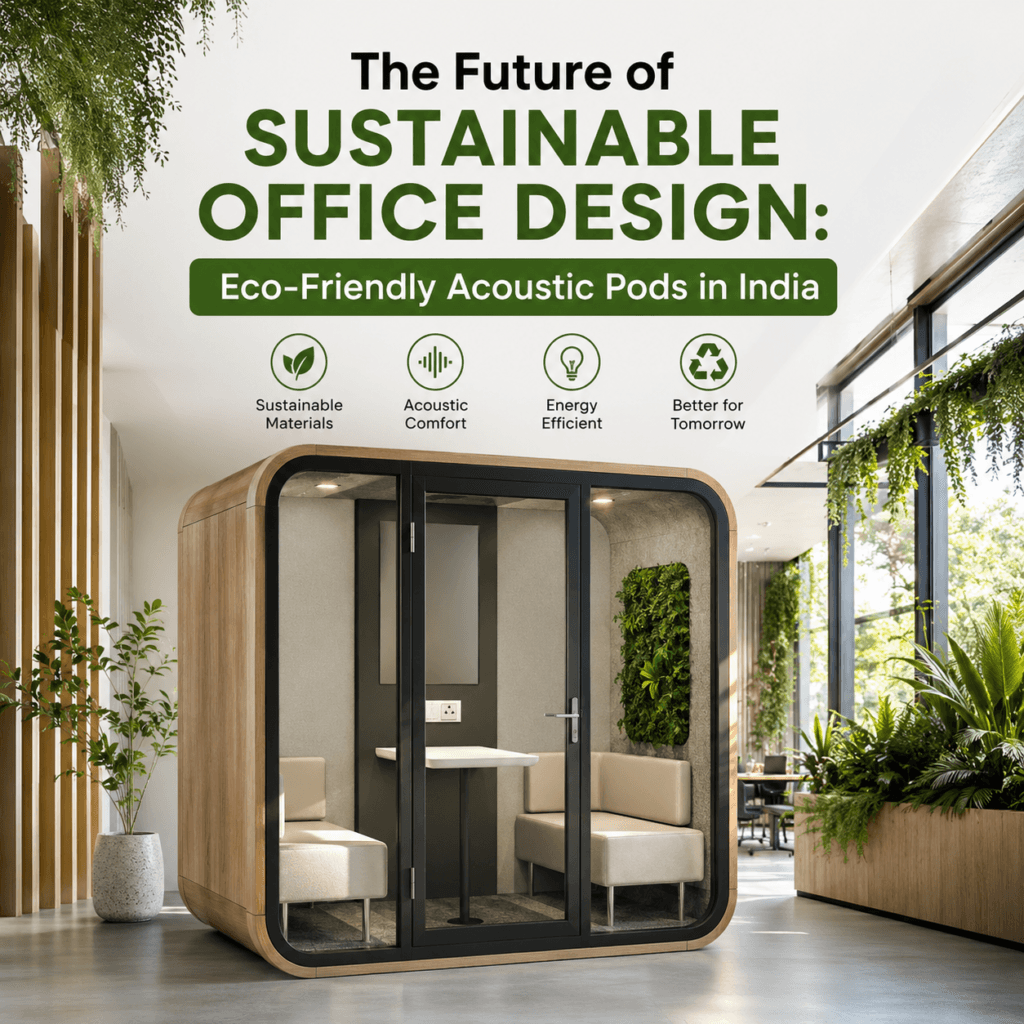
The Future of Sustainable Office Design: Eco-Friendly Acoustic Pods in India

The Dawn of Green Workspaces: Sustainable Office Design in India 1. Introduction: The Green Revolution in Indian Workspaces India’s corporate landscape is undergoing a profound transformation. Beyond the pursuit of productivity and efficiency, there’s a growing imperative for sustainability. As businesses strive to minimize their environmental footprint and enhance employee well-being, sustainable office design has emerged as a critical focus. At the forefront of this movement are eco-friendly acoustic pods, innovative solutions that blend environmental responsibility with the need for focused, quiet workspaces in bustling Indian offices. This article delves into how these modular, soundproof office booths and pods are redefining modern office aesthetics and functionality, offering a glimpse into a greener, healthier future of work in India. 2. Why Sustainable Office Design Matters Now More Than Ever The urgency for sustainable practices in office design is driven by several factors: Environmental Impact: Traditional office construction often involves significant waste generation and reliance on non-renewable resources. Sustainable design aims to mitigate these impacts through responsible material sourcing and waste reduction. Employee Well-being: A growing body of research links green building features to improved occupant health, comfort, and productivity. Elements like natural light, improved air quality, and reduced noise from soundproof phone booths contribute to a healthier workforce — and learning how to reduce noise in open-plan offices is central to that. Regulatory Compliance & Brand Image: With increasing environmental regulations and a growing consumer preference for eco-conscious brands, sustainable practices enhance corporate reputation and ensure compliance. Cost Savings: Energy-efficient designs and durable, low-maintenance materials — paired with good office pod maintenance practices — lead to significant long-term operational cost reductions. 3. Eco-Friendly Acoustic Pods: A Core Component of Green Offices Eco-friendly acoustic pods are not just about noise reduction; they are integral to a holistic sustainable office strategy. Their design and construction prioritize environmental stewardship without compromising on performance or aesthetics. Recycled and Renewable Materials One of the hallmarks of sustainable acoustic pods is their use of recycled materials office pods. Manufacturers are increasingly incorporating: Recycled PET: Acoustic panels made from recycled plastic bottles (PET) are a common and effective solution for sound absorption. This diverts plastic waste from landfills and oceans. Reclaimed Wood: Utilizing reclaimed or sustainably sourced wood reduces demand for virgin timber and supports responsible forestry practices. Natural Fibers: Materials like natural wool, hemp, and cork offer excellent acoustic properties and are renewable, biodegradable alternatives to synthetic foams. For a deeper look at how these materials perform, see our guide to acoustic treatment for home studios. Upcycled Metals: Components made from upcycled aluminum or steel further reduce the carbon footprint. These material choices are reflected in products like the Kraft-Obench Acoustics Booth, engineered for both performance and sustainability, and they also benefit indoor air quality by minimizing volatile organic compounds (VOCs) often found in conventional materials. Energy Efficiency and Air Quality Modern acoustic pods are designed with energy conservation in mind. Features include: LED Lighting: Integrated, energy-efficient LED lighting systems significantly reduce electricity consumption. Smart Ventilation: Advanced ventilation systems ensure optimal air circulation and filtration, providing fresh, clean air within the pod. This is crucial in maintaining a healthy environment, especially in densely populated urban areas — see how acoustic office pods in Delhi tackle this challenge. Passive Cooling/Heating: Some designs incorporate passive strategies to regulate temperature, further reducing reliance on HVAC systems. Modular Design for Reduced Waste The inherent modularity of a modular work pod makes it a sustainable choice. Unlike traditional construction, which often generates considerable waste during renovations or office reconfigurations, pods can be: Relocated: Easily moved within an office or to a new location, extending their lifespan and reducing the need for new purchases. Reconfigured: Adapted to different needs, minimizing waste from discarded furniture or partitions. This flexibility explains why modular office cabins for factories are increasingly favored over fixed construction in industrial settings too. Recycled: At the end of their life cycle, many components can be recycled, contributing to a circular economy. 4. Benefits Beyond the Environment: Productivity, Well-being, and ROI Investing in sustainable office pods yields a multitude of benefits that extend beyond environmental conservation: Enhanced Productivity: By providing quiet zones, pods help employees concentrate, leading to increased focus and output — a point explored further in our piece on acoustic meeting pod benefits for startups. This is particularly valuable in open-plan offices where distractions are rampant. Improved Employee Well-being: Access to private, comfortable spaces reduces stress and promotes mental well-being. Employees feel valued when their need for quiet and privacy is addressed — read more about the benefits of office pods for employee mental health. Attracting and Retaining Talent: Companies with strong sustainability credentials and employee-centric workspaces are more attractive to top talent, especially among younger generations who prioritize ethical employers. Positive Brand Image: Demonstrating a commitment to sustainability enhances a company’s reputation among clients, partners, and the public. Long-term ROI: While the initial investment might seem significant, a detailed cost comparison between office pods and traditional meeting rooms shows strong long-term savings from energy efficiency, reduced waste, and improved employee productivity and retention. 5. Kraft-Obench’s Commitment to Sustainable Solutions At Kraft-Obench, we are dedicated to pioneering eco-friendly acoustic pods that meet the evolving needs of Indian businesses. Our Nano Pods, Vocal Booths, and Meeting Pods are crafted with a focus on sustainable materials, energy efficiency, and durable, modular design. We believe that a productive workspace should also be a responsible one, contributing positively to both people and the planet. Our products are engineered to withstand Indian climatic conditions while delivering superior acoustic performance and environmental benefits. 6. FAQs About Eco-Friendly Acoustic Pods Q1: Are eco-friendly acoustic pods as effective as traditional ones?A1: Absolutely. Modern eco-friendly pods utilize advanced recycled and natural materials that offer comparable, if not superior, acoustic performance to traditional options, while also being environmentally conscious. Q2: What kind of recycled materials are used in these pods?A2: Common materials include recycled PET felt for acoustic panels, reclaimed wood, natural fibers like wool, and upcycled metals for

The Future of Sustainable Office Design: Eco-Friendly Acoustic Pods in India Read More »