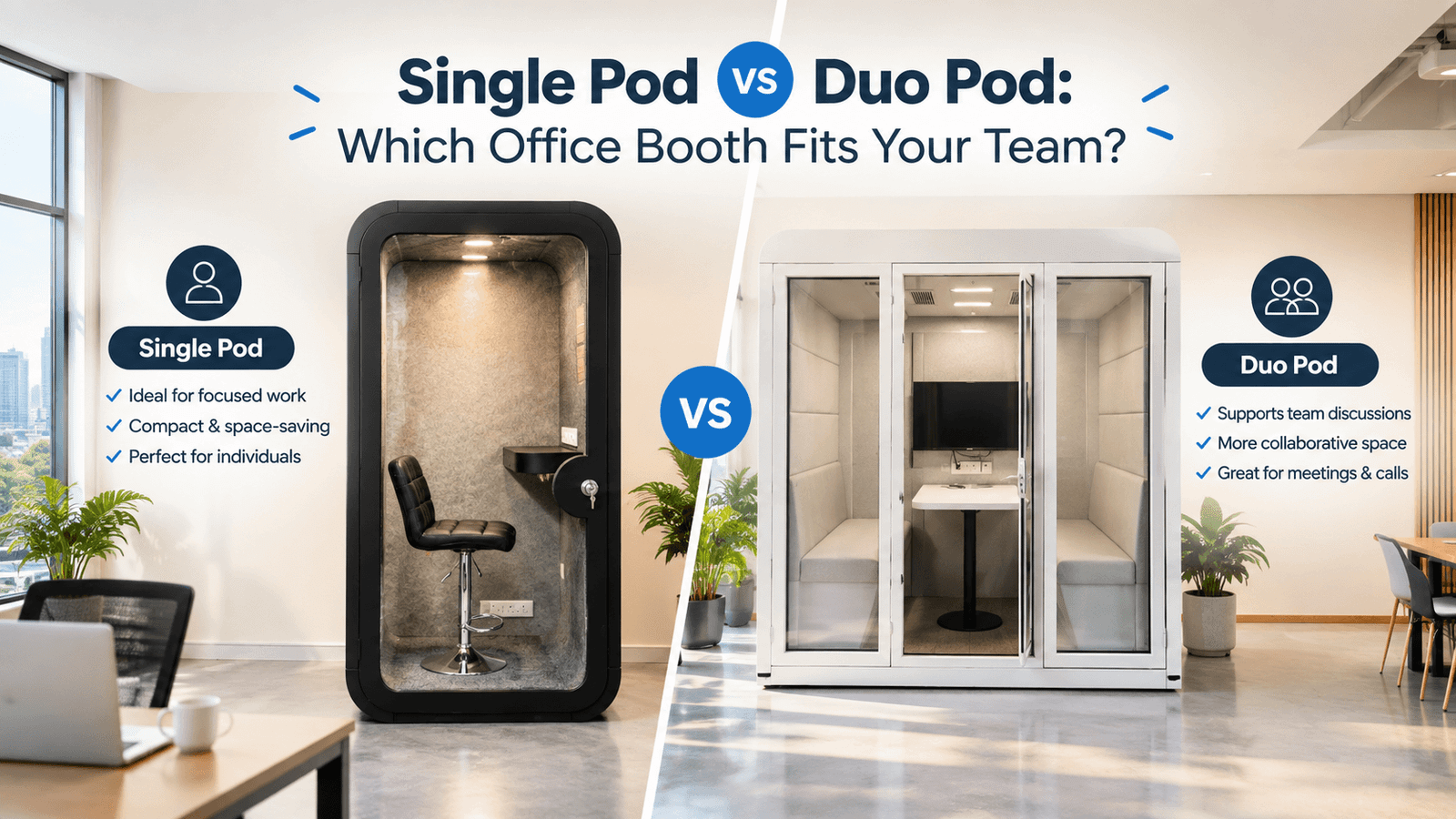
Single Pod vs Duo Pod: Which Office Booth Fits Your Team?
Once an Indian office decides to invest in acoustic pods, the next question is rarely “should we get pods at all” it’s “which size.” The choice between a single-person pod and a two-person duo pod looks small on paper, but it has a real impact on how much floor space you use, how much you spend per seat, and most importantly whether the pods actually match how your team works day to day. Get the ratio wrong, and you end up with expensive booths sitting empty while employees queue for the one configuration that suits their actual task.
This guide breaks down where single pods win, where duo pods win, and how to figure out the right mix for your specific team rather than guessing.
Why Pod Sizing Matters More Than It Seems
Office real estate in cities like Bengaluru, Mumbai, Gurgaon, and Hyderabad is expensive, and every square foot given to an enclosed pod is space not used for open desks or collaboration zones. At the same time, an under-provisioned office one with too few private spaces of the right type quickly develops a booking bottleneck, with employees hovering outside a single occupied pod waiting for a call slot. Getting the single-vs-duo decision right the first time avoids both problems: wasted space on one side, and frustrated employees on the other.
It also affects acoustic performance and comfort. A Nano Pod sized for one person, with one occupant, gets to run efficient ventilation and maintain a comfortable temperature. Put two people into a booth designed for one, and both the airflow and the working experience suffer which is exactly why Kraft-Obench designs single and duo configurations as genuinely distinct products rather than one-size-fits-all boxes.
Single Pods: Built for the Individual
Ideal for Individual Focus Work and Private Calls
A single pod, such as Kraft-Obench’s Nano Pod or standard Phone Booth, is designed around one occupant’s needs: a seat or standing desk, a foldable work surface, basic electricals, and enough acoustic insulation to make a call or a deep-work session genuinely private. For the bulk of daily office activity — a client call, a focused two-hour writing block, a confidential one-way conversation, or a quick video interview — a single pod is exactly the right amount of space, no more and no less.
Smaller Footprint, Easier to Fit Into Tight Spaces
Single pods typically fit within 15 square feet or less, which means they can be tucked into corners, along walls, in underused corridor space, or near a pantry — locations where a larger duo or meeting pod simply wouldn’t fit. For offices with irregular floor plates, older buildings, or limited square footage to spare (a very common scenario in Indian commercial real estate, especially in older business districts), this flexibility often decides the layout on its own.
Lower Cost Per Unit
Because they use less material, less floor space, and simpler internal fit-out, single pods carry a lower price tag than duo or meeting configurations. This makes them the more scalable option when an office needs to deploy a larger number of pods — for example, one single pod per every 15–20 employees is a common starting ratio for busy open-plan floors. If budget is the primary constraint, or if the immediate need is simply “more private spaces, distributed widely,” single pods deliver the most coverage per rupee spent. You can review current single-pod pricing directly by requesting a quote through Kraft-Obench’s contact page.
Duo Pods: Built for Two
Suited for Pair Programming, 1:1 Meetings, or Interviews
A duo pod earns its extra footprint by supporting the tasks that genuinely need two people in an enclosed, private space at once. This covers a wide range of common office activities: pair programming sessions between developers, manager–employee one-on-ones, candidate interviews, mentoring conversations, and small confidential discussions between colleagues. Trying to force these interactions into a single pod means one person standing awkwardly or the conversation happening in the open neither of which achieves the privacy the moment actually requires. Kraft-Obench’s Meeting Pod range, engineered for two to four occupants, is built specifically to handle this category of use case with proper seating, integrated lighting, and climate comfort.
Slightly Larger Footprint but Still Compact
Duo pods do require more floor space than single pods, but the increase is modest they remain a fraction of the size of a traditional enclosed meeting room. This makes them a realistic addition even to floors that are already tightly planned, particularly since they’re still modular and can be repositioned as office needs evolve, unlike a permanently built cabin.
Better Utilization If Two-Person Tasks Are Frequent
If your organization runs a lot of one-on-ones, structured interviews, pair-based technical work, or small vendor/client meetings, a duo pod actually gets used more consistently than a single pod would in the same scenario because it’s sized correctly for the task rather than forcing two people to improvise around a single-occupant design. Higher utilization per unit is, in itself, a strong argument for including duo pods in the mix wherever this pattern shows up in your office’s actual working rhythm.
Single vs. Duo: A Side-by-Side View
Factor | Single Pod | Duo Pod |
Ideal occupancy | 1 person | 2 people |
Best use case | Focus work, private calls | Pair work, 1:1s, interviews |
Footprint | Under 15 sq ft | Slightly larger, still compact |
Cost per unit | Lower | Moderately higher |
Scalability | High — deploy many across a floor | Deploy selectively where paired work is common |
Industries We Serve Across India
Kraft-Obench acoustic office furniture is trusted by organizations across multiple sectors.
Corporate Offices
Improve workplace productivity and provide employees with private spaces for focused work and meetings.
IT and Technology Companies
Support hybrid teams and create dedicated environments for virtual collaboration.
Coworking Spaces
Enhance member experience by offering premium private workspaces and meeting facilities.
Financial Institutions
Facilitate confidential discussions and client interactions.
Educational Institutions
Create quiet administrative workspaces and meeting areas.
Consulting and Professional Services
Provide private spaces for client meetings, interviews, and strategic discussions.
Our solutions are designed to adapt to the unique requirements of each industry and workplace environment.
How to Decide: Track Actual Usage, Not Assumptions
The single most reliable way to get the ratio right is to observe rather than guess how your team actually works. Before committing to a pod mix, track how often employees are booking meeting rooms or informal spaces for solo focus time versus paired discussions over a two- to four-week period. Teams heavy on engineering, sales calls, or individual client work tend to skew toward needing more single pods, such as the Nano Pod or Phone Booth range. Teams with a lot of structured collaboration recruiting-heavy organizations, agile engineering teams doing frequent pair programming, or client-services teams running constant 1:1 check-ins will get more value from investing further in Meeting Pods.
This usage pattern should directly inform your ratio of single to duo pods, rather than defaulting to an arbitrary 50/50 split. Many Indian offices land on something closer to a 3:1 or 4:1 ratio of single pods to duo/meeting pods, reflecting how much more frequent solo call-and-focus needs are compared to paired sessions but this varies meaningfully by team composition, so measuring your own office’s pattern is worth the two to four weeks it takes.
A Third Option: Flexible Configurations
For offices that aren’t ready to commit to a fixed single-versus-duo split, Kraft-Obench’s Nexo Series and Wee Series offer configurations that sit between the two, along with a rentals option available in select cities that lets you trial different pod sizes before finalizing a purchase. This is particularly useful for growing teams where the right ratio may shift within a year or two as headcount and working patterns change.
Seeing Real Deployments
It helps to see how other Indian offices have approached this exact decision. Kraft-Obench’s installation gallery showcases real single and duo pod deployments across corporate offices, startups, and coworking spaces in cities including Bengaluru, Mumbai, Gurgaon, Hyderabad, Chennai, and Pune. The clients page also documents how specific organizations have mixed pod types based on their own team structure, and the FAQ page covers common sizing and material questions if you’re still narrowing down your options.
Frequently Asked Questions
Q. Can duo pods also be used by one person?
Yes, duo pods work well for solo use when extra space is needed for example, if someone wants room to spread out reference materials, use a larger monitor setup, or simply prefers more breathing room than a compact single pod offers.
Q. Is a mix of both types recommended?
For most offices, a combination based on actual usage patterns delivers the best value a larger number of single pods for everyday focus work and calls, supplemented by a smaller number of duo or meeting pods for paired and small-group tasks.
Q. How do I know how many of each type to order?
Track solo versus paired space bookings over two to four weeks before ordering. This gives a realistic usage ratio rather than an assumption, and Kraft-Obench’s team can help translate that data into a specific pod mix during a consultation.
Q. Are single and duo pods equally soundproof?
Both configurations use the same acoustic construction principles Rockwool insulation and soundproof DGU glass so acoustic performance is comparable across sizes. The main differences are footprint, seating capacity, and cost per unit.
Not sure what mix of single and duo pods fits your team? Reach out to Kraft-Obench for help sizing the right combination, or explore the full product range and gallery to see what fits your office.

Our Exclusive Products
Because we have all that you need. See for yourself!
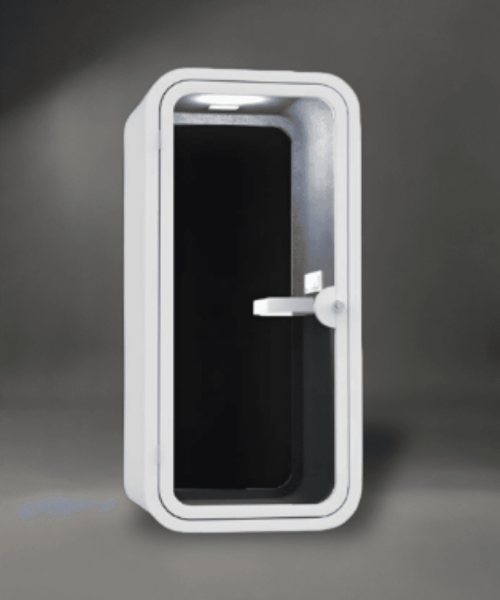
NANO Series
Your compact sanctuary for focused work or calls. Designed for small spaces.
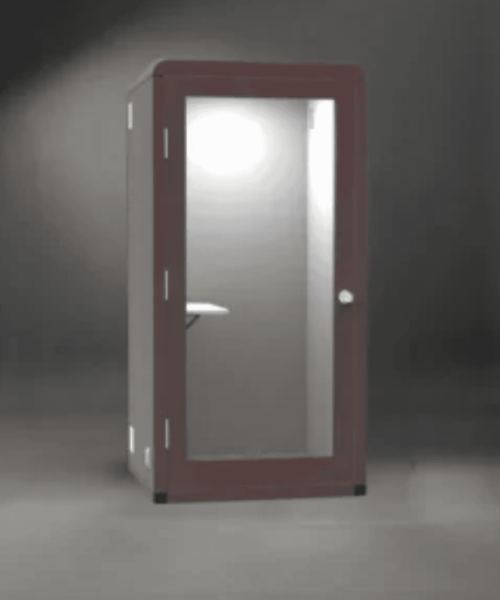
WEE Series
A tranquil environment in which to work, make calls, or simply sit and relax.

VOCAL Series
A private, efficient space for artists who love to record standing up.
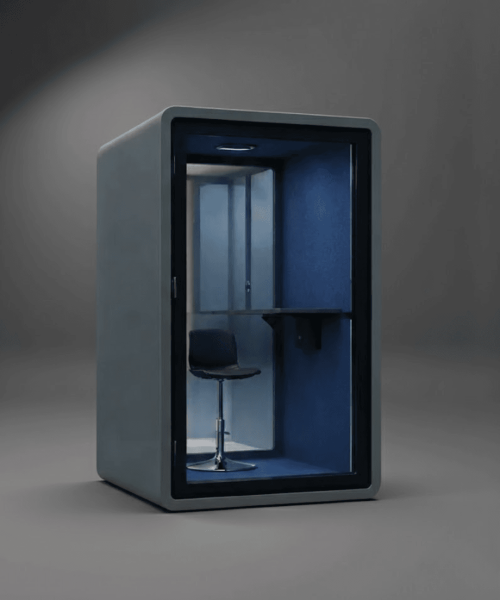
NEXO Series
NEXO Series ideal for private, comfortable, and efficient workspaces.
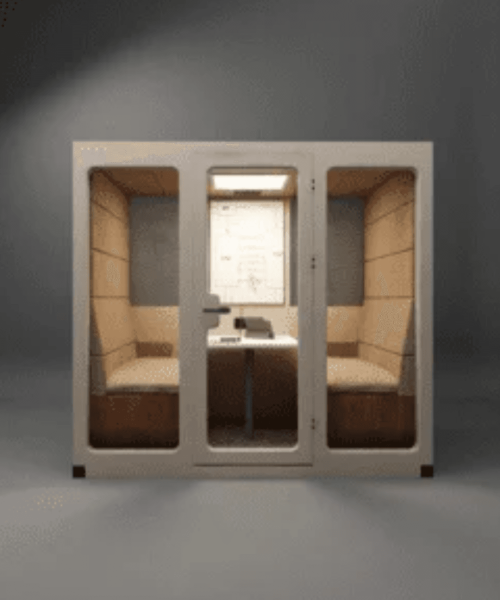
MEET Series
A room inside a room. Ideal for private phone and video calls, as well as meetings for four.