Acoustic Pod vs Cubicle: Which Is Better for Indian Offices?
Indian offices are going through a quiet but significant redesign. The rigid, wall-to-wall cubicle grid that defined corporate India through the 2000s and 2010s is steadily giving way to open-plan floors more light, more collaboration space, more flexibility for hybrid teams. But open layouts come with an obvious trade-off: noise. As businesses in Bengaluru’s tech parks, Gurgaon’s corporate towers, Mumbai’s BKC offices, and Hyderabad’s IT corridor rethink their floor plans, the real decision isn’t “open plan or closed plan” anymore. It’s a more specific one: when privacy or focus is genuinely needed, do you go back to a cubicle, or do you install an acoustic pod?
This comparison looks at both options honestly, including where cubicles still make sense, so you can decide the right mix for your own office rather than assuming one option replaces the other entirely.
Why This Debate Matters Now
A few forces are converging on Indian offices at once. First, hybrid work means fewer people are in the office on any given day, but the ones who are in tend to be on video calls constantly with colleagues working remotely, with global clients, with candidates being interviewed. Second, real estate costs in cities like Bengaluru, Mumbai, and Gurgaon are high enough that businesses want every square foot to be flexible rather than locked into a fixed configuration. Third, employees who’ve experienced quiet, focused work-from-home environments are far less tolerant of noisy, distraction-heavy office floors than they were a decade ago.
All three trends point toward the same conclusion: offices need spaces that are genuinely private when privacy matters, without giving up the openness and flexibility of a modern floor plan. That’s the specific problem both cubicles and acoustic pods are trying to solve just with very different levels of success.
Cubicles: The Traditional Option
Lower Upfront Cost Per Unit
Cubicles have one clear advantage: they are usually the cheaper option per workstation, especially when a business already owns or can easily source modular office furniture. For large floor plates where every seat needs some form of division, this lower per-unit cost adds up to a meaningful budget saving compared to enclosing every seat in a fully built pod.
Minimal Sound Isolation Noise Still Travels
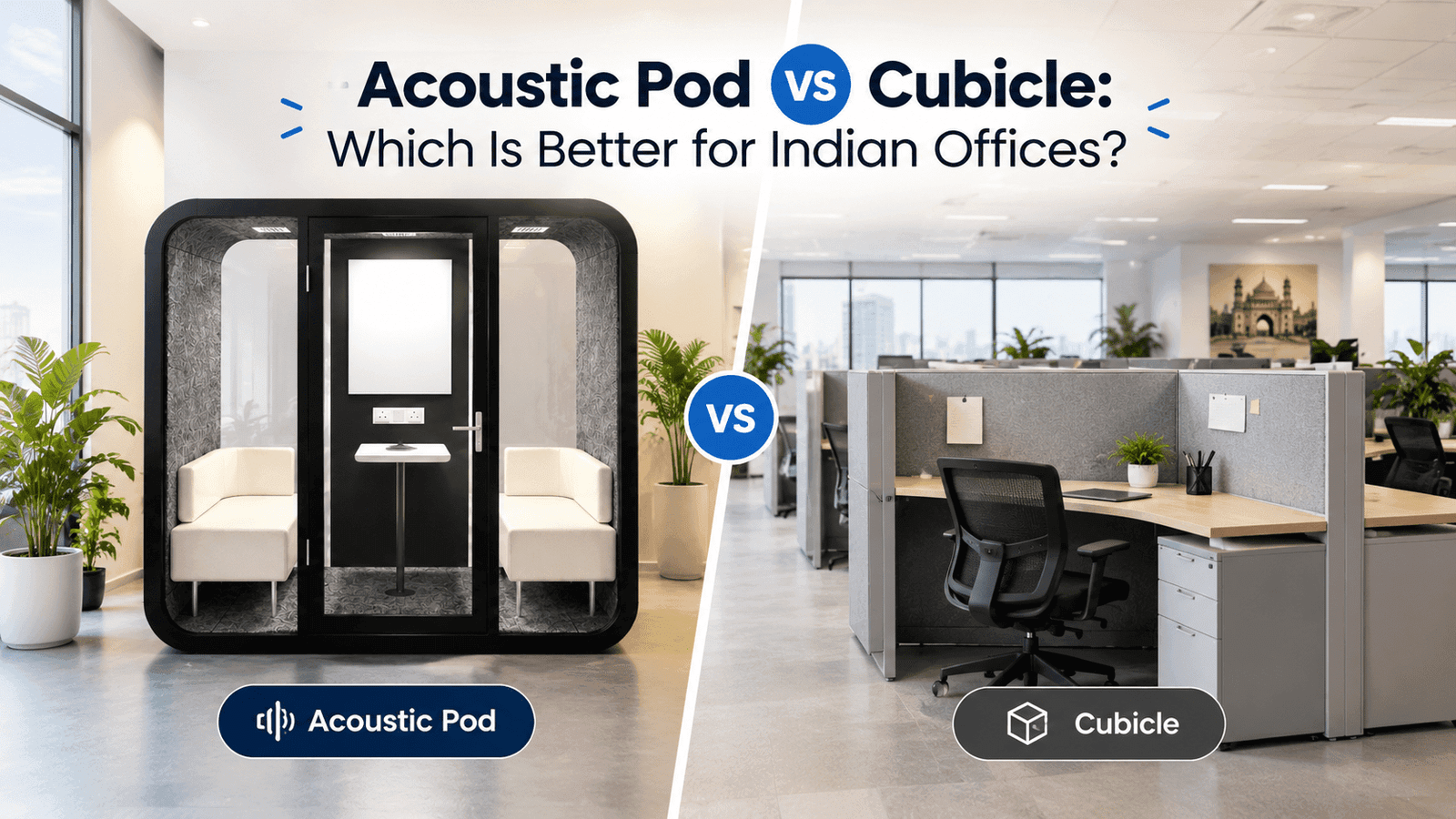
This is the core limitation. A cubicle wall, typically 4 to 5 feet high and made of fabric-wrapped particleboard or laminate, blocks sightlines, not sound. Conversations, phone calls, keyboard noise, and general office chatter travel freely over and around cubicle partitions. For visual privacy not wanting a colleague to see your screen cubicles do the job. For actual acoustic privacy, the kind needed for a confidential HR conversation, a client call, or two hours of deep, uninterrupted work, cubicles offer very little protection. This is precisely the gap that a purpose-built soundproof phone booth or acoustic pod is designed to close.
Fixed Placement, Difficult to Relocate
Traditional cubicle systems are typically bolted, wired, and cabled into a specific floor layout. Moving them means an electrician, a carpenter, and usually a weekend of disruption. As Indian companies increasingly restructure teams, reconfigure floors for hybrid attendance patterns, or move offices altogether (a common occurrence in fast-growing startups and IT firms), this rigidity becomes a real cost both in money and in the time it takes to adapt the workspace to changing needs.
Acoustic Pods: The Modern Alternative
Genuine Sound Isolation (Up to 85% Noise Reduction)
The single biggest differentiator is acoustic performance. A well-built pod like those in Kraft-Obench’s Nano Series, Wee Series, or Meet Series uses dense Rockwool insulation and soundproof double-glazed unit (DGU) glass to absorb up to roughly 85% of ambient sound. That’s the difference between a cubicle, where you can still hear the person two desks away, and a pod, where a confidential call genuinely stays confidential and a focused work session isn’t interrupted by the office around you.
Fully Enclosed for Calls and Focused Work
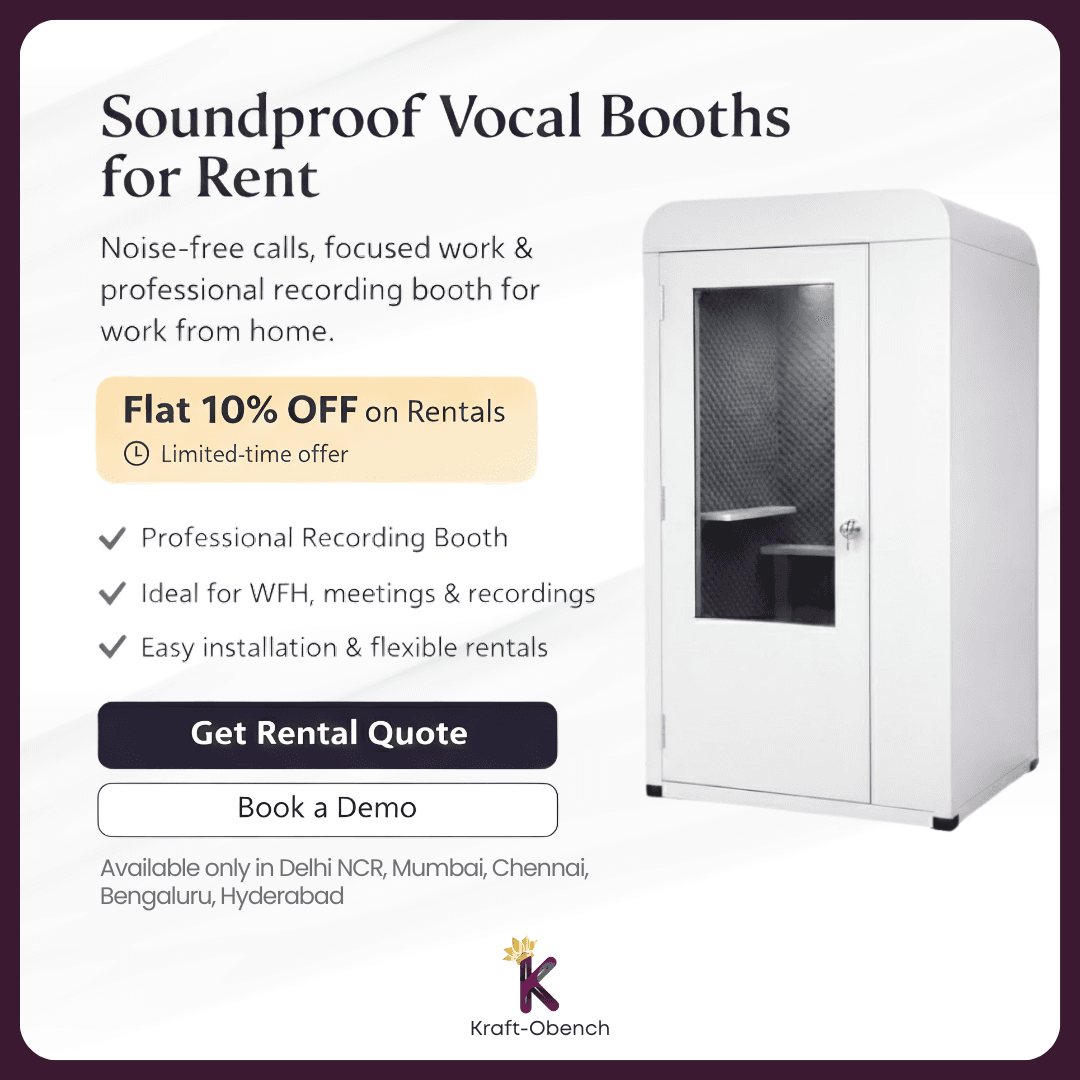
Unlike a cubicle, a pod is a complete room-within-a-room, with a door that closes. This matters enormously for two very different use cases that Indian offices deal with every day: private phone and video calls (increasingly common with global clients and remote team members) and deep, uninterrupted individual work. Kraft-Obench’s Phone Booth range is purpose-built for the former, while the Nano Pod suits the latter both fully enclosed, both a genuine escape from open-office noise. For teams that need to record voice content, run podcasts, or handle sensitive audio work, the Vocal Pod series goes a step further with studio-grade acoustic treatment.
Modular and Relocatable as Office Needs Change
Because pods are prefabricated and self-contained, they can be disassembled, moved, and reinstalled at a new location including an entirely different office without construction work. This is a meaningful advantage for companies going through office moves, floor reconfigurations, or simply testing how many private spaces a floor actually needs before committing further. It’s also why Kraft-Obench offers a rentals option in select cities, letting businesses trial pods before a full purchase decision.
Head-to-Head: What Each Option Actually Solves
Factor | Cubicle | Acoustic Pod |
Upfront cost per unit | Lower | Higher |
Acoustic privacy | Minimal — sound travels freely | Up to ~85% noise reduction |
Visual privacy | Good | Excellent (fully enclosed) |
Relocation | Difficult, needs rework | Modular, easily moved |
Best for | General seating, basic separation | Calls, focused work, meetings, recording |
The honest takeaway is that these two aren’t really competing for the same job. Cubicles solve visual separation across a large seating area cheaply. Pods solve acoustic privacy for the specific moments calls, focus work, sensitive conversations where noise genuinely gets in the way of getting things done.
Which Should You Choose?
For most Indian offices, the answer isn’t “replace every cubicle with a pod.” It’s “use cubicles for general seating, and add pods where acoustic privacy actually matters.” Cubicles remain a sensible, budget-friendly choice for basic visual separation across an open floor of desks. But wherever genuine focus or call privacy is the goal client calls, one-on-ones, interviews, or deep individual work a pod delivers outcomes that cubicles simply cannot match, particularly in the noisy, high-density office environments common across Bengaluru, Gurgaon, Mumbai, Hyderabad, and other major Indian business hubs.
Many organizations are landing on a hybrid model: an open floor of standard workstations (cubicle or otherwise) supplemented by a small cluster of pods a few phone booths for calls, a Meeting Pod for small group discussions, and perhaps a Nexo Series unit for flexible use. This mix gives employees the best of both: an open, collaborative floor plan for everyday work, and genuinely private spaces for the moments that require them.
Calculating the Real ROI
It’s true that pods cost more per unit than a cubicle workstation. But the comparison changes once you factor in what pods replace. A single Meeting Pod can absorb the demand that would otherwise require booking a dedicated meeting room a resource that, in most Indian offices, is chronically oversubscribed. Multiple phone booths distributed around a floor reduce the need to build additional enclosed cabins during a fit-out, which is a far larger capital expense than the pods themselves. When you weigh pod costs against the alternative of constructing more permanent rooms plus the ongoing flexibility of being able to relocate pods as the business evolves the ROI case becomes considerably stronger than a simple per-unit price comparison suggests.
Seeing It in Practice
Kraft-Obench has installed pods across corporate offices, startups, and coworking spaces in more than 20 Indian cities, including Bengaluru, Mumbai, Gurgaon, Hyderabad, Chennai, and Pune. You can see real deployments in the installation gallery, read how existing clients have used pods in their own offices on the clients page, and check the FAQ page for common technical and sizing questions before making a decision.
Frequently Asked Questions
Q: Are pods more expensive than cubicles?
Per-unit pricing is higher for acoustic pods than for standard cubicle partitions. However, pods often reduce the need for separate enclosed meeting rooms during an office fit-out, which improves the overall return on investment once total space costs are considered.
Q. Can pods and cubicles be used together?
Yes. Many offices use cubicles for general, everyday seating and reserve pods for calls, focused individual work, and small meetings — combining the cost efficiency of cubicles with the genuine acoustic privacy of pods.
Q. How much noise reduction do acoustic pods actually provide?
Pods built with Rockwool insulation and soundproof DGU glass, such as those in Kraft-Obench’s product range, can absorb up to around 85% of ambient sound a level of isolation that standard cubicle partitions cannot approach.
Q. Can pods be relocated if our office layout changes?
Yes, this is one of the key advantages of pods over built-in rooms or cubicle systems. Because pods are modular and self-contained, they can be disassembled and reinstalled elsewhere, including at a different office location, without structural work.
Not sure what the right mix of cubicles and pods looks like for your floor plan? Talk to Kraft-Obench about your office layout, browse the full product range, or explore rental options to trial a pod before committing to a purchase.

Our Exclusive Products
Because we have all that you need. See for yourself!
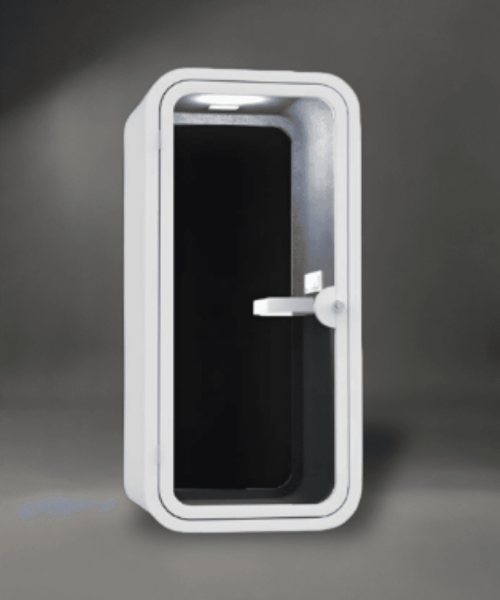
NANO Series
Your compact sanctuary for focused work or calls. Designed for small spaces.
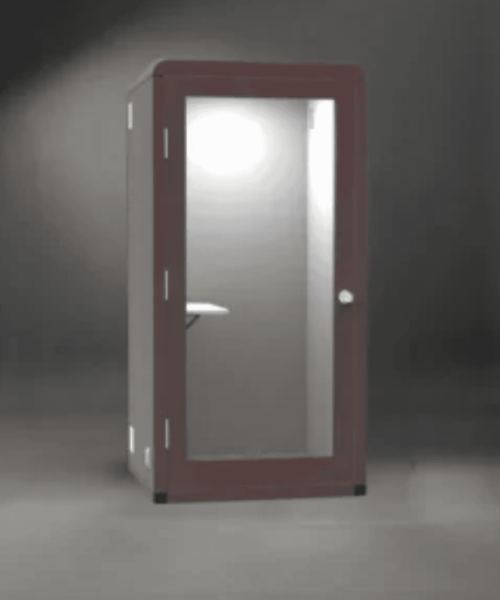
WEE Series
A tranquil environment in which to work, make calls, or simply sit and relax.
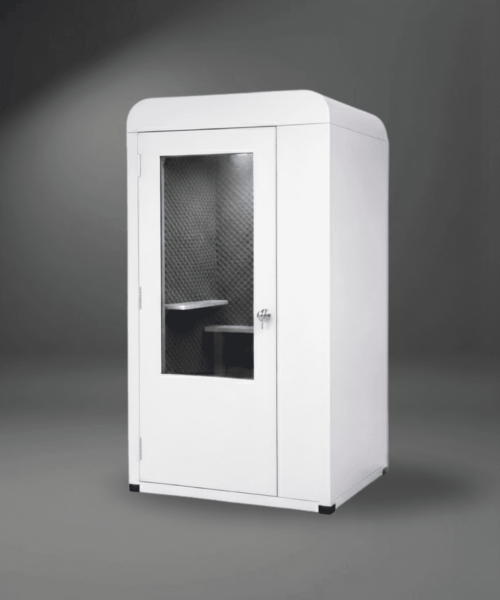
VOCAL Series
A private, efficient space for artists who love to record standing up.
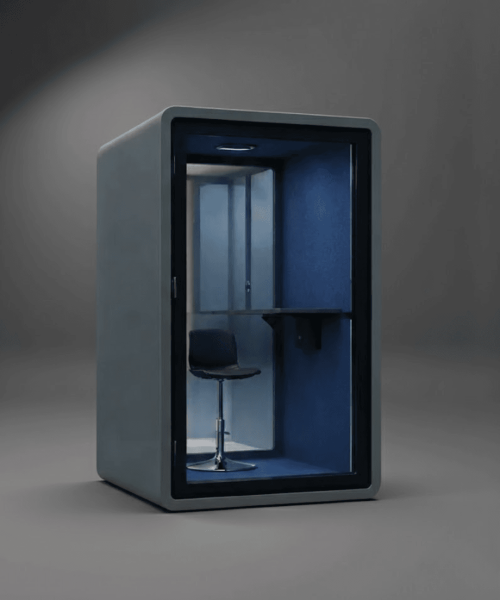
NEXO Series
NEXO Series ideal for private, comfortable, and efficient workspaces.
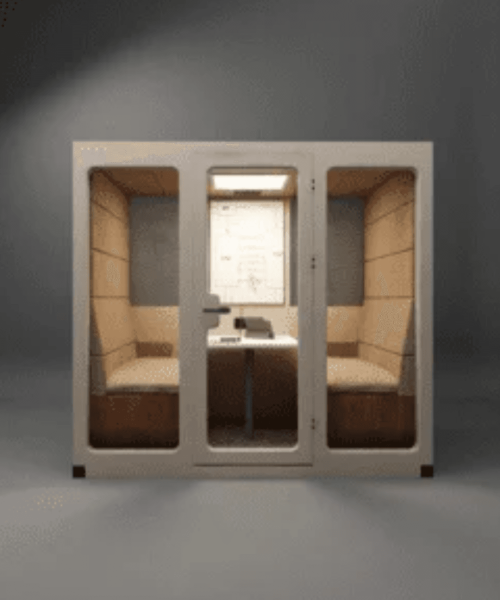
MEET Series
A room inside a room. Ideal for private phone and video calls, as well as meetings for four.